


News
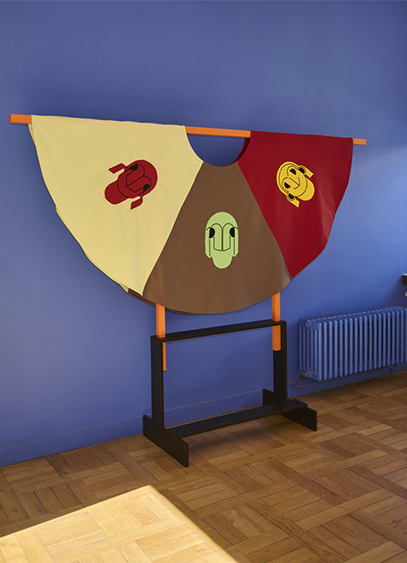
Dans sa nouvelle exposition présentée à la Villa Savoye de Le Corbusier jusqu’au 11 janvier, la designer matali crasset interroge la complexité de notre société.Une réflexion portée par une multitude de médiums artistiques, toujours présentés par trois.
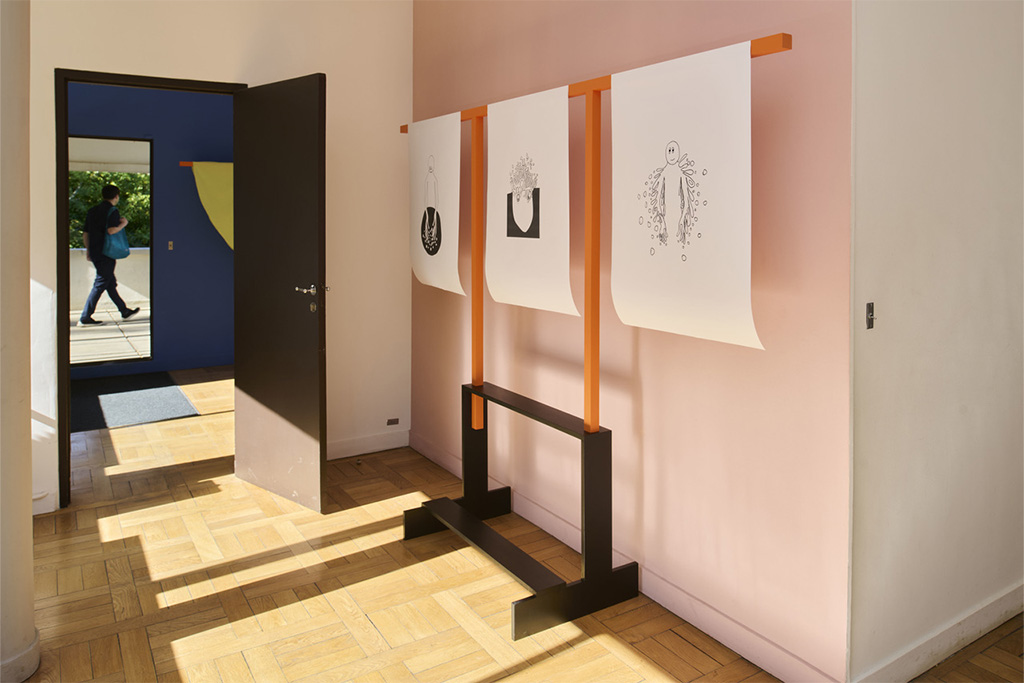
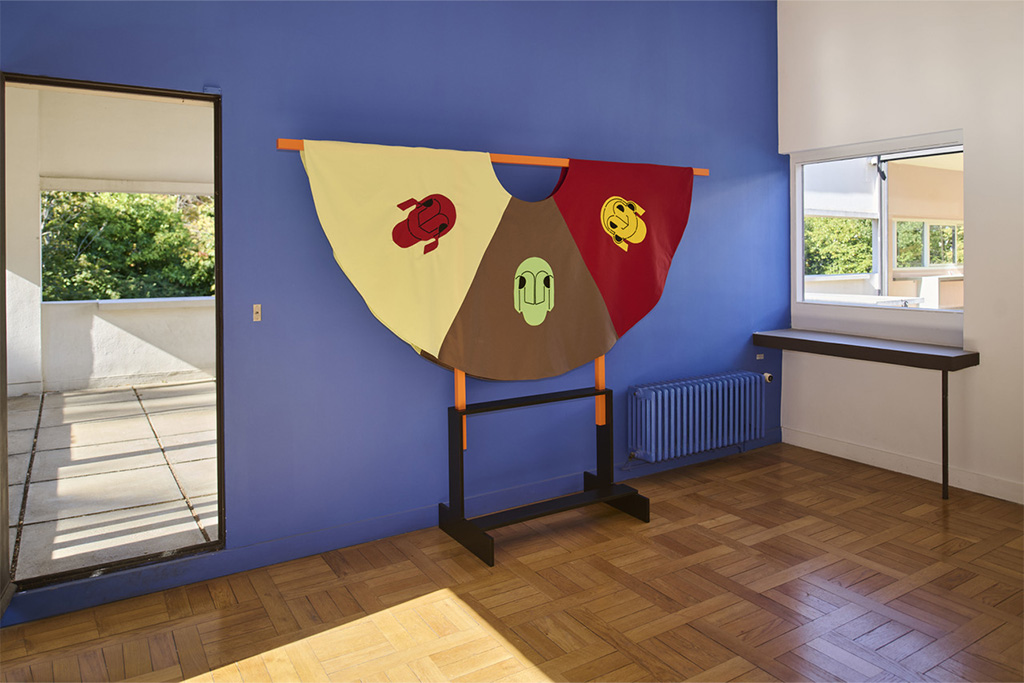
Après avoir mis en avant notre vulnérabilité avec « Nos pieds d’argile », présentée à l'Église Saint-Pierre de Firminy-Vert puis les interconnexions aux Beaux-Arts de La Chaux-de-Fonds dans « Les égards ajustés », matali crasset présente en ce moment « Le temps de la secousse ». Davantage artistique que design, cette exposition, visible à la Villa Savoye jusqu’au 11 janvier, a été imaginée comme une nouvelle retranscription des réflexions sociétales de la designer. Cette fois-ci, c’est autour de la complexification de notre monde que s’articulent les dessins, céramiques ou autres broderies présentées. Des typologies sans connexions apparentes, mais unies par la présentation en triptyque sur des sortes de prie-dieu conçus pour l’occasion. Une initiative menée en écho au chiffre trois. « Je me suis intéressée à la manière dont certaines personnes avaient tenté de clarifier les éléments en les synthétisant. Et tout cela me ramenait à cette valeur numérique. Je ne saurais pas vraiment expliquer pourquoi, mais c’est sans doute le plus petit nombre qui permet d’amalgamer des choses qui, normalement, ne fonctionnent pas ensemble. » Une approche à laquelle fait écho le projet de diplôme de la créatrice - formée à l’ENSCI -qui s’était questionnée sur le rôle du design industriel. « Dans mes travaux, je citais le philosophe norvégien Arne Næss qui décrivait dans ses écrits trois niveaux de qualité. La primaire d’abord, qui constitue la forme d’un objet ou sa matière ; la secondaire ensuite, relative aux sentiments provoqués ; et enfin la tertiaire, qui est un ressenti beaucoup plus immatériel et profond. C’est ce que j’avais appelé la trilogie de l’écologie il y a des années, et que je replace aujourd’hui dans l’exposition. »
Promenade artistique en territoire architectural
Incarnée dès l’entrée par trois sculptures évoquant l’identité de la designer, née « dans la craie, en plein cœur de la Marne », la triple approche d’Arne Næss ponctue l’ensemble de l’exposition, imaginée comme une balade. « Je ne souhaitais pas simplement investir l’espace, mais proposerun autre angle de lecture au gré de la visite », relate matali crasset dont le travail des modules et de la couleur trouve à la Villa Savoye une certaine résonance. « Je ne perçois pas de filiation entre mon travail et celui de Le Corbusier, mais la qualité de création de ses espaces et leur singularité due àpeu de choses, m’interpellent. Je dis souvent que je travaille des projets à l’échelle humaine comme Le Corbusier, mais là où le Modulor établissait une norme, je cultive, de mon côté, l’individualité des propositions. » Une démarche portée, selon la designer par les scénarios de vie contemporaine, bien différents de ceux qui ont façonné puis habité le modernisme. Reste un langage de la couleur, commun aux deux esprits, que « Le temps de la secousse » propose de combiner jusqu’au début de l’année prochaine.
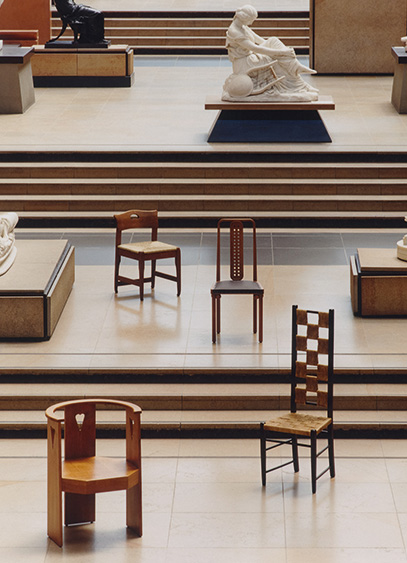
À l’occasion des 40 ans du musée d’Orsay, la maison d’édition Ecart s’associe à l’institution parisienne pour rééditer quatre assises emblématiques issues de ses collections permanentes.
Fondée en 1978 par Andrée Putman, la maison Ecart s’attache depuis près de cinquante ans à faire revivre des pièces majeures de l’histoire du design. Depuis 2024, sous l’impulsion du groupe Pierre Yovanovitch qui en a repris la direction, l’éditeur poursuit cette démarche en enrichissant son catalogue de nouvelles rééditions. Pour célébrer son 40e anniversaire, le musée d’Orsay lui confie pour la première fois la réédition de quatre assises issues de ses collections permanentes, témoins d’une période charnière dans l’histoire du mobilier européen.
Quatre réalisations aux prémices du modernisme
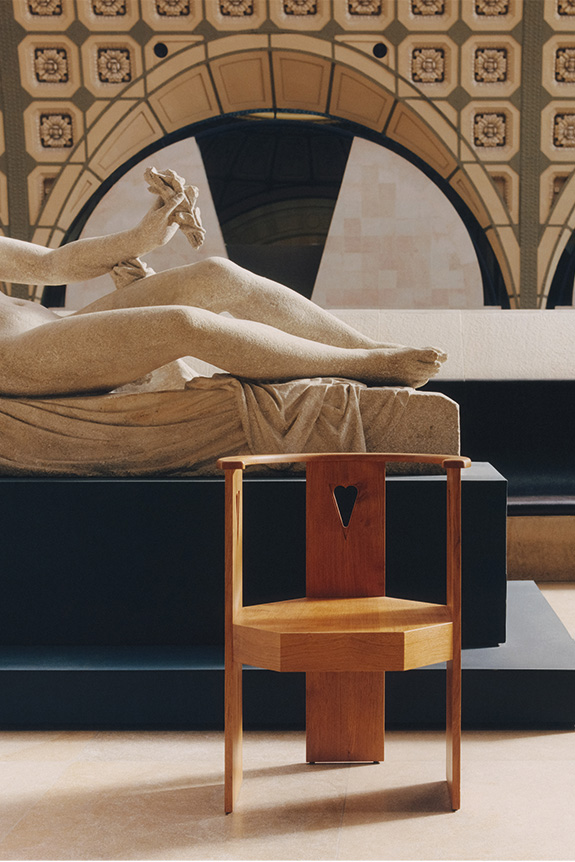
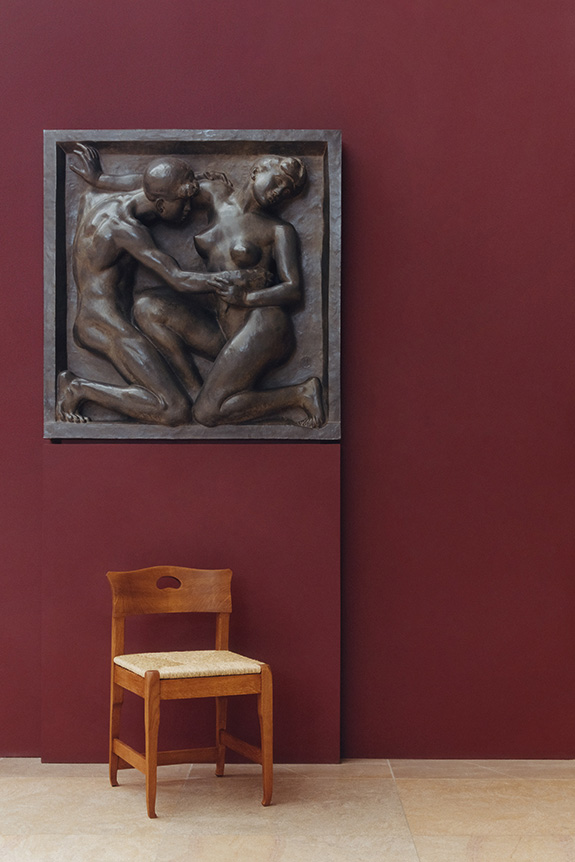
À la croisée de l’Art nouveau, de la Sécession viennoise et des prémices du modernisme, les quatre modèles sélectionnés illustrent l’évolution du langage formel au début du XXe siècle. On peut ainsi (re)découvrir une réalisation en bois massif et paille de l’architecte allemand Richard Riemerschmid dessinée vers 1902, une chaise à haut dossier en raphia tressé imaginée par le décorateur autrichien Koloman Moser vers 1903, une chaise en bois cintré conçue par l’architecte autrichien Josef Hoffmann vers 1905 ainsi q'un fauteuil en bois massif signé de l’architecte finlandais Eliel Saarinen, datant de 1907-1908.
Réédition contemporaine
Rééditées en série limitée à 100 exemplaires, les quatre assises sont toutes réalisées à partir de matériaux et de techniques de fabrication traditionnels, dans le respect des proportions et des finitions des modèles originaux. Au-delà de la préservation des savoir-faire, cette collaboration permet de remettre au goût du jour un patrimoine à travers un usage plus contemporain. En s’affranchissant du cadre muséal, ces pièces retrouvent ainsi leur vocation première, celle d’assises prêtes à être utilisées. Les quatre rééditions seront toutes exclusivement disponibles sur le site d’Ecart et au sein de sa galerie parisienne, située rue Jacob.
Légendes : à gauche : ECART x Muséed'Orsay, chaise de Josef Hoffmann (1905) ©Julien T.Hamon / à droite : ECART x Musée d'Orsay Chaise de Koloman Moser (1903) ©Julien T.Hamon
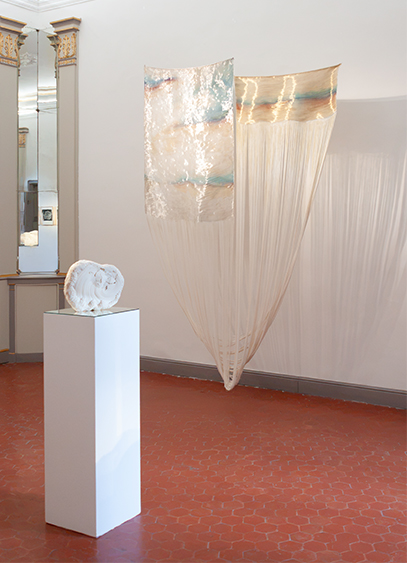
Pour sa cinquième édition qui se tient à Aix-en-Provence jusqu’au 13 mars 2027, Gallifet présente 15 artistes sous la thématique « Reliance ». L’occasion de rétablir le lien entre les métiers d’art et leur environnement.
Imaginé à rebours des codes du white cube, Gallifet, fondé à Aix-en-Provence il y a une quinzaine d’années par Nicolas Mazet, investit un hôtel particulier du XVIIIe siècle devenu un espace pluridisciplinaire, à la croisée de l’art contemporain, de l’artisanat et du design. Après avoir exploré les liens entre le geste et la mémoire des paysages, les relations entre les créateurs et le vivant, ou encore notre rapport à la transmission, la cinquième édition du festival éponyme s’articule cette année autour de la thématique « Reliance ». Un terme qui évoque à la fois la dépendance et la confiance, « deux notions devenues rares dans la société contemporaine », explique Morgane Baroghel-Crucq, artiste tisserande et commissaire de l’exposition ouverte jusqu’au 13 mars 2027. « Selon moi, Gallifet est un événement qu’il faut savoir détacher de sa thématique, même si celle-ci reste présente. L’idée est avant tout de mettre en lumière le lien entre l’artisan et son environnement, à travers le prisme des métiers d’art », précise l’artiste, dont la pratique s’articule autour de l’interdépendance des éléments. « Lorsque j’ai réalisé mes premières œuvres il y a plus de quinze ans, on me disait que les métiers d’art étaient ringards. Or, depuis une décennie, on observe un véritable regain d’intérêt. » Un phénomène que Gallifet entend accompagner et promouvoir en réunissant des artistes reconnus et des talents émergents. De Simone Pheulpin, dont les sculptures de coton évoquent la pierre, à Wilfried Bécret et ses luminaires réalisés à partir de poussières de verre, les frontières entre les disciplines deviennent poreuses à mesure que les médiums changent d’état. « Il serait impossible de classer les différents profils. L’objectif de ma sélection est d’abord de constituer un corpus de savoir-faire vivants, réenchantés par le geste. »
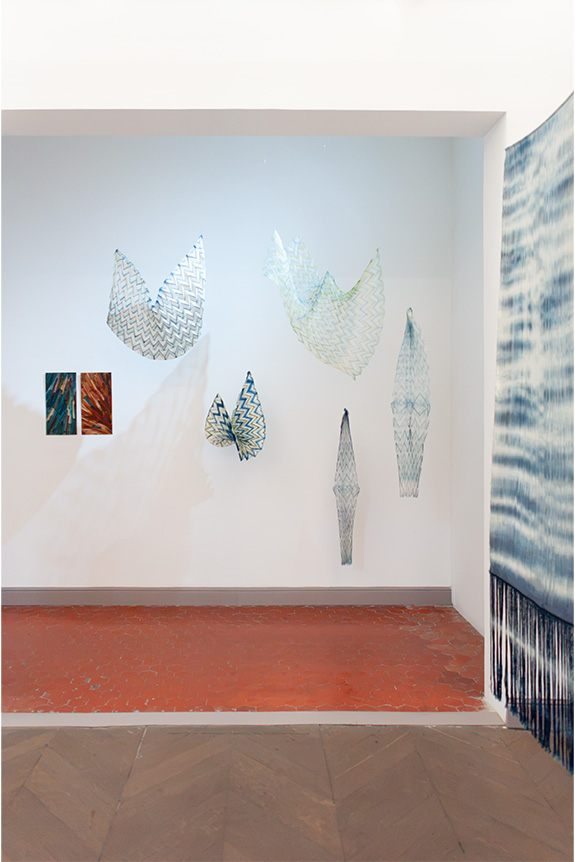
Le médium et la technique avant l’objet
Avec Gallifet, ce sont les processus que l’on célèbre. Dans cet esprit, l’événement invite les visiteurs à découvrir une diversité de matières, de techniques et d’approches. « Il n’a jamais été question pour moi d’exposer des objets, mais plutôt des visions.C’est pourquoi le fil rouge qui unit les artisans réside dans leur positionnement d’artistes-concepteurs, et non de simples exécutants », explique Morgane Baroghel-Crucq pour qui la valeur intrinsèque des métiers d’art tient avant tout à leur rapport au temps et, par extension, à l’environnement. « Les métiers d’art se caractérisent souvent par une approche monomatière, dont la maîtrise artistique demande généralement une dizaine d’années. C’est quelque chose qui, à mes yeux, invite à une certaine humilité. Or, cette notion partage une racine latine, humilis, avec les mots humanité et humus. Il me semble assez évident que le rôle de l’artisan d’art est aujourd’hui de révéler ce que les matières ont à nous dire. C’est aussi tout l’enjeu de cette exposition. » Des tissages de fibres végétales, aux fleurs de métal en passant par le au jeu d’échecs d’Atelier George et Xavier Montoy, où le verre soufflé et la galvanoplastie emprisonnent des échantillons de la flore, cette nouvelle édition fait de la ressource naturelle un vecteur de transmission et de renouvellement des savoir-faire.
Ci-dessous à gauche le jeu d'échec par Atelier George et Xavier Montoy ©Aude Volokhoff de Roucy
Ci-dessous à droite lampe de Wilfried Bécret ©Aude Volokhoff de Roucy
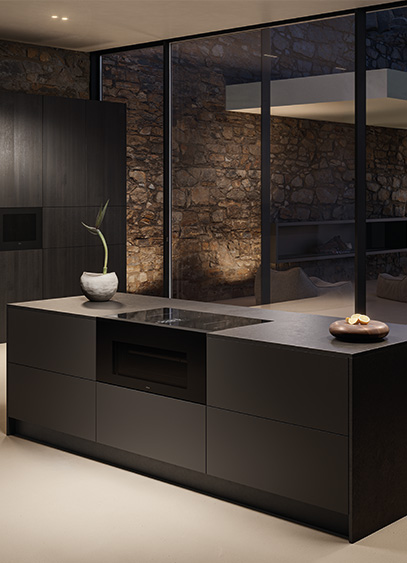
En réunissant un four, une plaque à induction et un système d’aspiration au sein d’un seul équipement, la marque italienne Elica ouvre une nouvelle voie dans l’univers de l’électroménager. Baptisée Lhov, cette innovation conjugue recherche esthétique, performances technologiques et optimisation de l’espace.
Comment repenser les équipements de cuisson pour mieux les intégrer à la cuisine contemporaine ? C’est à cette question qu’a voulu répondre Elica en imaginant Lhov, une solution conçue par Fabrizio Crisà. Elica, entreprise italienne d’avant-garde dans la conception et la production d’appareils électroménagers pour la cuisine et leader dans les systèmes d’aspiration, pousse ici sa réflexion plus en loin en développant un système capable de capturer les fumées, les vapeurs et les odeurs directement à la source, aussi bien au niveau de la plaque de cuisson que du four, pendant la cuisson et à l’ouverture de la porte.
La technologie au service des usages
Pensé pour s’intégrer naturellement aux différents projets d’aménagement de cuisine, tout en optimisant l’espace disponible, Lhov est disponible en trois finitions – noir brillant, noir mat et blanc mat –, et s’adapte à tous les partis pris esthétiques. La finition Raw offre quant à elle une résistance aux rayures et aux traces de doigts, facilitant l’entretien au quotidien. Mais au-delà de sa dimension esthétique, Lhov se distingue par la diversité de ses fonctionnalités, dont certaines sont directement inspirées de l’univers professionnel. Dotée de cinq zones de cuisson combinables, la plaque à induction dispose de plusieurs programmes automatiques permettant de faire fondre, mijoter ou encore maintenir les préparations au chaud. Le four - dont la largeur permet de disposer deux plaques côte à côte - associe différents modes de cuisson, parmi lesquels la vapeur, l’Air Frying et le grill tandis que système d’aspiration ajuste automatiquement sa puissance en fonction des besoins.
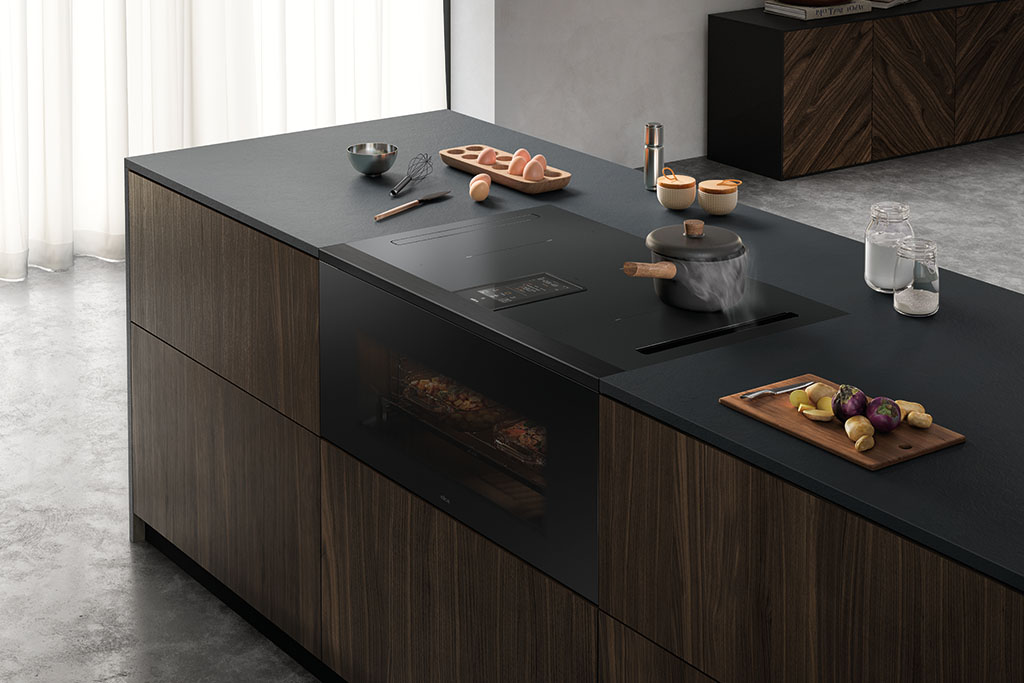
L’ensemble des fonctionnalités est accessible depuis un écran numérique connecté facile d’utilisation, pensé pour fluidifier l’expérience utilisateur. Récompensé par de nombreuses distinctions internationales, dont un Compasso d’Oro, Lhov témoigne du souhait d’Elica de dépasser les typologies traditionnelles de l’électroménager pour proposer une nouvelle vision de l’aménagement et des usages en cuisine.

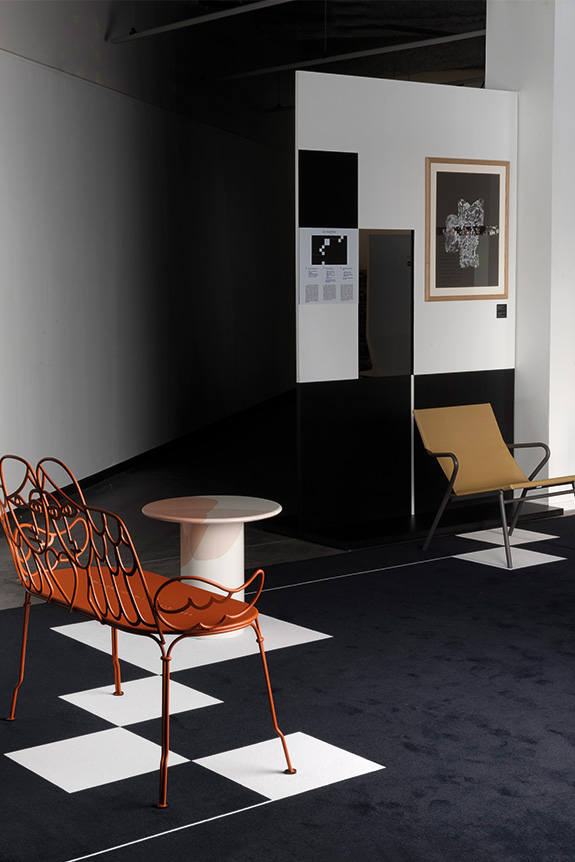
Jusqu’au 22 janvier 2027, la galerie du FRENCH DESIGN présente l’exposition « Hospitalité lyrique, l’émotion dans l’art de recevoir », qui réunit une sélection de lauréats du prix FD100 autour de la thématique de l’hospitalité. Une exposition scénographiée par le Studio Andrée Putman, qui fait dialoguer les pièces autour du rêve et de la poésie.
« L’hospitalité est un élément assez fondamental dans la création de mobilier français. Ce sens du recevoir, cet art de vivre à la française que l’on retrouve beaucoup dans les pièces. Il y a une façon de concevoir en France qui est très immersive, très complète. C’est aussi ça que l’on a voulu montrer : des espaces qui sont complets. » racontait Jean-Paul Bath, directeur du FRENCH DESIGN. Pour cette nouvelle exposition, la thématique principale est donc l’hospitalité, abordée à travers une question centrale : comment le design peut-il susciter l’émotion et réinventer notre manière de recevoir ? Pour y répondre, Le FRENCH DESIGN présente une trentaine de créations de designers, d’artisans et d’architectes d’intérieur, réunies autour d’une même notion : le « Design Lyrique », qui cherche à faire dialoguer poésie et excellence des savoir-faire, qu’ils soient artisanaux ou industriels.

Un panorama de la création française
Réparties autour de cinq thématiques – Privilégier le dialogue, De l’ordre de l’intime, Tout en légèreté, L’art de la mémoire et Savoir surprendre –, les pièces se répondent pour proposer un panorama de la création française, allant du mobilier aux luminaires, en passant par les accessoires et autres réalisations plus artisanales. Issues de la quatrième édition du prix FD100, dont les lauréats ont été dévoilés en avril, les créations présentées témoignent de la diversité des approches du design français. Parmi elles, la chauffeuse EME de Christophe Delcourt, le fauteuil Platane imaginé par Corpus Studio pour MONO Éditions, la console Moduloir de Maxime Lis pour MAC MOBILIER, ou encore la chaise Aile et Moi, issue de la collaboration entre Jean-Charles de Castelbajac et Fermob. Le parcours fait également la part belle aux luminaires, à l’image de la suspension INTOYO de Céline Wright, réalisée en papier japonais, ou du lampadaire J14 de Joseph-André Motte, réédité par Disderot. L’exposition explore aussi les frontières entre art et design grâce à une sélection d’une dizaine d’œuvres modernes et contemporaines réalisée par Guillaume Piens, commissaire général d’Art Paris. Des créations signées notamment Dora Maar, Piero Gilardi ou Christian Hidaka qui viennent ainsi enrichir l'espace, en proposant d’autres interprétations du rêve, de la mémoire et de l’imaginaire.

Une scénographie pointue
Imaginée par le Studio Andrée Putman, la scénographie de l’exposition rend, en quelque sorte, hommage au travail de l’architecte d’intérieur à travers une multitude de détails. « On a confié la scénographie au Studio Andrée Putman, qui faisait le lien avec l’hospitalité, d’une part, puisque Andrée Putman a été connue à travers son fameux hôtel de New York, où l’on retrouve ses carreaux noirs et blancs, qui sont devenus sa signature. Mais aussi car c’était une personne qui avait vraiment ce sens de l’hospitalité dans toutes ses créations, et qui faisait beaucoup cette alliance entre les arts et la poésie, qui était vraiment importante dans sa façon de créer. » Des références à l’univers d’Andrée Putman ponctuent ainsi le parcours, notamment à travers les jeux de contrastes entre le noir et le blanc, mais aussi les citations inscrites sur les murs. La dimension sonore fait également partie de l'expérience puisque le compositeur Brice Davoli a imaginé une composition musicale en lien avec les différentes thématiques de l’exposition, tandis que des archives sonores d’Andrée Putman viennent pontuer la visite.

Entre design, art et récit poétique, « Hospitalité lyrique » propose finalement une vision de l’art de recevoir qui dépasse les seuls enjeux d’aménagement et de confort, pour faire du design un véritable vecteur d’émotions et d’expériences.
Avec « L’Adresse », Polimair lance son premier appel à projets destiné aux professionnels de l’hospitalité et aux lieux culturels, en leur proposant d’équiper leur futur espace en mobilier à prix coûtant. Les candidatures sont ouvertes jusqu’au 31 décembre.
Après deux ans consacrées à l’élaboration de ses collections, Polimair franchit une nouvelle étape de son développement avec « L’Adresse », un appel à projets destiné aux hôtels, restaurants, cafés, bars et autres lieux culturels. Ouvert aux exploitants comme aux architectes et designers, ce dernier vise à sélectionner un projet situé en France métropolitaine, dont la livraison est prévue entre avril et décembre 2027, et intégrant au minimum 20 assises de la marque.
Un projet pour valoriser l’écoconception
Le lauréat - qui sera dévoilé le 31 janvier 2027 -, pourra bénéficier de mobilier Polimair à prix coûtant, ainsi que d’un reportage photo et vidéo professionnel financé par la marque. Jusqu’à deux mentions spéciales pourront également être attribuées, donnant accès à des remises sur le mobilier. Les projets distingués profiteront par ailleurs d’un accompagnement autour de leur démarche d’écoconception. Le jury de cet appel à projets sera présidé par Arthur Gaudenz, cofondateur et directeur artistique de Polimair et réunira Natacha Froger (atOme associés), Grégoire Gérard (Eco Impact), Frédéric Marty (Intramuros) et Léo Gaudenz (Polimair).
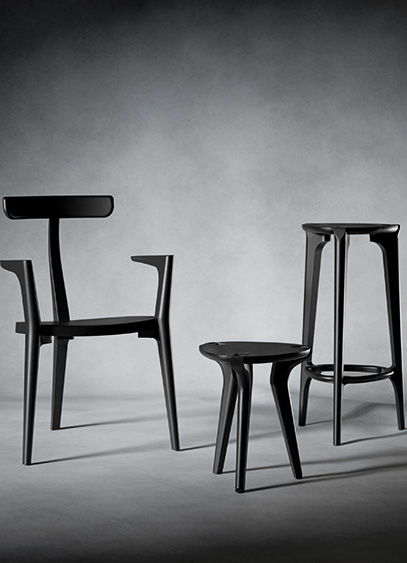
Plus globalement, cet appel à projets permettra également de mettre en avant les trois modèles de la marque : la chaise Beluga, le tabouret modulable Baiji et le nouveau Baiji Bar, proposé en deux hauteurs. « Avec L’Adresse, nous voulons voir notre gamme prendre vie dans un lieu exigeant, où chaque choix de conception compte », explique Arthur Gaudenz. Fabriquées en France à partir de plastique 100 % recyclé, ces assises sont personnalisables et garanties à vie.
Informations et inscription ici : ladresse-polimair.netlify.app
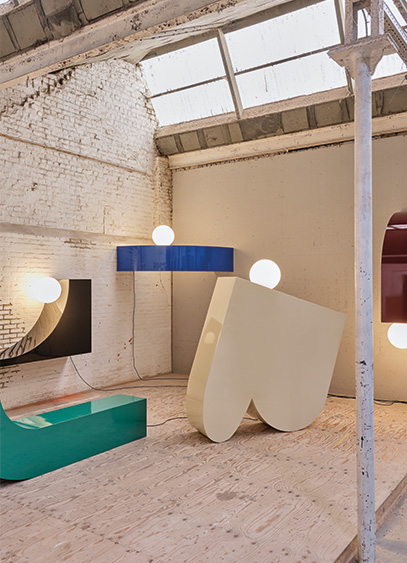
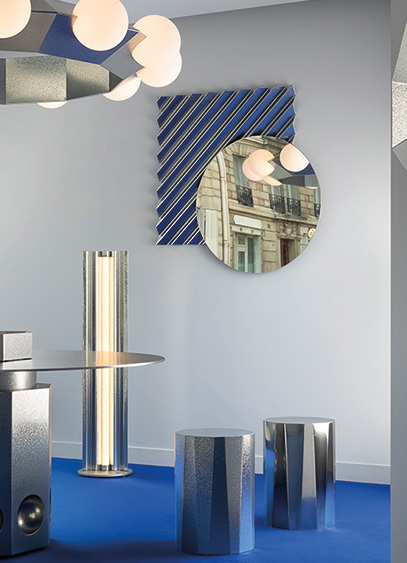
Jusqu’au 6 février 2027, Muller Van Severen investit la Tim Van Laere Gallery de Rome avec « Pianos », une exposition réunissant sept pièces uniques à mi-chemin entre mobilier et sculpture, où l'instrument de musique se réinvente à travers de nouveaux usages.
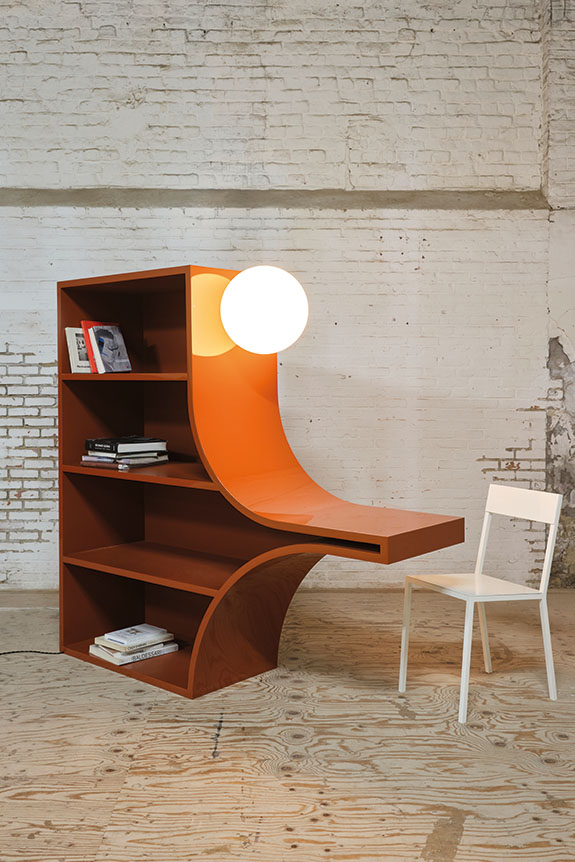
Et si le piano devenait un objet fonctionnel, accessible même à ceux qui ne savent pas en jouer ? C’est le point de départ de « Pianos », la nouvelle exposition du duo de designers Muller Van Severen, composé de Fien Muller et Hannes Van Severen. Fascinés par la présence architecturale du piano, ses lignes et ses surfaces laquées, les designers ont imaginé sept pièces uniques qui reprennent les codes esthétiques de l'instrument, tout en le détournant de sa fonction première. Déconstruites et recomposées, les silhouettes se transforment ainsi en tables, bancs, armoires ou sculptures murales, conservant une identité familière malgré leur nouvelle fonction.
Du son à la lumière
Avec « Pianos », le duo belge poursuit son exploration des frontières entre art et design, en jouant sur les volumes, les matières et les usages. Le titre de l'exposition fait également référence au terme italien piano, qui désigne un plan ou un niveau, en écho aux différentes surfaces horizontales qui composent ces petites architectures.
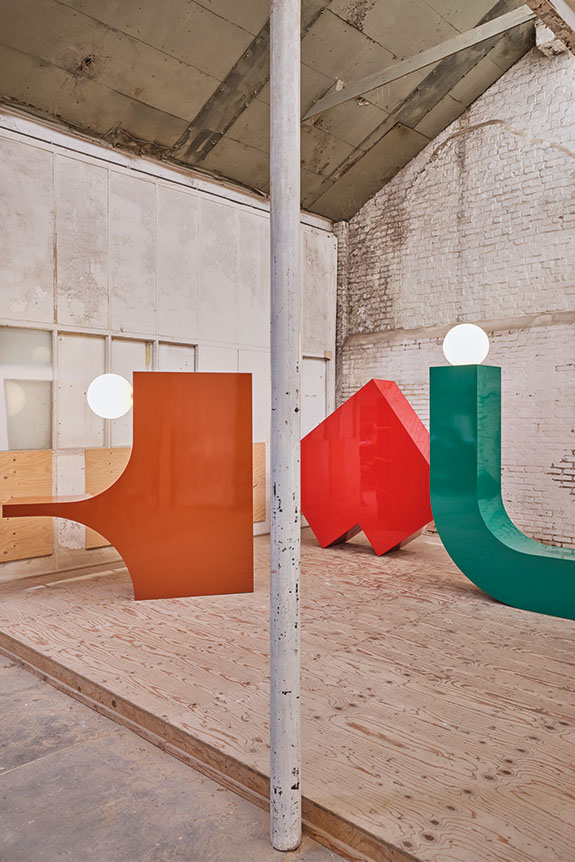
Autre particularité : six des sept pièces sont surmontées d'une sphère lumineuse en verre opalin, remplaçant symboliquement le son par la lumière. Une transformation qui confère aux créations une dimension presque onirique, évoquant notamment l'univers surréaliste de René Magritte. Entre surfaces brillantes, jeux de lumière et silhouettes sculpturales, l'ensemble compose une atmosphère feutrée, inspirée des clubs de jazz, où le piano, désormais silencieux, conserve toute sa présence.
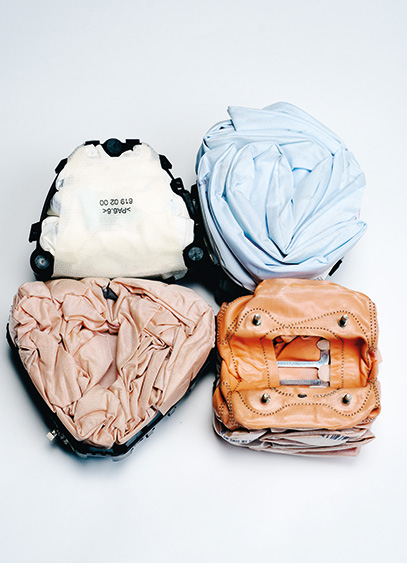
With Third Line, the French group GPA, specializing in automotive recycling, is launching a new design prize aimed at exploring the creative potential of materials sourced from end-of-life vehicles. For this inaugural edition, artists and designers are invited to imagine new uses for an unexpected material: the airbag. The call for entries is open until January 31, 2027.
What happens to automotive materials when they can no longer be recycled? This is the question the GPA group, a family-owned business based in the Drôme region specializing in automotive recycling, aims to answer with the launch of Third Line. Conceived as a biennial event, this new prize intends to foster a dialogue between contemporary creation and industrial expertise by inviting artists and designers to rethink the uses of materials that are currently underutilized. Each year, GPA processes more than 45,000 vehicles and manages to recycle and recover an average of 99.7% of their mass. However, certain materials, such as foams, leathers, and airbags, remain difficult to recycle. It is precisely these materials that Third Line seeks to view through a new lens, turning design into a true field of experimentation.
The airbag as a creative material
For this first edition, the focus is on the airbag, a technical polyamide textile known for its lightness and mechanical strength, but which currently lacks any suitable recycling stream. Prize applicants are invited to explore its properties to imagine a piece of contemporary, functional furniture intended for corporate spaces.
A prize bridging research and production
Open to artists and designers, the Third Line prize includes a €10,000 award and offers support that goes beyond mere financial reward. The winner, to be announced in the spring of 2027, will be hosted at GPA starting in September 2027 for a research and production residency. They will be able to develop their project in collaboration with the company's teams, as well as local artisans and technical partners, through to completion. Ultimately, the goal of each edition will be to explore a different material, gradually building a collection born from this encounter between creation and industry.
More information and registration here: https://www.groupe-gpa.fr/third-line-prix-du-design/

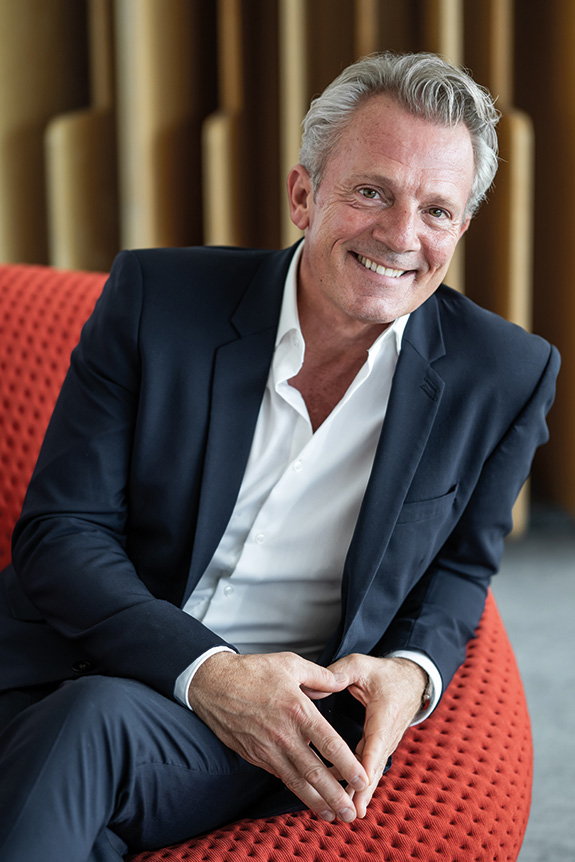
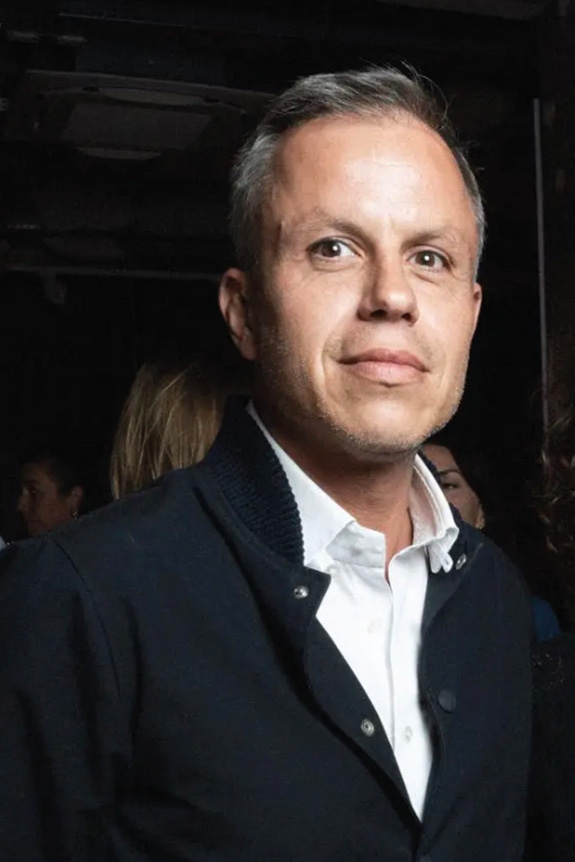
For the launch of the first edition of the Trophées du Meuble, Dantès Presse—publisher of Le Courrier du Meuble, Cuisines & Bains magazine, and Concept Bains—has partnered with Intramuros magazine and Maison&Objet. This collaboration will include a major awards ceremony held at the trade show on January 14, 2027. Frédéric Marty, General Manager of Dantès Presse and Editor-in-Chief of Intramuros, and Vincent Lhoste, General Manager of Safi, discuss the ins and outs of this new event.
In 2026, Dantès Presse and Intramuros are launching the first edition of the Trophées du Meuble. What does this event entail, and what is the motivation behind this initiative?
Frédéric Marty: The positioning of our various magazines—Le Courrier du Meuble, the historic B2B publication for the furniture industry; Cuisines & Bains magazine and Concept Bains, which are leaders in the kitchen and bathroom sector; and Intramuros, the reference for design—gives us a comprehensive view of the furniture market. We realized that while these different fields, all centered on home furnishings and interior architecture, have their own competitions and awards, they lack connections and bridges between them. The main idea behind the Trophées du Meuble is to fill a gap in the market by creating a cross-disciplinary competition that rewards the excellence and expertise of all these companies—industrial or artisanal—without which designers' creations could never come to life.
How have market players responded, and where do we stand with the schedule as of early November?
Frédéric Marty: We received a very positive response right away, which encouraged us to see this project through. Today, there is a lot of talk about collectible design, limited editions, and exclusive creations, but not enough about industrial design or the expertise of manufacturers and artisans—which is remarkable in France and Europe and forms the foundation for the quality and large-scale distribution of our products. We must pay tribute to and support all these companies that invest, innovate, and take risks. To fulfill this role, the Trophées du Meuble are divided into 11 categories—such as living room, outdoor furniture, eco-furniture, contract, etc.—with three awards in each (First Prize, Jury’s Special Prize, and Public Prize, totaling 33 awards). These will be decided by an independent jury composed of experts from each sector to eliminate any risk of bias or insularity. Regarding the schedule, entries are open until December 15, 2026, which will allow the juries to deliberate before the end of the year, leading up to the awards ceremony on January 14, 2027, at Maison&Objet.
Maison&Objet is a major event in our sector that needs no introduction, but the concept has evolved significantly in recent editions. Could you give us an overview of its main features?
Vincent Lhoste: Today, Maison&Objet is much more than just a trade show. It is an ecosystem that supports professionals throughout the year through our physical meetings, our digital platform MOM, and the events that bring design to life in Paris: Paris Design Week in September and In the City in January. Our ambition remains the same: to create meaningful connections between brands, specifiers, distributors, and buyers, and to provide them with the means to launch new projects. Our two Parisian events have complementary identities. In September, Maison&Objet Pulse focuses on movement, innovation, and new ways of living and creating. It is a time for exploration, open to trends and possible futures. In January, Maison&Objet Premier asserts a more premium dimension, with a particular focus on excellence, craftsmanship, and exceptional signatures. This edition also broadens the perspective from the object to the space and new uses, particularly in high-end decoration and the Contract sector.
The partnership between Maison&Objet and the furniture industry has a long history. What is the profile of the furniture brands that exhibit at the show, and why is this event valuable to them?
Vincent Lhoste: The show brings together a diverse range of profiles: established houses as well as newer brands, publishers, manufacturers, and designers. They share the same high standards for design, quality, and differentiation, with offerings ranging from furniture to interior design solutions and projects for the hospitality or Contract sectors. For these brands, Maison&Objet is a place for visibility and commercial development. They can present their collections, meet international buyers, distributors, and specifiers, and also test their proposals against market trends. The show creates the conditions for exchanges that can lead to concrete projects, listings, and orders.
The first Trophées du Meuble awards ceremony will take place next January at Maison&Objet Premier, which runs from January 14 to 18. Why did you choose this event?
Frédéric Marty: From the moment we launched our competition, Maison&Objet expressed its desire to be our partner, and our teams met to work together on developing the best possible project. Maison&Objet is indeed the ideal partner because of its cross-disciplinary view of the market: the show covers almost all sectors of the home, hosting numerous furniture profiles for both residential and contract use, which are covered by our various magazines. Our publications and the show are complementary: the winners of the Trophées du Meuble, as well as all participants, will benefit from editorial coverage in our columns, but also from the resonance of Maison&Objet and all the media coverage of the event by French and international print and web publications. Our goal is to give the widest possible audience to the creativity and expertise of the players in our markets.
Why is Maison&Objet Premier, which will hold its first edition in January, the right venue to host the Trophées du Meuble?
Vincent Lhoste: Maison&Objet Premier is a particularly fitting setting to host these Trophées because it highlights the excellence, innovation, and expertise that drive the industry forward. Furniture has always held an important place in the history of our show, and the new Maison&Objet Premier concept, held in January, offers furniture brands a prime platform for expression. The Trophées du Meuble, organized by Le Courrier du Meuble with Intramuros, Cuisines & Bains Magazine, and Concept Bain, recognize companies, innovations, and expertise in the worlds of furnishing, design, and Contract. Their presence at Maison&Objet Premier gives visibility to those who are advancing these sectors. It also reflects our desire to foster dialogue between the different trades of interior design and to celebrate the initiatives that contribute to their transformation.
Information and registration:https://lestropheesdumeuble.fr/
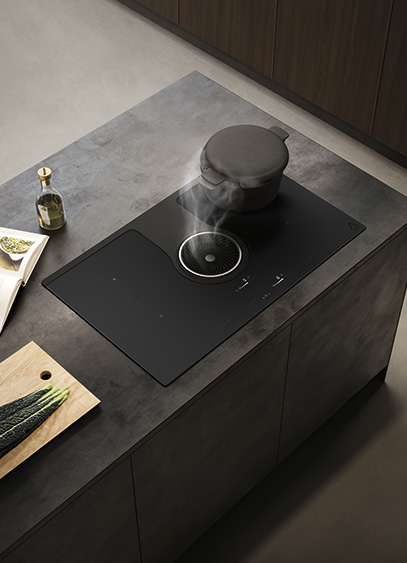
With its Matte Black and Raw finishes, Elica explores the aesthetic and technical possibilities of matte black in the kitchen. From hoods and cooktops to ovens and lighting, the Italian brand is developing a shared design language where style, innovation, and functionality meet.
Long favored for its elegance and understated appeal, matte black has established itself as a definitive finish in the world of kitchen design. Elica embraces this trend through two complementary offerings: Matte Black and Raw. Designed as a cohesive aesthetic thread, these finishes adorn various product types—from hoods and ovens to the Luna lamp—allowing for visual continuity across appliances. This approach reflects the evolution of the kitchen, now viewed as a true living space where technical equipment plays an integral role in interior design.
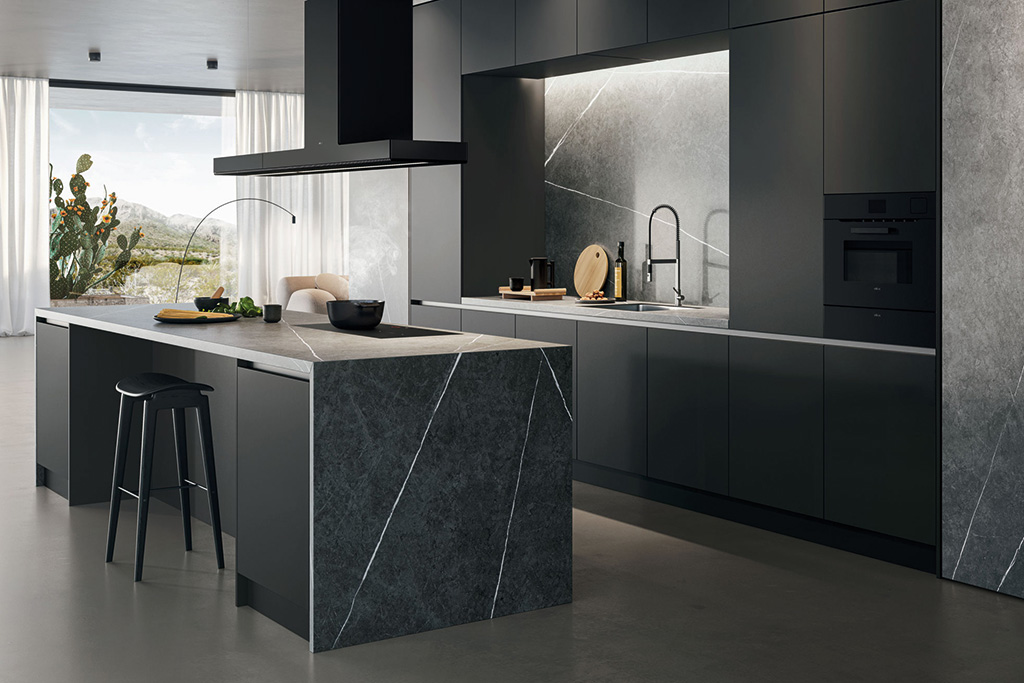
Raw: material meets utility
Beyond its aesthetic qualities, matte black has become a playground for innovation at Elica. With Raw, the brand has developed a matte black glass finish that combines material research with practicality. Applied notably to NikolaTesla aspiration hobs, induction cooktops, and the Lhov cooking system, this finish stands out for its textured look and technical properties. Designed to withstand the rigors of daily use, the sophisticated Raw finish makes cleaning and maintenance significantly easier: its surface is resistant to scratches from pots and utensils, as well as fingerprints. The Matte Black surface also offers effortless daily cleaning.
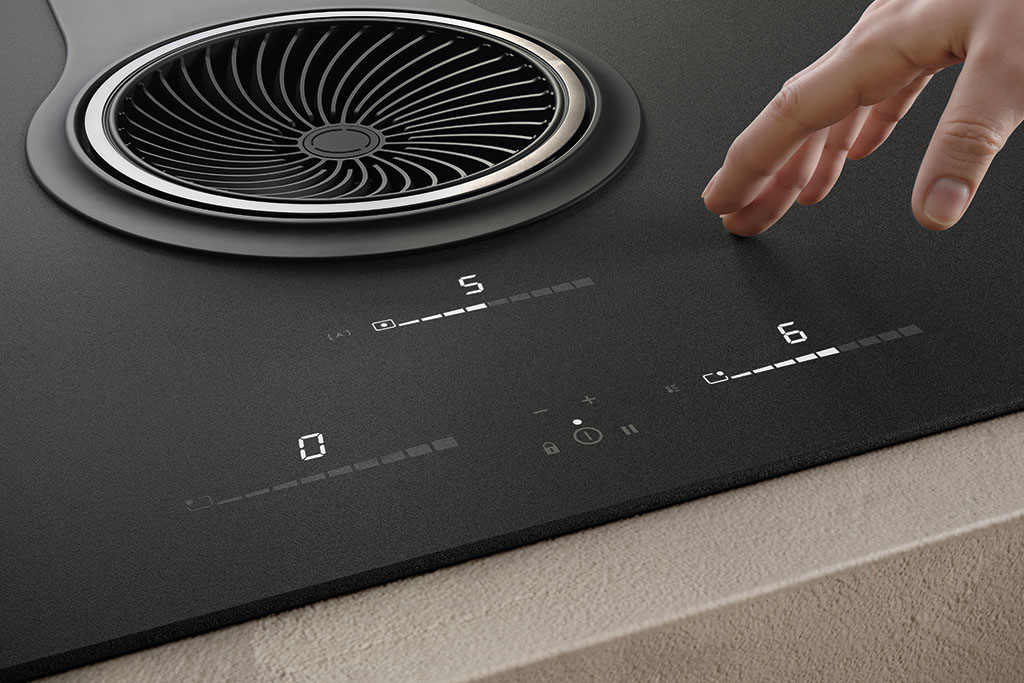
Through Matte Black and Raw, Elica moves beyond the simple question of color to treat finish as a fundamental element of kitchen design. It is a way of rethinking appliances, where the material no longer just covers the object, but actively contributes to its function and identity.
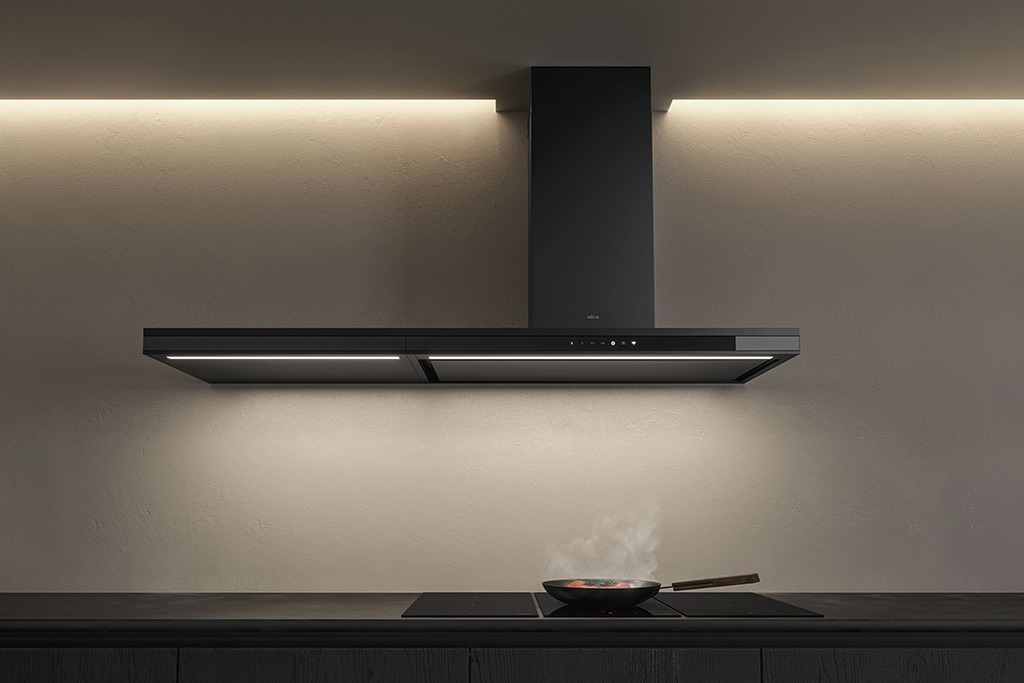
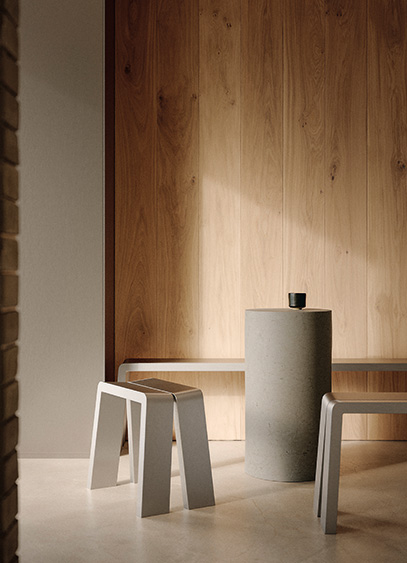
Specializing in the design and manufacture of stainless steel products for over 30 years, the Basque brand Didheya is opening a new chapter in its history with Urban Furniture. This new line of furniture, developed in collaboration with Iratzoki Studio, consists of five collections designed for both public and private spaces.
Founded in 1994 in Irun, in the Spanish Basque Country, Didheya has built its expertise around working with stainless steel. Initially specializing in hardware and architectural accessories, the brand gradually diversified into the transport sector, notably developing equipment for trains, subways, and buses. Today, it aims to apply this industrial expertise to furniture through Urban Furniture, a line conceived in collaboration with Iratzoki Studio that marks a new stage in its development.
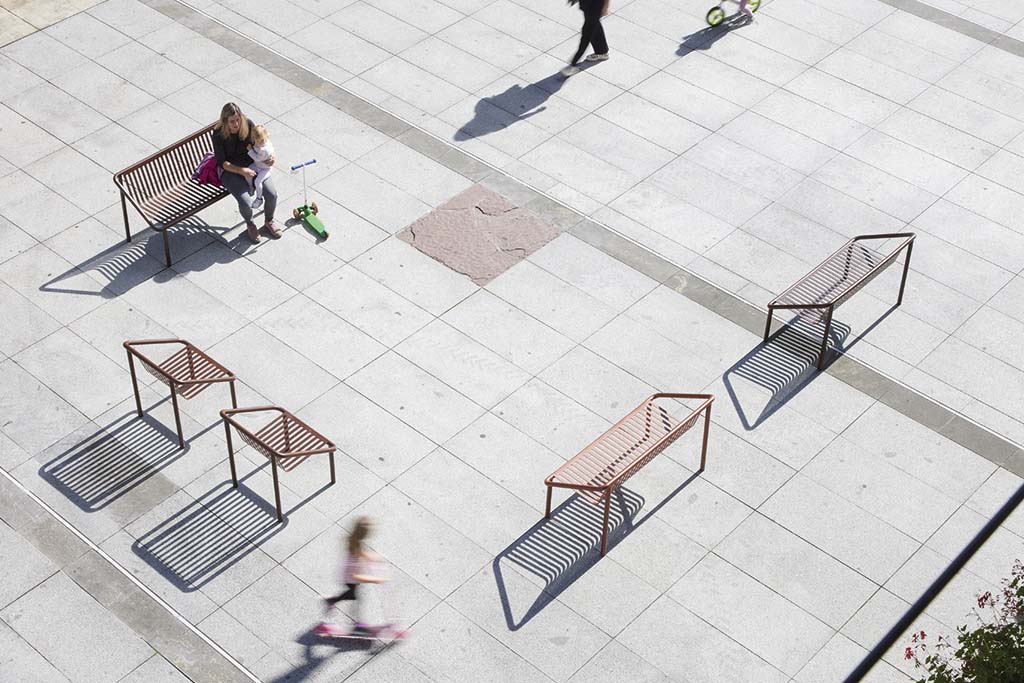
Five collections at the crossroads of design and industry
The result of a long-standing relationship between Didheya and Basque designer Jean-Louis Iratzoki, this collaboration is unveiled through five collections titled Hanka, Hodi, Aroa, Ingude, and Luze. Beyond the design of the pieces, the project is based on a shared reflection on materials, manufacturing processes, and usage, with the aim of offering furniture that is functional, durable, and capable of integrating into various environments.
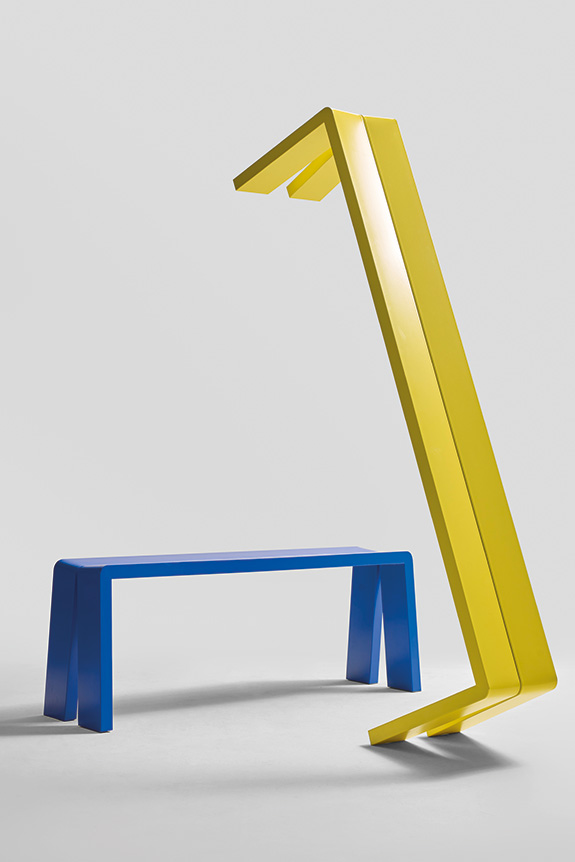
Stainless steel, Didheya's material of choice, serves as the common thread throughout the collections, sometimes combined with solid wood, concrete, or stone. "Our work focused on stainless steel, with an opening toward outdoor furniture intended for both public and private spaces. We sought to design durable, resistant, easy-to-maintain, and environmentally friendly products,"explains the designer.
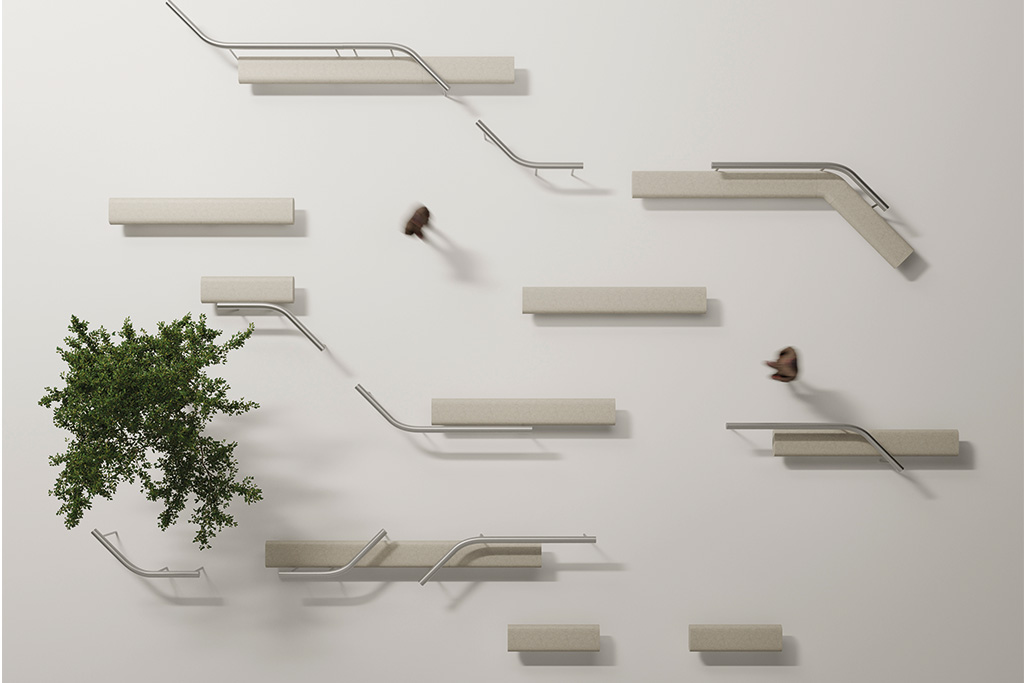
Initially conceived for outdoor use, these collections stand out for their versatility and the diversity of their finishes, allowing them to also find their place in interior spaces. From urban squares to university campuses and hotel common areas, they demonstrate a desire to go beyond the mere function of furniture to make it an integral part of the architecture of a space.
Captions: left, Ingude collection, design: Iratzoki Studio © Didheya / right: Hodi collection, design: Iratzoki Studio © Didheya
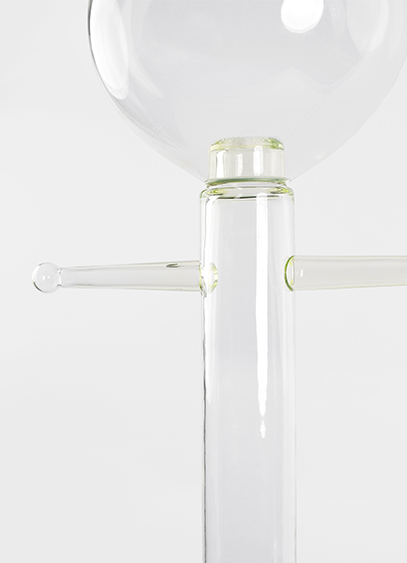
Through December 23, the London-based collective JAM is presenting Lampposts at Galerie kreo. The exhibition features a collection of glass street lamps created in collaboration with the Cirva in Marseille.
The result of a two-year collaboration between the London-based collective JAM and the Cirva in Marseille, Lampposts is now on display at Galerie kreo. Comprising five street lamps, the collection defies gravity. Distant cousins of their urban archetypes, these totemic compositions push the structural limits of glass, whether molded or blown. Standing between 2.2 and 3.5 meters tall, these colorful giants invite visitors to contemplate them in the dim light of 31 rue Dauphine in Paris. It is a striking assembly, on view until December 23, which we discussed with its creators: Joe Halligan, Dan Waterstone, and Adam Willis.
Can you tell us about your two years spent at Cirva and the research that led to the "Lampposts" project?
To be honest, we arrived at Cirva with a fairly open brief. As architects, we are interested in how things are made, how materials behave, and how we can push familiar processes into unknown territory. Cirva is an extraordinary place to explore these questions because it is designed for experimentation rather than the simple production of a predetermined object. So, the beginning was exploratory. We started by discovering the different qualities of glass and the processes available to us. There was blowing, molding, cutting, as well as assembly and material reuse. Several different projects emerged from this research—some more successful than others—but the street lamps gradually became the most ambitious project. What was particularly exciting was the relationship with the glassblowers. We developed a process of creating plaster molds that the glassblowers used to produce the individual glass cylinders that make up the lamps. It was a very direct collaboration between us and the artisans at Cirva. That is also what allowed the design to evolve throughout the manufacturing process, through trials and adjustments.
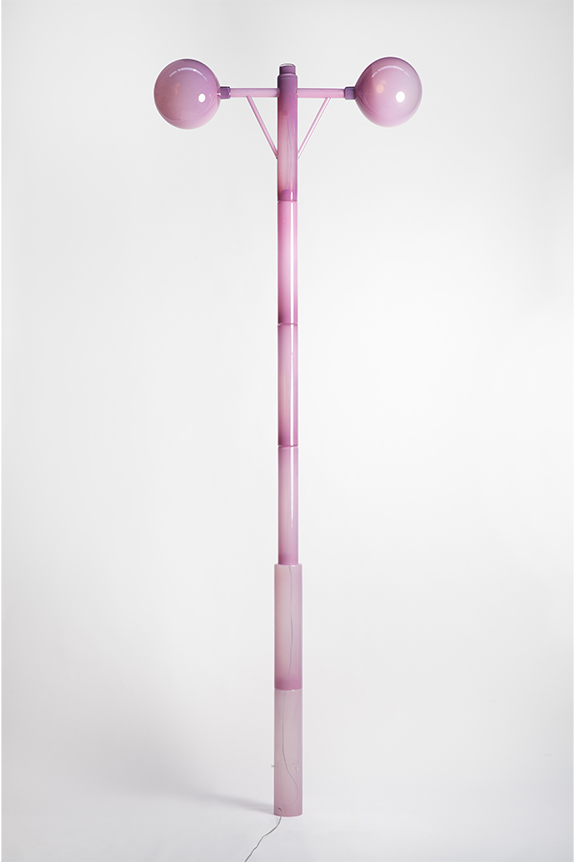
At what point did this very "linear" drawing style become the main characteristic of your colorful structures?
Street lamps often have a very simple graphic aesthetic: a pole, an arm, and a globe. For our part, we liked the idea of reducing these familiar objects to their most basic lines. Glass offered an interesting way to achieve this, as it has a physical presence while also being able to almost disappear. The transparent tubes thus outline the object without giving it the solidity one would normally expect. As for the color, that was another discovery. Where the glass overlaps, where its thickness increases, the color becomes more intense. So, what seems quite simple from a distance becomes much richer and more complex as you move around it. Furthermore, there is a tension between the precision of the overall design and the irregularity of the handmade glass. And we really appreciate that relationship.
The notion of scale and the "improbable" nature of creating such tall lighting fixtures were at the heart of your approach. Why is that?
We wanted to create something at a scale that didn't seem entirely reasonable for this material. Glass is generally associated with relatively small and delicate objects, whereas a street lamp is a piece of robust urban infrastructure. Bringing these two elements together results in a slightly absurd proposition. Scale also changes how one perceives an object. A classic table lamp fits into a room like a piece of furniture, but at two or three meters high, these street lamps take on an architectural dimension. They occupy space differently and become almost like characters with whom you share the room. There was also something exciting about attempting a project that we weren't entirely sure we could pull off. The technical difficulties became an integral part of the research, rather than just problems to be eliminated. Working at this scale pushed us, as well as the Cirva team, to develop new methods for manufacturing and assembling the pieces.
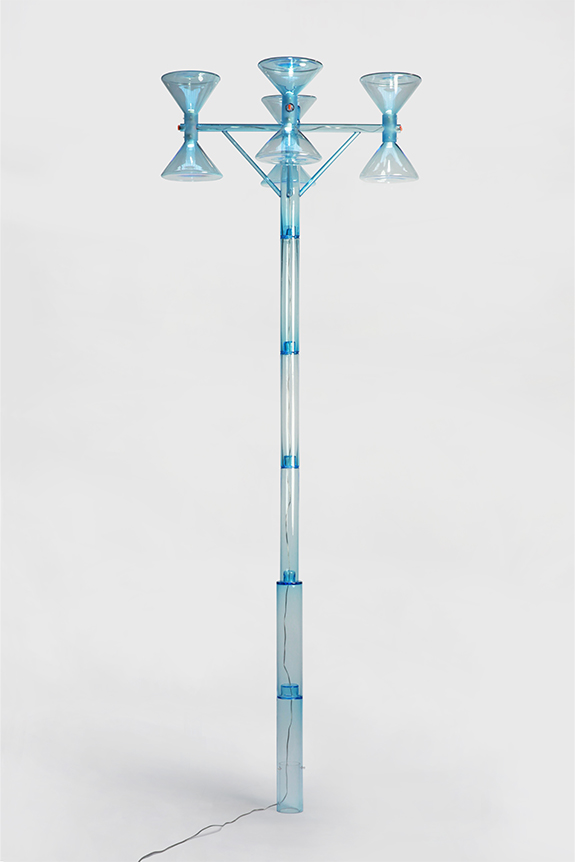
You speak of an "element of urban infrastructure." What is your relationship with the city and the elements that compose it?
We are interested in the ordinary elements that give a city its unique character and atmosphere. Street lamps, railings, bollards, benches, and other pieces of street furniture are often overlooked, but taken together, they contribute enormously to our perception of a place. This is particularly evident in cinema, where an element as simple as a street lamp can immediately define the location, the era, or the mood of a scene. Think of the iconic street lamps of Paris or New York. These objects are an integral part of our collective image of a city, almost as if they were characters in their own right.
You say you work with your glass street lamps "because it is the wrong material." What do you mean by that?
A street lamp is supposed to be solid, durable, economical, and resistant to the elements and everything else that might happen to it in a city. Glass is almost the exact opposite. It is fragile, difficult to work with, and in this specific case, its manufacture requires a considerable amount of labor. This contradiction was really the starting point. We liked the idea of taking something associated with solidity and permanence and reinventing it in a material that seems delicate and vulnerable. There is something interesting about using a material against its usual logic. It forces you to rethink the object, but also to explore qualities of the material that might otherwise go unnoticed.
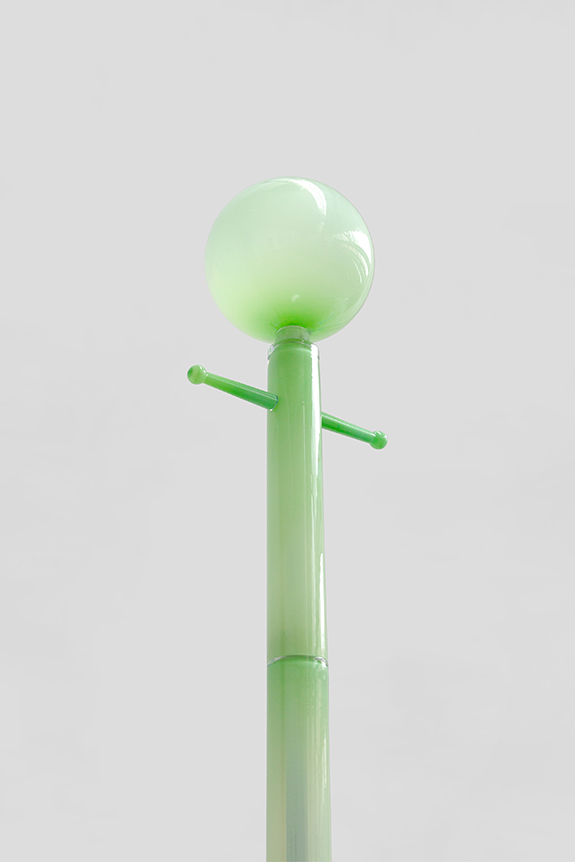
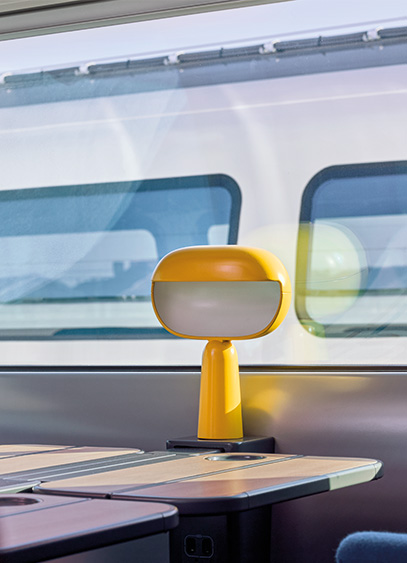
Unveiled on November 6, SNCF’s next-generation TGV features interior designs reimagined by the agency AREP and the Japanese studio Nendo. From furniture and lighting to the layout of the spaces, this new version aims to evolve the train travel experience.
After several years of development, the next-generation TGV, formerly known as TGV M, has just been unveiled. To design its new interior, SNCF Voyageurs partnered with AREP, an agency specializing in mobility projects, and the Japanese studio Nendo, founded by Oki Sato. Together, they worked on a new interior identity with the goal of offering spaces that are more comfortable and better suited to passengers' needs.
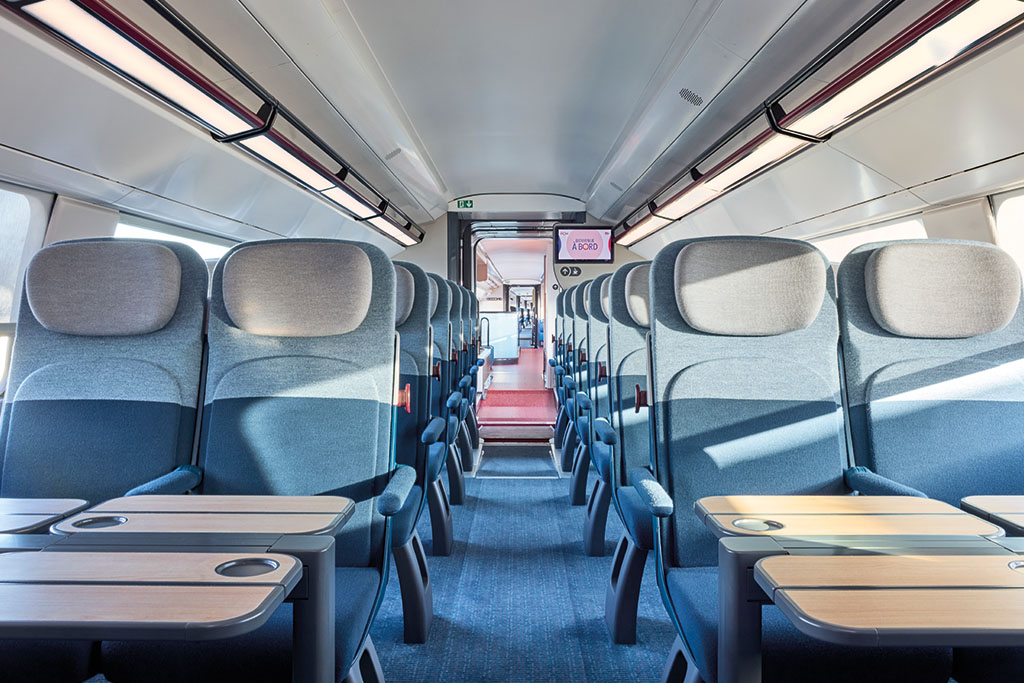
Spaces reimagined around user needs
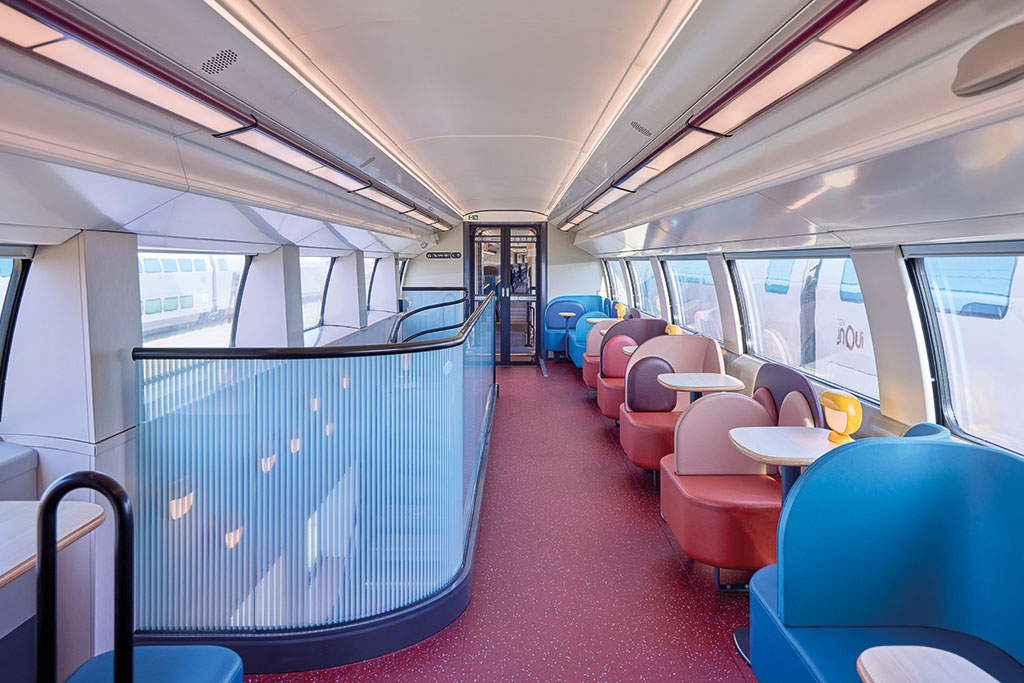
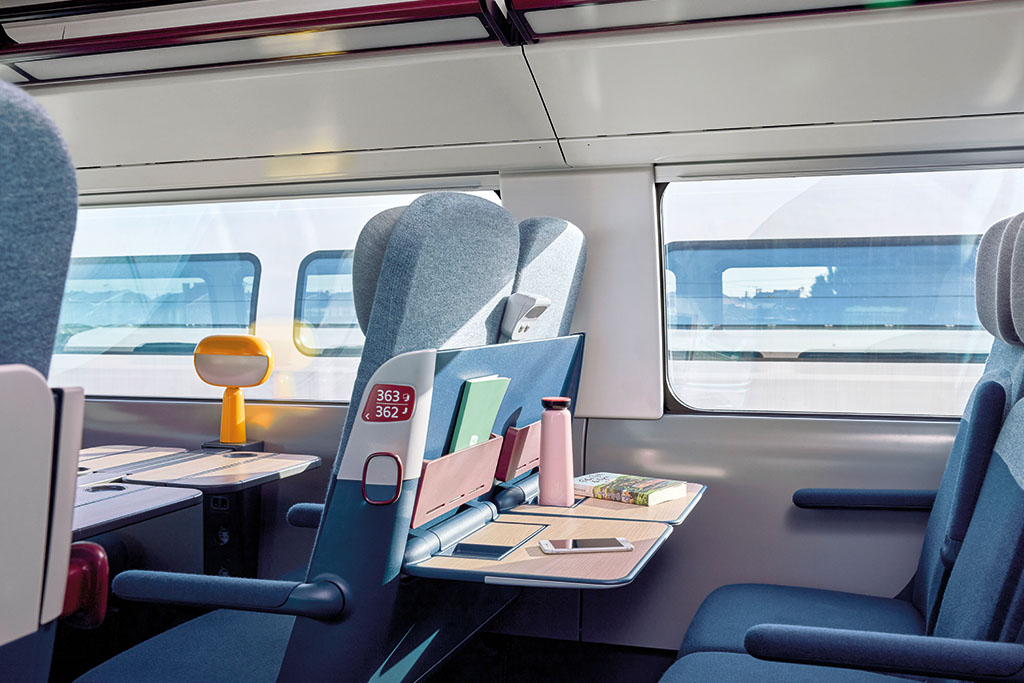
From furniture and circulation areas to materials, colors, and lighting, the entire train interior has been overhauled to create a warmer atmosphere while accounting for the constraints of rail travel. The new seats have been redesigned in terms of both shape and materials. Upholstered in a 3D-knitted fabric, they feature a structure designed to better support the back. In first class, the seats have been widened and include tables inspired by secretary desks, while in second class, the thinner backrests provide more legroom. Common areas have also evolved, with the addition of benches and relaxation zones, while the windows have been enlarged to bring more natural light into the carriages.
Light at the heart of the project
Among the other major innovations is a table lamp designed by AREP and Nendo, which revisits an object that has been present since the first generations of TGV. Recognizable by its rounded shape and yellow color, it was developed with the manufacturer Brossier Saderne, which also offers it to the public in its catalog in three colors: yellow, red, and blue. The general lighting has also been rethought, with an LED system that automatically adapts to the different stages of the journey. Brighter in the station, it dims by half during the trip to create a more subdued ambiance. This attention to light is part of the overall approach for this new version of the TGV, where every element contributes to the train's interior design.
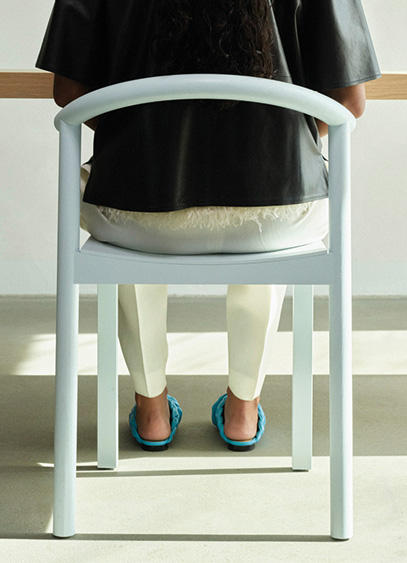
Founded by Ruben Hutschemaekers and designer Sebastian Schönheit, the German furniture brand ARWENN launched in September with an initial collection of over 40 products, ranging from furniture and lighting to accessories and small objects. The brand aims to make design accessible in every sense.
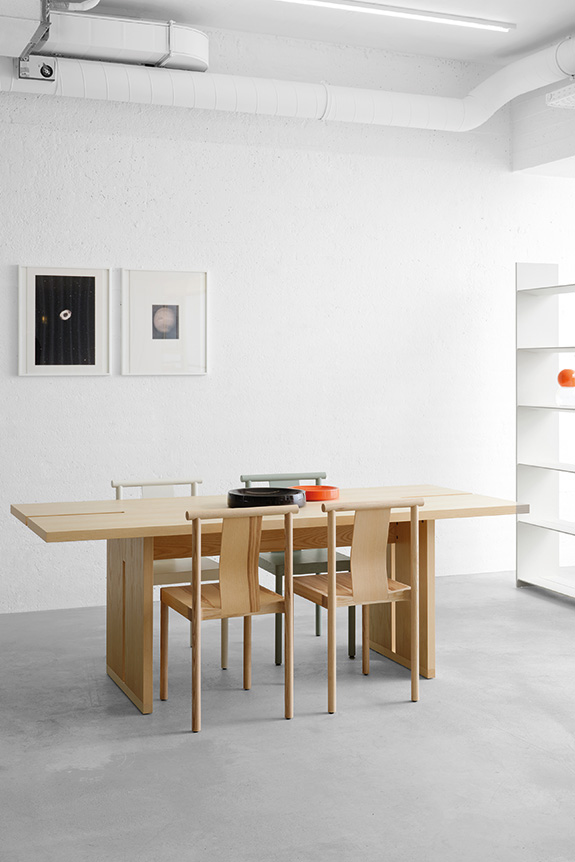
After several weeks of social media teasers, the Berlin-based furniture brand ARWENN finally debuted in early September with an initial collection featuring a wide variety of product types, some of which were created in collaboration with international designers. These include Maria Jeglińska-Adamczewska, Studio Œ, Jörg Schellmann, and Unknown, Untitled. ARWENN aims to offer simple yet thoughtful design without neglecting the customer experience, which is central to its approach. Founders Ruben Hutschemaekers and Sebastian Schönheit share their vision.
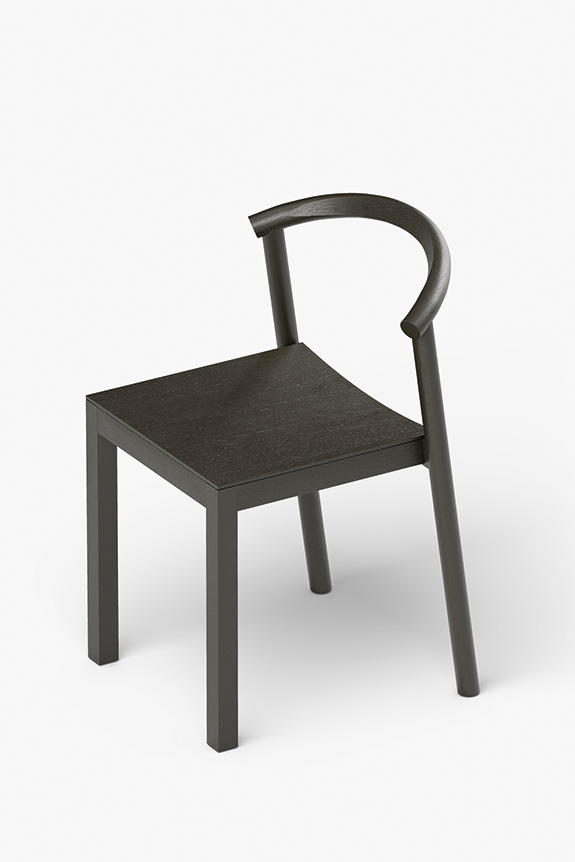
How did the idea for ARWENN come about?
ARWENN was born from a desire to meet the expectations of today's consumers. We believe that good design should combine a strong brand identity, affordable prices, uncompromising quality, and immediate availability. Too often, customers have to choose between these criteria. With ARWENN, we wanted to bring them all together.
You launched ARWENN in September, unveiling a collection of over 60 products. What were the main challenges in launching a new design brand? How long did it take to bring this project to life?
It took almost two years from the initial idea to where we are today. We started almost from scratch, as we had to build the brand identity, the supply chain, the business structure, and, of course, the collections themselves. Bringing all these elements together in such a short time was a real challenge. But having the right people around us from the start made a huge difference.
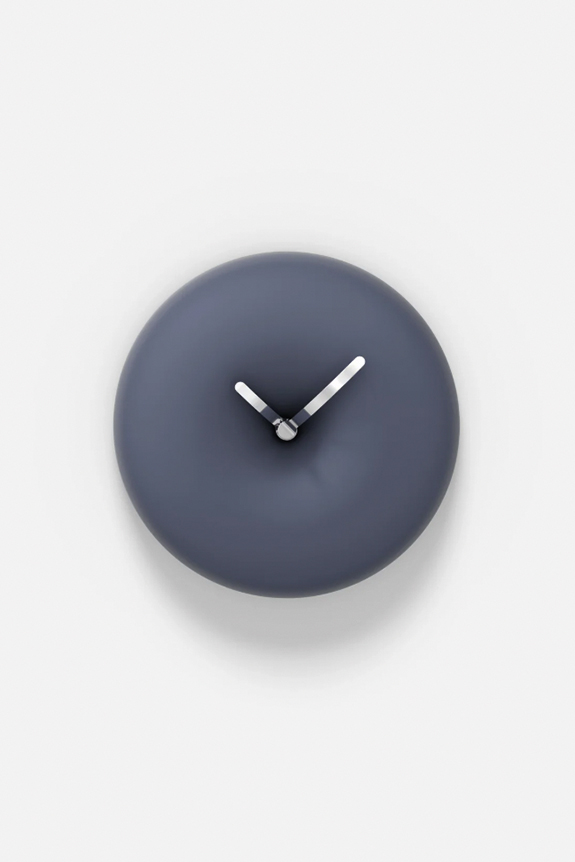
If you had to summarize the identity and DNA of ARWENN in a few words, what would you say? What vision of design do you want to convey through the brand?
"Simplicity with a twist." That probably sums up ARWENN best. This idea applies as much to our products as it does to the overall experience we want to offer our customers. We stand for simple, thoughtful design, but always with an unexpected element that gives it character. Ultimately, nothing too complicated, but never anything mundane.
For this first collection, you collaborated with several international designers. How did you select them?
From the start, we made a promise to ourselves: to work only with people we enjoy collaborating with. Obviously, talent and creativity are essential, but mindset, work ethic, and a shared desire to create something meaningful are just as important. Over the years, we have had the opportunity to meet many inspiring people whose work and personality we admire. It is particularly rewarding to see some of these relationships take shape within the ARWENN collections today. Each designer brings a different perspective, but we all share a common vision of what we want to develop.
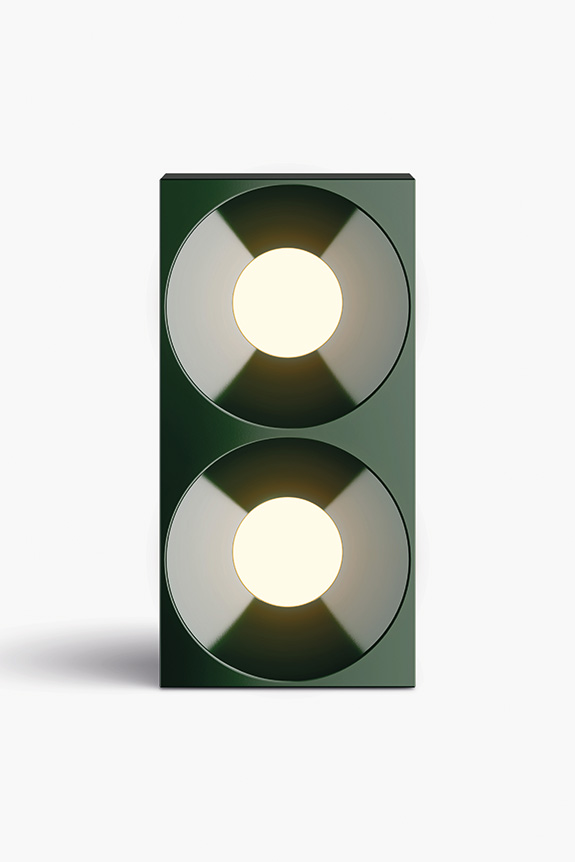
ARWENN also has its own in-house design team. How does it work and what role does it play in the development of the collections?
Design and product development are at the heart of what we love to do. It was therefore natural for us to keep this creative energy within the brand. We enjoy collaborating with external designers, but some projects also start with a very specific idea from the beginning. Sometimes, the challenge is less about exploring a new creative direction and more about finding the smartest and most efficient way to design a good product. In those cases, our internal team takes over, which allows us to approach design from different angles while staying close to the realities of production, pricing, and product availability.
How is the production of your pieces organized and where are they manufactured?
All of our furniture is manufactured in Europe, with industrial partners located in Denmark, Germany, and Slovakia. Our lighting collection is produced in China, where we found a particularly high level of technical expertise and industrial development. The production capabilities there are impressive, especially regarding innovative manufacturing processes. For all our collections, we place great importance on optimizing packaging and transport. "Flat-pack" solutions play an important role in this approach, as they allow us to reduce transport volumes and, ultimately, make the products more accessible.
You opened your first boutique in Berlin at the end of October. What does this new milestone represent for ARWENN?
Opening our first boutique in Berlin marks a significant milestone, as it brings the entire ARWENN universe together in one place. It is a space where the brand, our collections, and the customer experience truly come to life. We view physical retail locations as an essential component of our approach. It is not just about displaying products, but about creating an experience that differs from what consumers are typically accustomed to. Berlin is our starting point, and we are excited about the prospect of expanding this concept to other cities.
You advocate for making design more accessible, both in terms of price and product availability. How have you integrated this ambition into the development of your collections? And how do you manage to reconcile accessibility, quality, and craftsmanship?
This is probably our greatest challenge, but also one of the most important principles upon which ARWENN is built. Offering accessible prices, quality products, authentic materials, efficient inventory management, and a great customer experience is far from simple. It requires looking at every decision from multiple angles. For us, accessibility is not something added at the end of the design process: it must be integrated from the very beginning. Every product must be consistent on creative, technical, commercial, and logistical levels. This philosophy is reflected in every product in our first collection. There are certainly still areas where we can improve, but we have laid a solid foundation. And that is precisely what makes this process so interesting: constantly seeking solutions to make design more accessible without losing what makes it unique.
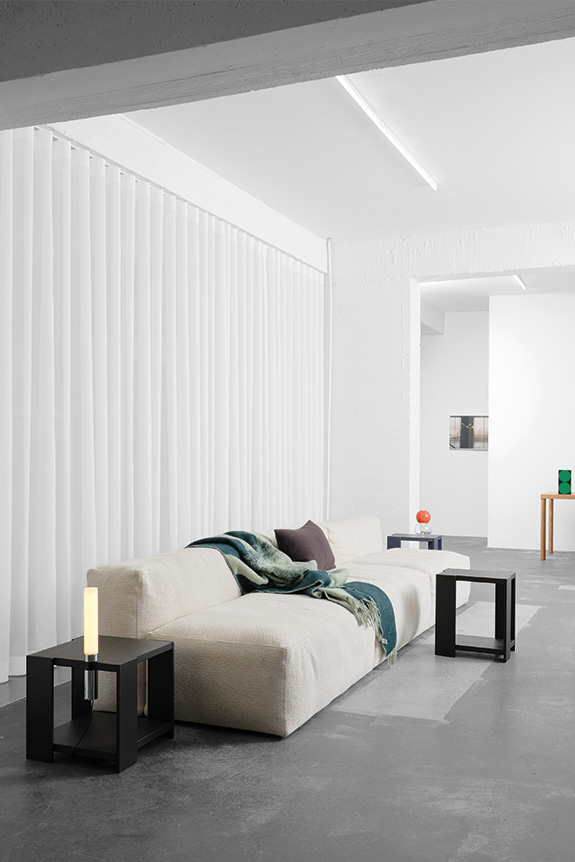
Bottom left: DADO shelf, design: Unknown Untitled © ARWENN
Bottom right: BASE sofa, design: ARWENN © ARWENN

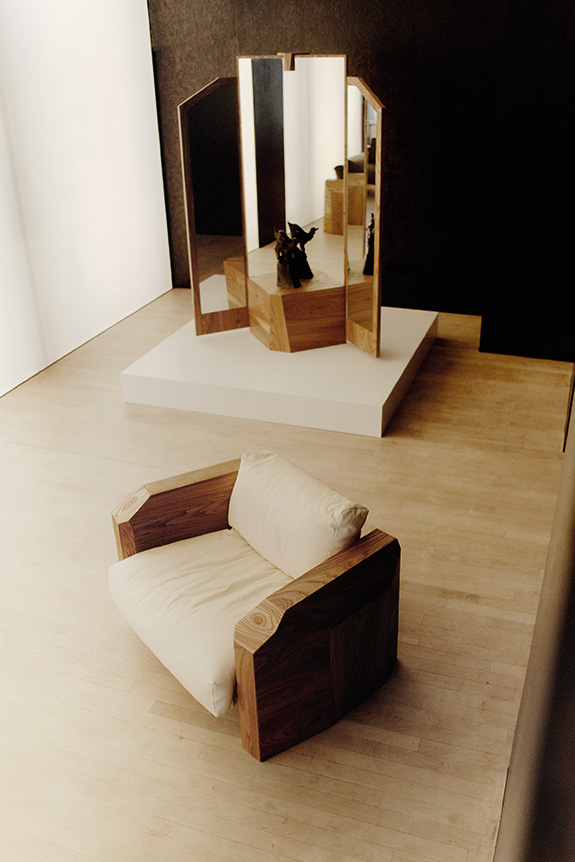
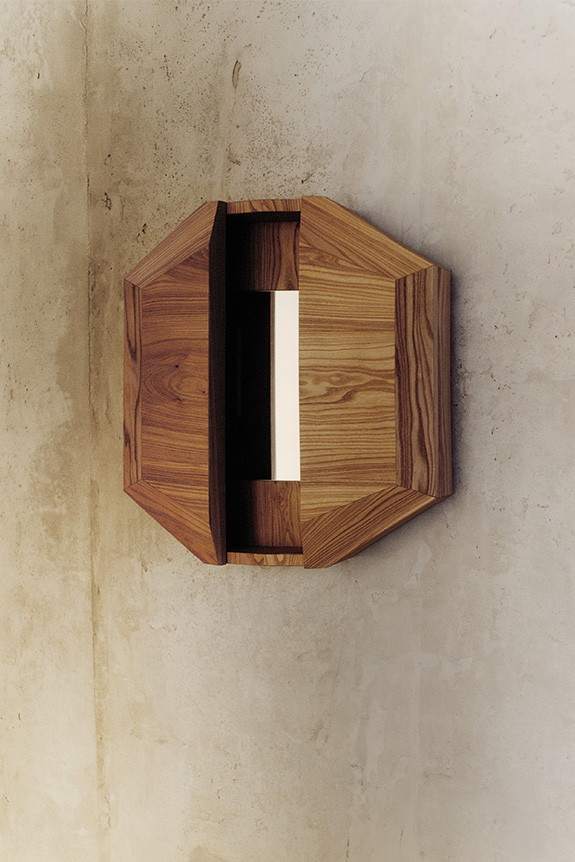
For La Chance, the duo Bernal & Semerciyan drew inspiration from the principle of the cut angle to conceive the Ether collection, consisting of four pieces—an armchair, a sofa, a wall mirror, and a floor mirror—all crafted from elm wood.
Founded by Camillo Bernal and Graziella Semerciyan, the Bernal & Semerciyan studio develops a design approach informed by architecture, art history, and artisanal craftsmanship. For their first collaboration with the publisher La Chance, the two creators imagined Ether, a collection based on the principle of the cut angle. Here, the geometric element is not limited to a simple aesthetic intention, but becomes the starting point for the construction of each piece. The collection is also inspired by the work of several 20th-century architects, such as Goethe, Frank Lloyd Wright, and Rudolf Steiner. "They had a principle of starting with an architectural element and carrying it throughout the interior. For our part, we wanted to start from anthroposophy, which is also based on an architectural element, while giving a prominent place to the material. We chose to work with elm, which has a very striking grain that is quite remarkable, and which is interesting in terms of patina and aging," explains Graziella Semerciyan.
Material as a construction element
The choice of elm is by no means trivial, as it was selected for its pronounced grain and natural color. The volumes are created from several assembled layers of wood, with the joints intentionally left visible to highlight the manufacturing techniques. "Camillo is an interior architect and has always had this attention to the architect's gestures. As for me, I have seen a lot of historical furniture and I always try to be precise about what we can bring to something that we already know, because we know that we aren't inventing anything." With Ether, La Chance continues its exploration of expressive furniture at the crossroads of functional object and sculpture, where craftsmanship and material become inseparable from the design.
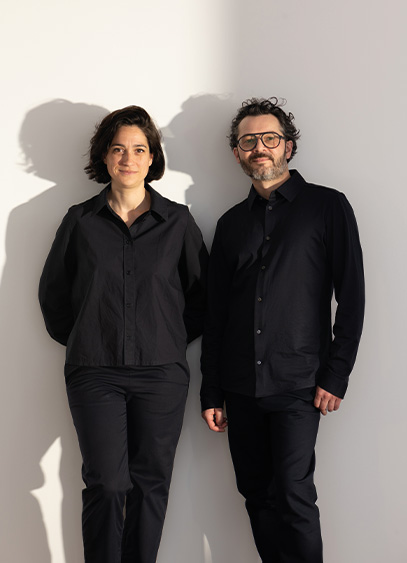
Since 2010, the BrichetZiegler studio has explored design as a constant field of experimentation. Working between Paris and the Haute-Savoie region, the duo has developed a free-spirited practice where drawing, self-production, and collaborations with manufacturers feed into one another.
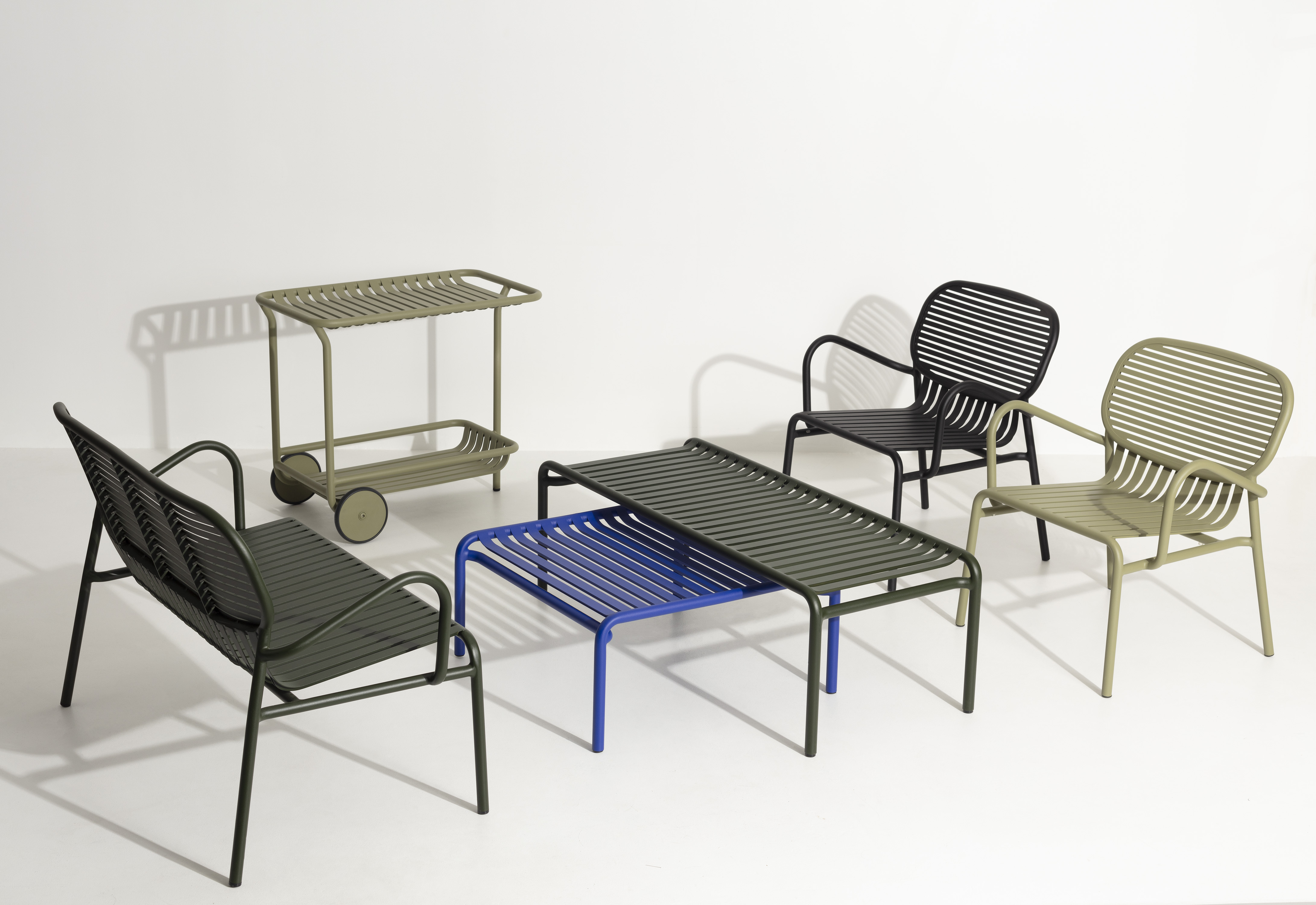
Pierre Brichet and Caroline Ziegler met in 2006 through the design collective Dito, where they worked on elaborate exhibition projects "with as many hands as there were people", alongside their agency work. They soon began meeting outside the collective: "Very quickly, we started getting together from time to time to draw. We had absolutely no idea where it would lead; there was no clear vision. It started simply, spontaneously." This spontaneity and complementary approach to ideas eventually convinced them to launch their own studio in 2010, following the development of their first flagship collection: the Week-end outdoor range, which was first produced by Oxyo in 2012 before being taken over by Petite Friture in 2017.
Creating with freedom
Beyond the purely design-focused aspect, the duo feels a deep need for creative freedom, fueled by the synergy between the two designers, who conceive all their projects together from the first sketch to the final product. "We love having that blank-page feeling at the start of a project, where we allow ourselves real freedom. We show each other what we’re doing, we discuss it, and that’s usually what breaks the deadlock. Often, we’re the ones who trigger that spark." A spark that can be born from a sketch, an image, or a simple sentence, but also through a model or a prototype. Because crafting and bringing objects to life isn't just the next step—it is an integral part of the process. This is why, in the heart of the Haute-Savoie, within a family workshop turned laboratory, the designers test, model, and prototype most of their pieces, alongside their work in their Parisian studio. It is a dual approach through which each project feeds the next and opens up a unique field of experimentation.
Between self-production and manufacturing
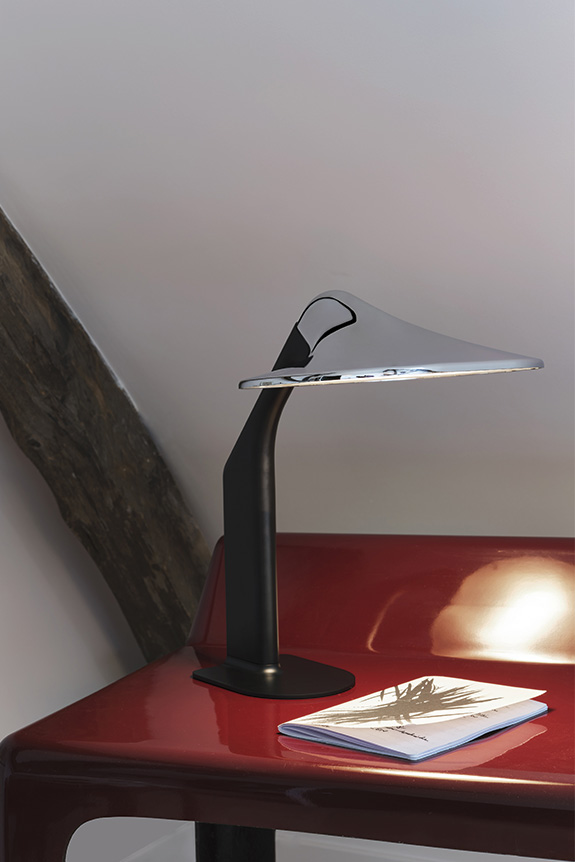
In 2015, they decided to take the process even further with the By Hands project, a collection of self-produced, limited-edition objects that allowed them to showcase the breadth of their expertise and sparked several collaborations. The Ombre Portée lamp was spotted by DCW Éditions and became Niwaki in 2023—the very same lamp installed on President Macron’s desk. The wooden Feuilles Volantes shelves were reinterpreted in ceramic by the manufacturer Moustache under the name Isola, while Pulpo took on the Fine Lame chair, which became the Cut chair. "Manufacturing in the workshop allows us to have the product quickly and without frustration. We can test the comfort, see what works, and identify weak points directly." Passionate about chairs, they presented a completely different project during Paris Design Week 2023: "The Wild Chairs," an exhibition of ten prototypes born from their experiments. The series was later installed at Le Labo during Milan Design Week in 2024, before being acquired by the CNAP.
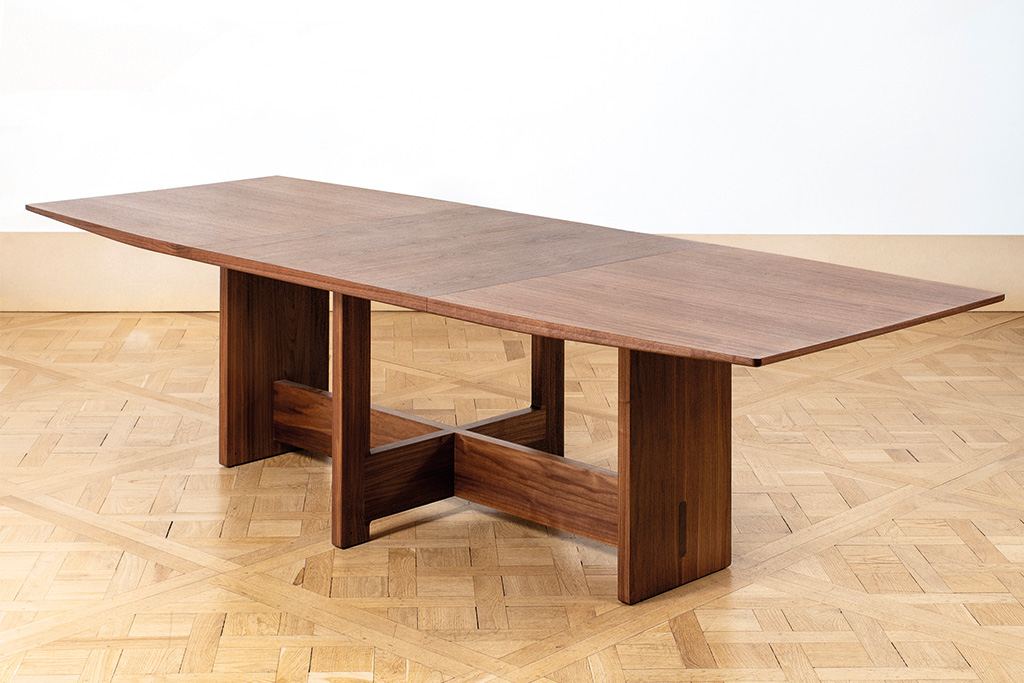
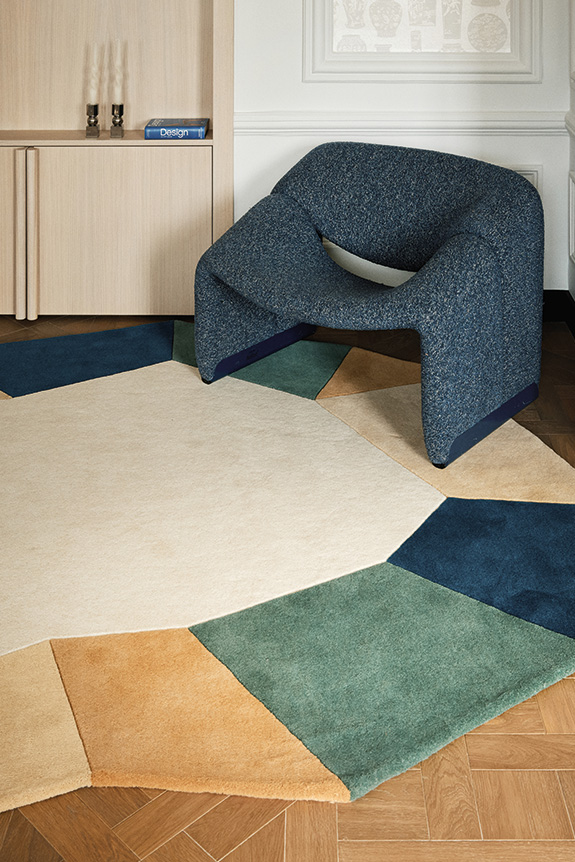
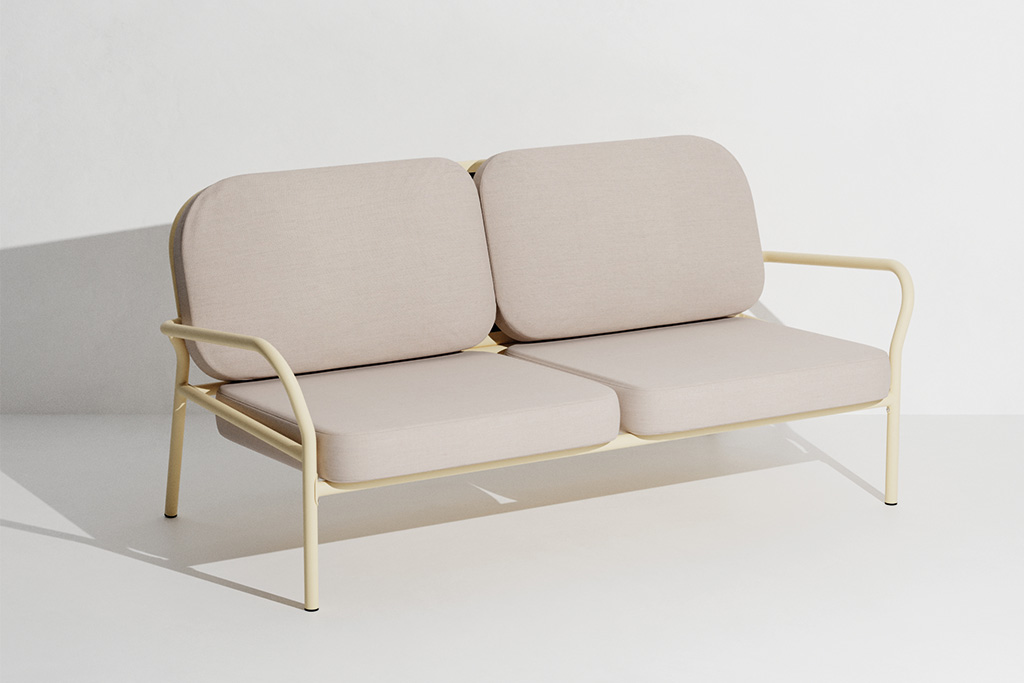
In terms of manufacturing, the duo has numerous collaborations to their name, notably with Habitat on the Torii table, Toulemonde Bochart with the Brindilles, Eventail, and Facette rugs, and Maison Drucker with the Valmy chair, to name but a few. Meanwhile, the studio continues its collaboration with Petite Friture on the Week-end range, with an outdoor sofa version scheduled for early 2027. At the end of 2025, they presented the solid wood Drift chair with Theoreme Editions, featuring raw lines and a gallery-piece aesthetic that remains entirely functional, while the table was unveiled this past March.
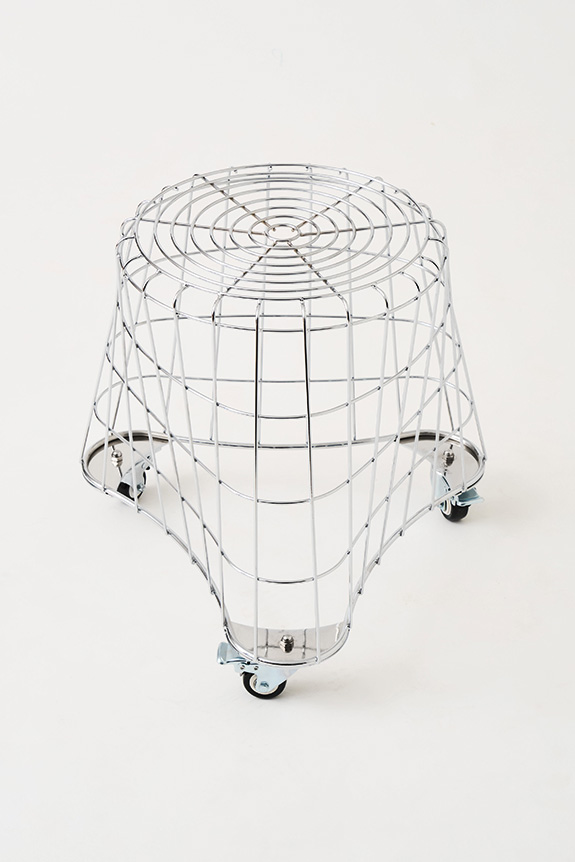
In early January 2026, at the Maison&Objet trade fair, they unveiled the all-terrain Grid rolling stool with 13Desserts, as well as the Cut chair, from the Industrial Art series, with Pulpo. As for upcoming collaborations, the duo has several projects in the works, including a sideboard for Kann Design expected to be revealed in January, and new lamps for DCW, scheduled for the spring.
Leaving a mark
"We have never sought to have a recognizable style from one product to the next. We prefer to design sculptural and expressive forms. We like to imagine objects that are different from what already exists, because they tell a different story." More than the pursuit of a formal identity, there is first and foremost a desire to create pieces that make an impact—"UFOs," as they like to call them—much like the Mezzadro stool by the Castiglioni brothers and the Zig Zag chair by Gerrit Thomas Rietveld, which they readily cite as references. "It takes a lot of patience and resilience, but, deep down, we are primarily looking to design objects that have a certain strength and can fit in anywhere, transcending trends to stand the test of time."



Subscriptions
2 year subscription
You save 65.20 euros by subscribing
1-year student subscription
You save 48.60 euros by subscribing


