


News
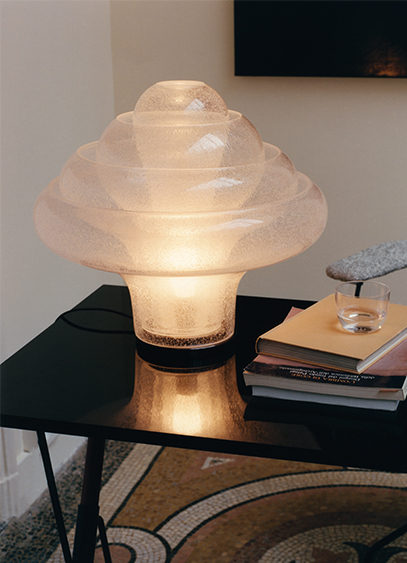
Disparu en mai dernier, le designer italien Carlo Nason laisse derrière lui une multitude de créations en verre. Parmi elles, la lampe Lotus dessinée en 1969 et rééditée par GUBI.
LT305. Un nom un peu barbare qui ne vous dit probablement rien. Pourtant, derrière cette référence se cache la Lotus Table Lamp. Surnommé ainsi par les collectionneurs en raison de sa forme, le modèle créé en 1969 est aujourd’hui réédité par GUBI. Un hommage à son designer, Carlo Nason, décédé en mai à l’âge de 91 ans. Né à Murano dans une famille d’artisans verrier, le créateur laisse derrière lui un vaste éventail d'objets parmi lesquels des vases, pour certains acquis par le Corning Museum of Glass de New-York dès 1959. Des typologies décoratives rapidement mises de côté au profit de l’éclairage dans lequel l'italien se lance en collaboration avec le spécialiste muranais AV Mazzega, dirigé par son ami de longue date Gianni Mazzega. Une association qui marque durablement sa carrière du designer ponctuée de succès parmi lesquels le modèle Lotus.
Fleur éternelle
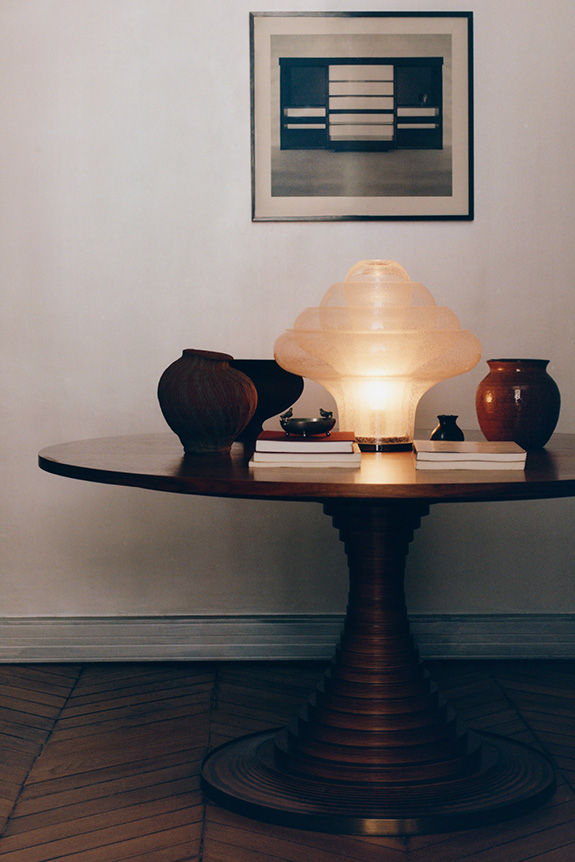
Inspiré par le modernisme nord-européen et les courbes futuristes du Space Age, Carlo Nason instille rapidement une dimension expérimentale à sa pratique du verre soufflé. De cette fusion est née la LT305, un modèle emblématique porté par un nouveau langage formel. Véritable architecture géométrique, le dessin combine quatre diffuseurs imbriqués les uns dans les autres. Assemblés autour d’une structure en acier - aujourd’hui chromée noir -, les globes jouent avec la lumière et la translucidité grâce à la technique du pulegoso. Mis au point dans les années 1920, ce procédé consiste à emprisonner de petites bulles d’air dans la matière. Une technique que Carlo Nason réexploite ici au profit d’une fleur évanescente.
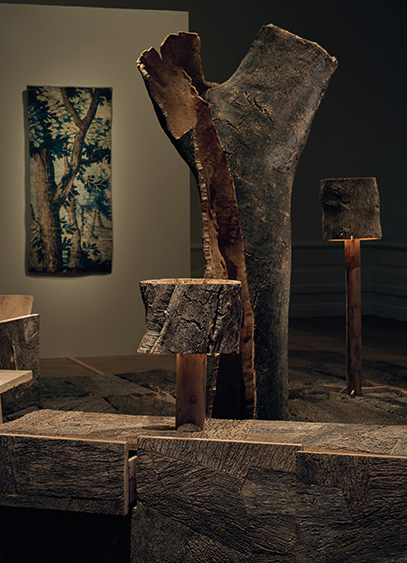
En partenariat avec le Mobilier national, le designer Noé Duchaufour-Lawrance expose “Made in Situ” jusqu’au 29 novembre dans la galerie des Gobelins à Paris. Une monographie qui retrace sept années d’exploration créative et autant de projets menés au Portugal.
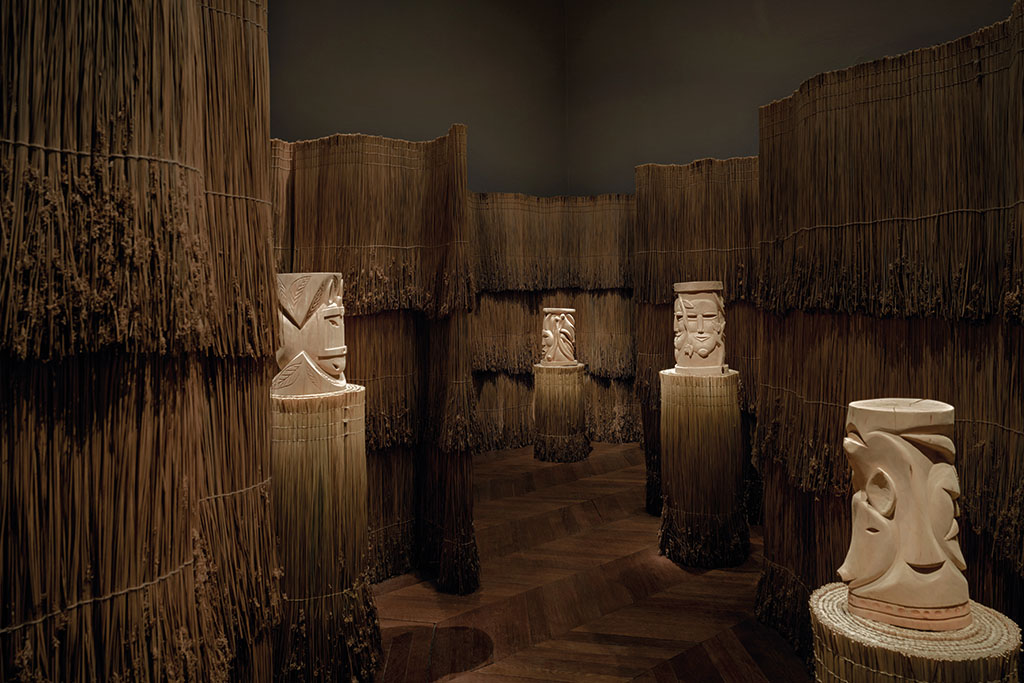
Sept projets en une seule exposition. C’est l’idée de "Made In Situ", une monographie présentée jusqu’au 29 novembre dans la Galerie des Gobelins à Paris. Parti au Portugal dans l’optique de retrouver un artisanat populaire et des savoir-faire locaux qu’il pensait perdu en France, Noé Duchaufour-Lawrance y est resté sept ans. Un déplacement sur le temps long motivé par une perte de sens et la volonté de réattribuer à la matière une valeur concrète et une origine palpable. La démarche, à l’origine inspirée par la gastronomie et la conscience du local, du lien au territoire, a donné lieu au « design situé, de design de situation ». Un concept matérialisé par sept collections d’objets et de mobiliers dans lesquelles se rencontrent techniques ancestrales et lignes organiques sophistiquées. De quoi ériger la fabrication vernaculaire en nouveau territoire d’exploration plastique.
Voyage en terre nouvelle
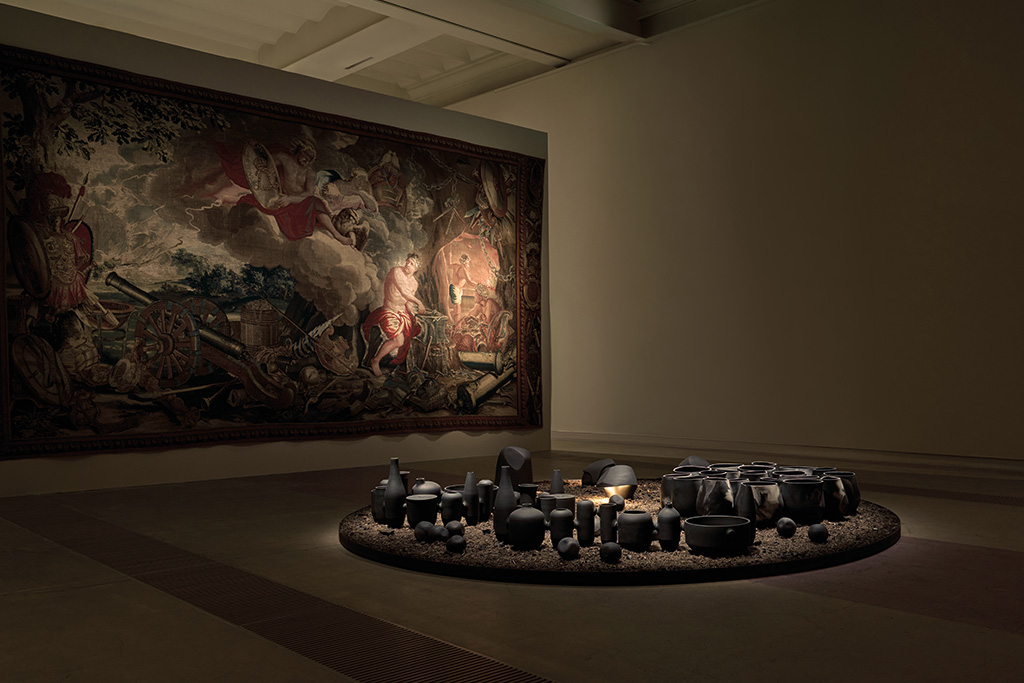
Imaginée comme un bref voyage au sein des traditions de ce pays de la péninsule ibérique, l’exposition se déploie sous forme de saynètes. Chaque projet est présenté dans une mise en scène où le produit fini côtoie la matière brute. Une manière de convoquer subtilement le geste artisanal, expliqué par de discrets cartels où croquis et photographies racontent, à qui veut l’entendre, les secrets de fabrication. Qu’il s’agisse de la soenga, une cuisson artisanale de la céramique à même le sol, ou du travail du liège, un bois résilient face aux incendies qui attaquent régulièrement le couvert portugais, Made in Situ est également le récit d’un pays.
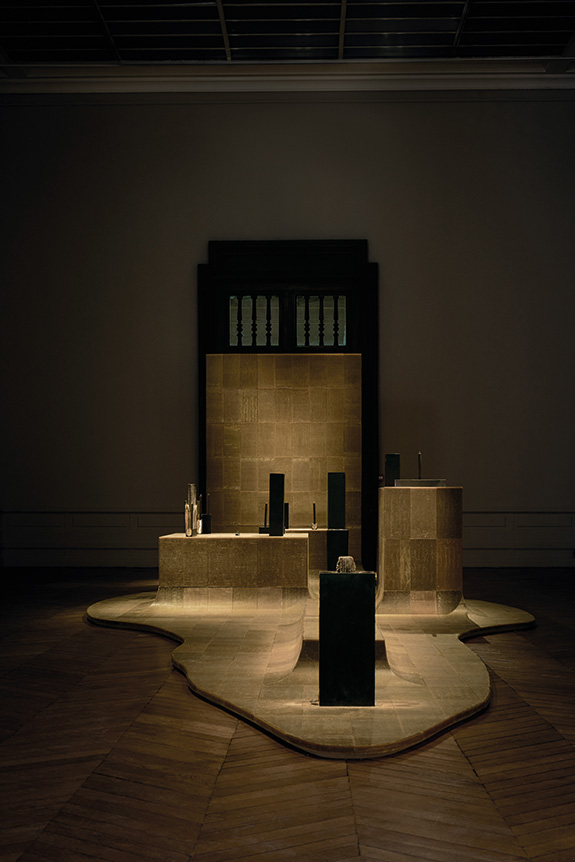
Fort de ses traditions, et devenu au fil des décennies un terrain de fabrication plébiscité par le secteur du design, le Portugal se voit tout au long du parcours, mais se ressent aussi grâce à la scénographie de Clémence Farrell. Spécialiste des parcours immersifs, elle livre une déambulation portée par des senteurs et les créations sonores de Luis Clara Gomes et Vany Fox. Une belle rétrospective dans laquelle l’objet se fait conteur et transmetteur d’artisanats locaux.
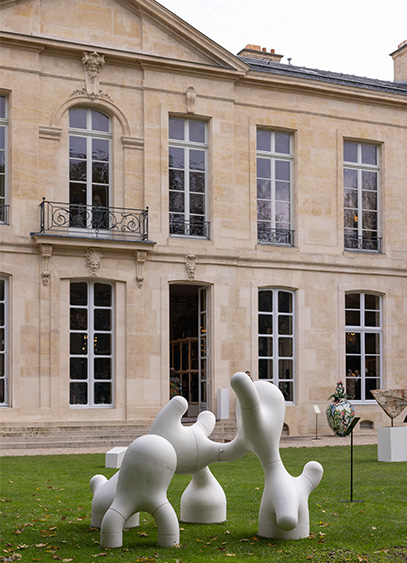
Pour sa cinquième édition, Design Miami Paris a invité trente galeries à prendre possession de l’hôtel de Maisons. L’occasion de regrouper, en cette semaine de l’art, les arts décoratifs français, le design moderniste et collectible. Une rencontre entre plusieurs univers dont nous a parlé Jen Roberts, directrice générale de l’événement.
Le mois d’octobre est devenu, depuis quelques années, le rendez-vous annuel des collectionneurs et des amateurs d’art. En parallèle d’Art Basel, Design Miami Paris s’ouvre ce mardi 20 octobre pour cinq jours. Implantée au sein de l’hôtel de Maisons, derrière les hauts murs du 51 rue de l’Université, cette cinquième édition s’articule autour de la thématique « Design for presence ». Une présence incarnée par différents courants artistiques. Ici, les lignes modernistes des bijoux dessinés par Pierre Charreau et le mobilier de Jean Prouvé se confrontent aux formes généreuses et aux techniques ornementales présentées par un corpus de galeries internationales. Une approche contrastée de la création sur laquelle nous éclaire Jen Roberts, directrice générale de Design Miami depuis 2015.
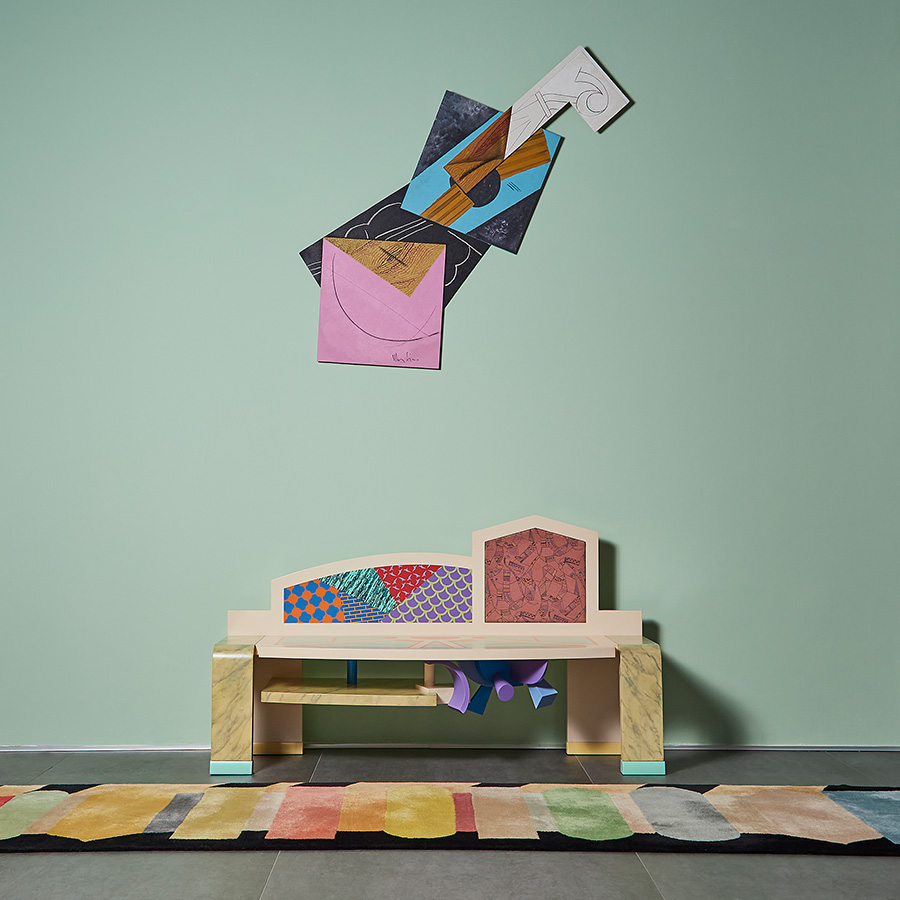
Cette année, le design historique français et les arts décoratifs seront à l'honneur. Pourquoi ce choix ?
C’est à Paris qu’une grande partie de l’histoire du design et des arts décoratifs français s’est écrite, et c’est là qu’elle reste aujourd’hui encore très vivante. La ville abrite une concentration exceptionnelle de galeries spécialisées, d’ateliers et de collectionneurs qui connaissent parfaitement ces périodes. Ici, les œuvres historiques sont comprises et activement collectionnées. Il est donc logique que notre édition parisienne leur accorde plus de place que celle de Miami.
Cette dynamique se ressent tout au long du salon. La Galerie Maxime Flatry rassemble un ensemble rare d’œuvres modernistes françaises des années 1930, articulé autour d’un ensemble majeur de Robert Mallet-Stevens et présenté aux côtés d’œuvres de Pierre Chareau, Eileen Gray et Pierre Legrain. Laffanour | Galerie Downtown présente des œuvres de Le Corbusier, Pierre Jeanneret et Charlotte Perriand. Mitterrand expose des œuvres de Claude et François-Xavier Lalanne, notamment une paire exceptionnelle de « Singes Attentifs » et une « Pomme de Londres » datant de 2007. Et dans les jardins, dans le cadre de « Design at Large », les visiteurs pourront découvrir « Le Très Grand Ours » de François-Xavier Lalanne, un ours en bronze de trois mètres de haut.
Comment la sélection de Design Miami Paris — qui se concentre principalement sur les pièces de collection — s’inscrira-t-elle dans ce thème historique ?
Il existe un lien naturel entre le thème historique et l’orientation du salon vers le design de collection. Le salon réunit des œuvres historiques et contemporaines, permettant ainsi aux visiteurs de suivre l’évolution des idées de design au fil du temps. Chaque pièce est examinée par des experts indépendants. Les œuvres historiques capturent un moment précis, qu’il soit marqué par une avancée technique, un mouvement artistique ou un bouleversement social ou politique. Elles offrent aux designers d’aujourd’hui une histoire sur laquelle s’appuyer, et permettent aux collectionneurs de replacer les œuvres contemporaines dans leur contexte. Souvent, les moments les plus intéressants se produisent là où les deux se rencontrent. La Galerie kreo associe des luminaires français et italiens du XXe siècle à des éditions limitées signées par des designers tels que Jasper Morrison et Virgil Abloh. Cette juxtaposition rend visible la relation entre les époques. Le Salon 94 Design de New York et la SIDE Gallery de Barcelone apportent également au salon des perspectives venues d’au-delà de la France.
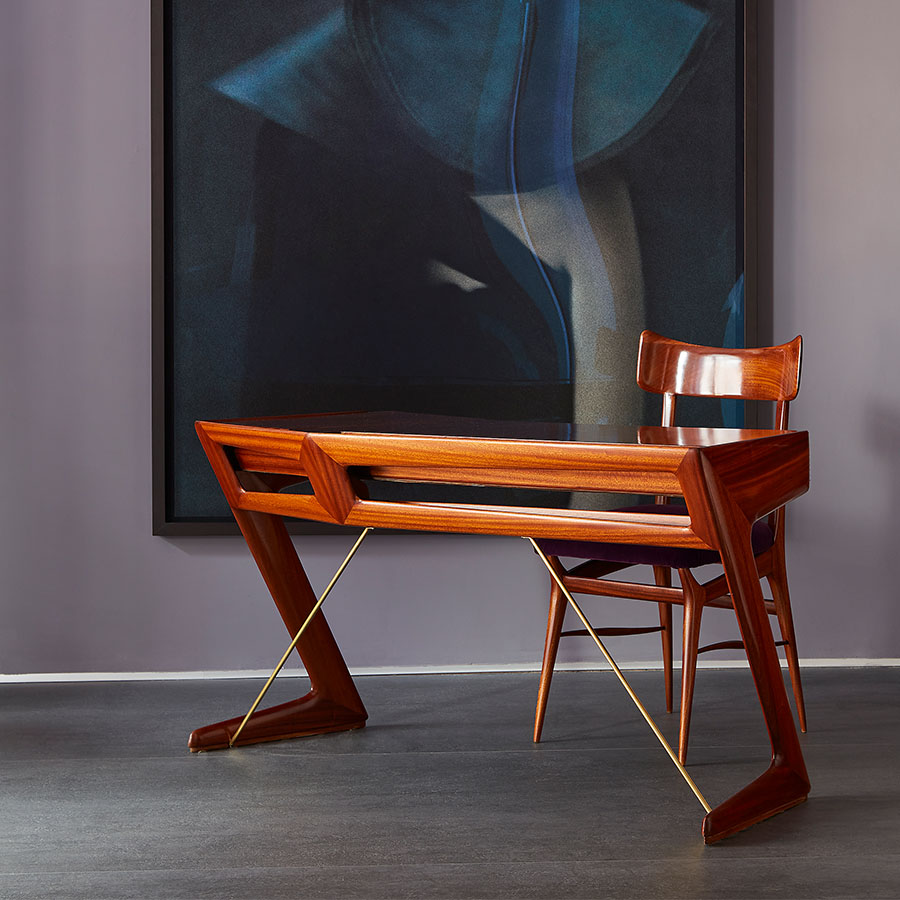
Faut-il s’attendre à des liens visuels entre ces univers, ou à un anachronisme délibéré ?
Les liens visuels comme les contrastes délibérés font partie du plaisir de ce salon. En quelques pas, on peut passer d’un meuble des années 1930 à une pièce achevée ce printemps. Parfois, le lien est explicite. À la Galerie SCÈNE OUVERTE, l’exposition « Around a Desk : A Contemporary Vision of Decorative Arts » rassemble le bureau et le totem en argent allemand du Studio Lugo, ainsi que le canapé du Studio KRJST, conçu autour d’une tapisserie unique en son genre. Ces deux œuvres dialoguent clairement avec la tradition française des arts décoratifs. Ailleurs, c’est le contraste qui fait toute la force de l’exposition. Dans les jardins, la maison préfabriquée de Jean Prouvé, datant de 1944, se dresse près de la balançoire en bronze d’Irene Cattaneo, réalisée cette année.
Les nouveaux exposants élargissent également le débat sur le plan géographique. La galerie A/P Room, originaire de Dubaï, présente des œuvres brésiliennes du milieu du siècle dernier signées Joaquim Tenreiro, Abraham Palatnik et Branco e Preto, aux côtés d’Originform, une nouvelle série de luminaires sculpturaux de Rogan Gregory, ainsi que des objets de l’architecte et céramiste libanais Zein Daouk. Les liens s’établissent davantage par la forme et la matière que par la date, et les pièces historiques et contemporaines occupent une place équivalente.
Que l’accent soit mis sur le design moderne ou contemporain, le cadre architectural de l’hôtel de Maisons influence-t-il, d’une manière ou d’une autre, votre sélection artistique ?
Tout à fait. C’est notre quatrième édition à l’hôtel de Maisons, et le cadre a son importance. Le lieu est une demeure, pas un hall d’exposition. Les meubles et les objets s’y découvrent donc à une échelle domestique, dans des pièces baignées de lumière naturelle et chargées d’histoire. De nombreuses galeries adaptent leurs présentations en fonction de la maison. La Galleria Rossella Colombari, par exemple, évoque l’atmosphère d’une maison italienne typique.
À l’extérieur, la cour et les jardins nous offrent l’espace nécessaire pour « Design at Large », notre programme d’œuvres à grande échelle qui ne pourraient pas être exposées à l’intérieur. Cyryl Zakrzewski a conçu son banc en contreplaqué de bouleau pour la Craftica Gallery spécialement pour cet environnement extérieur, et Abel Macias, ancien étudiant de la SCAD, a créé un revêtement de sol capitonné pour l’escalier d’origine du XVIIIe siècle de la maison.
Parmi les nouveaux talents présentés dans ce numéro, pourriez-vous en citer un ou deux qui, selon vous, pourraient se démarquer dans les années à venir ?
En tant qu’organisateurs, ce n’est pas à nous de désigner des favoris, mais j’invite les visiteurs à découvrir la Galerie SCÈNE OUVERTE, où Adélie Ducasse expose sa première lampe en verre de Murano, ainsi que le Studio Lugo, qui présente un bureau et une bibliothèque en argent allemand en série limitée à huit exemplaires, fruit d’une première collaboration avec la galerie. Tous deux appartiennent à une génération de designers très attachés aux matériaux et à la tradition des arts décoratifs.
Je recommanderais également aux visiteurs de découvrir les quatre designers sélectionnés pour « Designers of Tomorrow », notre programme en partenariat avec Apple. Le thème de cette année, « Design for Presence », s’interroge sur la manière dont le design peut nous aider à ralentir le rythme et à créer des liens. Leurs créations seront dévoilées lors du salon.
Ci-dessous, visuels de la galerie A/P Room : bibliothèque Arte Viva et lampadaire Upholstered

Pour sa 27e édition, le Prix Liliane Bettencourt pour l’Intelligence de la Main® a distingué quatre profils qui pérennisent et renouvellent les métiers d’art à travers un design innovant et exigeant.
Si le beau passe par l’objet et son design, il passe avant tout par le geste. C’est cette alliance entre maîtrise technique et créativité que célèbre depuis 27 ans le Prix Liliane Bettencourt pour l’Intelligence de la Main. Depuis 1999, 139 artisans d’art ont été mis à l’honneur, témoignant de la diversité des disciplines et de la vitalité des savoir-faire portés par des créatrices et créateurs contemporains. Pour cette édition, la Fondation Bettencourt Schueller, sous la présidence de Françoise Bettencourt Meyers, a récompensé trois lauréats, chacun recevant une dotation de 50 000 euros. Sélectionnés par le jury présidé par Laurence des Cars, ces acteurs incarnent, à travers des projets et des approches du design variés, un même esprit de recherche où transparaissent le souci de l'environnement et la diversité de nos territoires.
Un prix, trois catégories
La catégorie Talents d’exception, qui distingue la maîtrise technique d’un artisan d’art et sa capacité à faire évoluer son savoir-faire, a été décernée à Sébastien Desplat pour son ouvrage Dans les bois, dessiné en collaboration avec Fanette Mellier. Le graveur et imprimeur en taille-douce y réinterprète le moku-hanga, une technique japonaise traditionnelle d’impression sur bois.

La catégorie Dialogue, consacrée à la rencontre entre artisan et designer, a récompensé le menuisier en sièges Louis Monier et le designer Edgar Jayet. Leur chaise réinvente un savoir-faire historique en lui apportant une interprétation contemporaine. Elle témoigne d’une démarche créative fondée sur l’innovation constructive et l’adaptation aux nouveaux usages.

Enfin, la catégorie Parcours, qui salue l’engagement d’un acteur en faveur du développement et du rayonnement des métiers d’art, a été attribuée au Réseau Excellence EPV (Entreprises du Patrimoine Vivant). Portée par Tristan de Witte, cette initiative fédère des entreprises françaises détentrices de savoir-faire d’exception et développe les réseaux régionaux, renforçant ainsi les échanges économiques et la visibilité de ces acteurs.

Les candidatures pour l’édition 2027 sont d’ores et déjà ouvertes dans les catégories Talents d’exception et Dialogue. Les inscriptions, à effectuer sur le site de la Fondation Bettencourt Schueller, seront clôturées le 10 mars. Le jury sera, quant à lui, dévoilé au printemps. Alors, pas de temps à perdre !
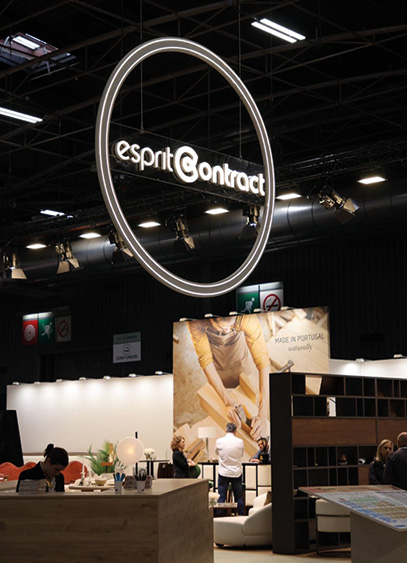
Du 21 au 24 novembre, EspritContract revient à Paris, Porte de Versailles, en parallèle du salon EspritMeuble. Pour cette quatrième édition, le rendez-vous dédié aux professionnels de l'aménagement et du contract fait évoluer son format, avec une programmation mêlant rencontres, expositions et conférences, pour mettre en lumière les savoir-faire et les enjeux du secteur.
Pensé comme un lieu d'échanges et de rencontres entre les différents acteurs du marché, le salon EspritContract poursuit son développement avec une édition qui entend renforcer les synergies entre marques, architectes, prescripteurs et porteurs de projets. Installé au cœur du salon EspritMeuble, l'espace réunira une sélection de marques françaises et internationales aux expertises complémentaires, allant du mobilier aux luminaires, en passant par les revêtements, les surfaces et, en nouveauté cette année, l'agencement. L'occasion de valoriser des savoir-faire industriels, semi-industriels et artisanaux, tout en favorisant les collaborations autour de projets d'aménagement.
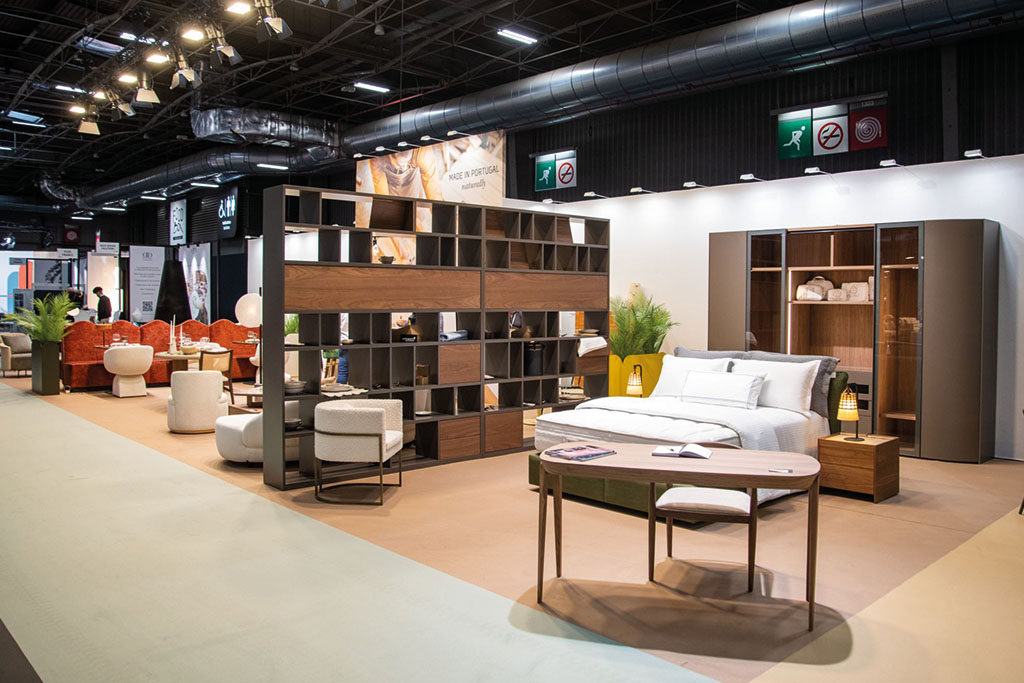
Des rencontres pour favoriser les collaborations
Parmi les principales nouveautés cette année, EspritContract inaugure un format de rendez-vous d'affaires qualifiés, organisés les matinées du 23 et 24 novembre. Pensées pour faciliter les échanges entre fournisseurs, acheteurs, prescripteurs et porteurs de projets, ces rencontres permettront aux marques de présenter leurs expertises et de se positionner sur des projets en cours ou à venir. Une initiative qui traduit la volonté du salon de renforcer sa dimension professionnelle, tout en favorisant des échanges ciblés et de nouvelles opportunités de collaboration.
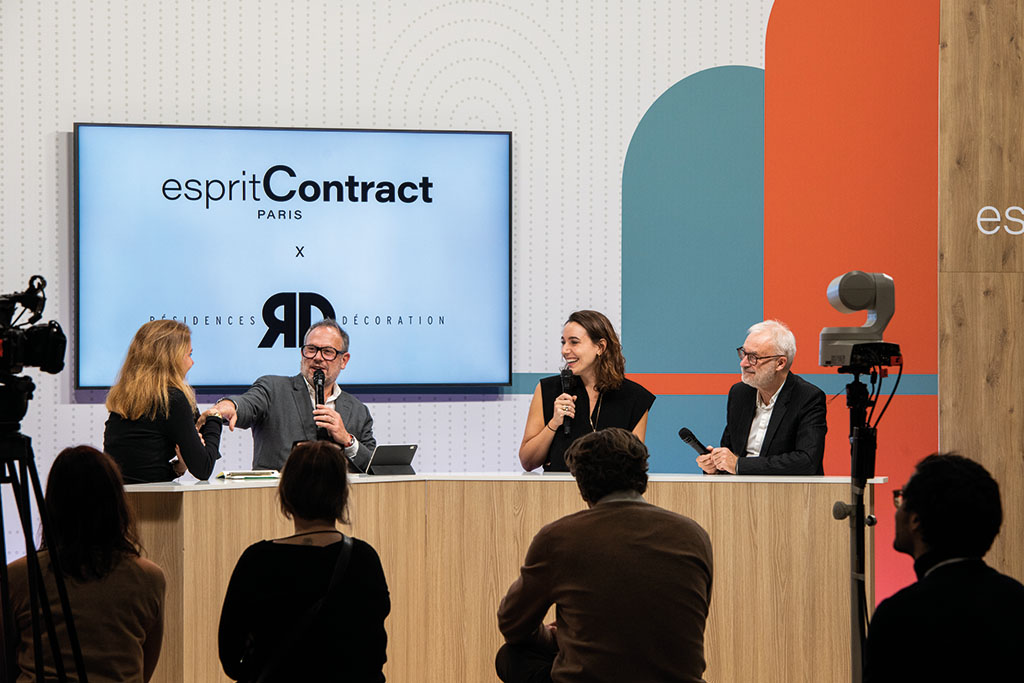
En parallèle, un cycle de conférences organisé en partenariat avec Intramuros, donnera la parole aux professionnels du secteur pour décrypter les évolutions du marché, questionner les pratiques et partager leurs expériences.
Une programmation entre créativité et expérimentation
En plus des rencontres professionnelles, EspritContract proposera également des expériences et expositions inédites. Parmi elles, « La chambre qui déraille », projet imaginé par Figurz, le studio CHHO et Malvaux Interior. À travers la mise en scène volontairement décalée d'une chambre d'hôtel ponctuée d'erreurs de conception, les trois acteurs chercheront à mettre en évidence, avec une pointe d’humour, les problématiques auxquelles peuvent être confrontés les clients comme les équipes hôtelières. Une sélection de pièces de mobilier imaginées par des architectes d'intérieur et designers sera également présentée tout au long du parcours, témoignant de la diversité des approches et de la richesse créative du secteur.
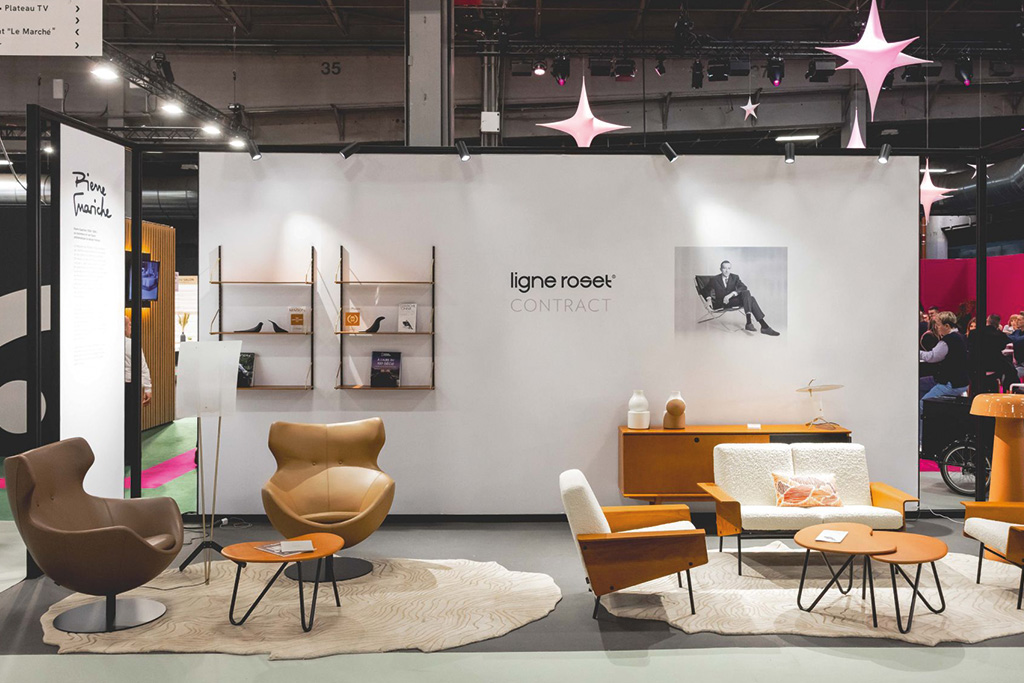
Autour de cette nouvelle édition, EspritContract confirme son ambition de réunir les différents métiers de l'aménagement autour d'un objectif commun : faire dialoguer les expertises, encourager les collaborations et mettre les savoir-faire au service des projets de demain.
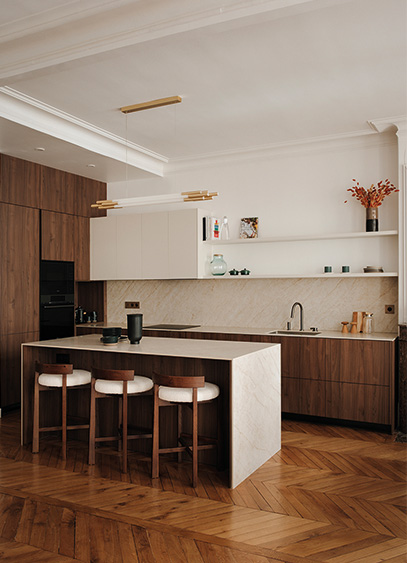
Dans le IXe arrondissement parisien, eba a imaginé une cuisine sur mesure au sein d’un appartement haussmannien entièrement rénové. Un projet de 9 m² où matériaux, lignes contemporaines, et fonctionnalité dialoguent avec le charme de l’ancien.
Comment réussir à intégrer une cuisine contemporaine dans un appartement haussmannien sans pour autant dénaturer son caractère ? C’est tout l’enjeu de ce projet réalisé par eba au cœur de la capitale. Pensé pour un jeune couple, cet appartement a fait l’objet d’une rénovation complète avec l’ambition de créer un espace de vie ouvert, lumineux et fonctionnel, tout en préservant au maximum l’architecture d’origine. Moulures, parquet en point de Hongrie, cheminée en marbre et belle hauteur sous plafond composent ainsi le décor dans lequel vient s'inscrire une cuisine aux lignes épurées.
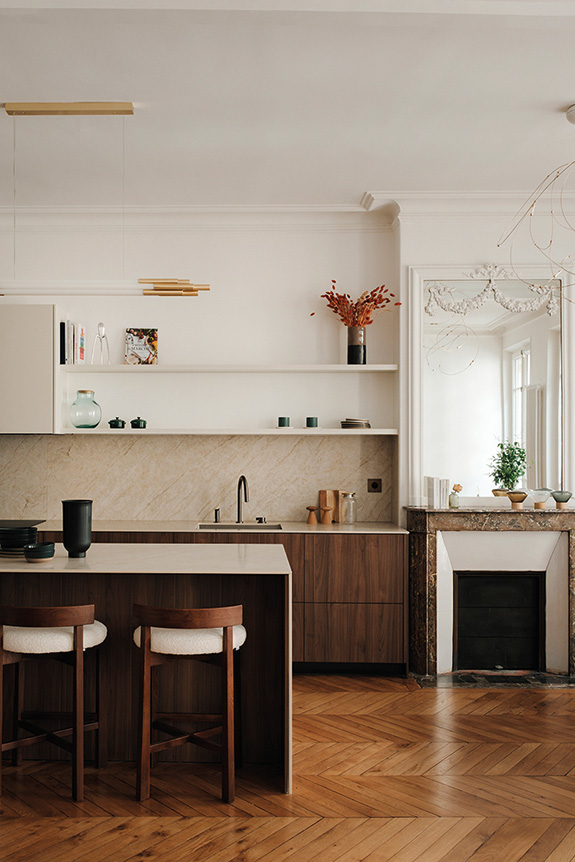
Un dialogue entre matières et architecture
Avec une surface de seulement 9 m², la cuisine s’organise autour d’une implantation en L, complétée par un îlot central. Une configuration qui permet d’optimiser l’espace tout en conservant l’ouverture sur le salon et la salle à manger. Pour permettre une continuité visuelle avec l’architecture existante, une palette de matériaux et de tonalités sobres et chaleureuses a été privilégié. Les façades de la collection FINE de Santos en Noyer Terre Vertical et Blanc Perle Soie, permettant de créer un contraste entre le bois et les surfaces claires tandis que le plan de travail et la crédence, réalisés en céramique Xtone Taj Mahal Silk, apportent une touche minérale à l’ensemble. Véritable point d’articulation de la cuisine, l’îlot central devient ici un espace de partage et de convivialité. Doté d’un coin repas pouvant accueillir trois personnes, il assure une transition entre les différents espaces de vie, tout en préservant les perspectives de l’appartement.
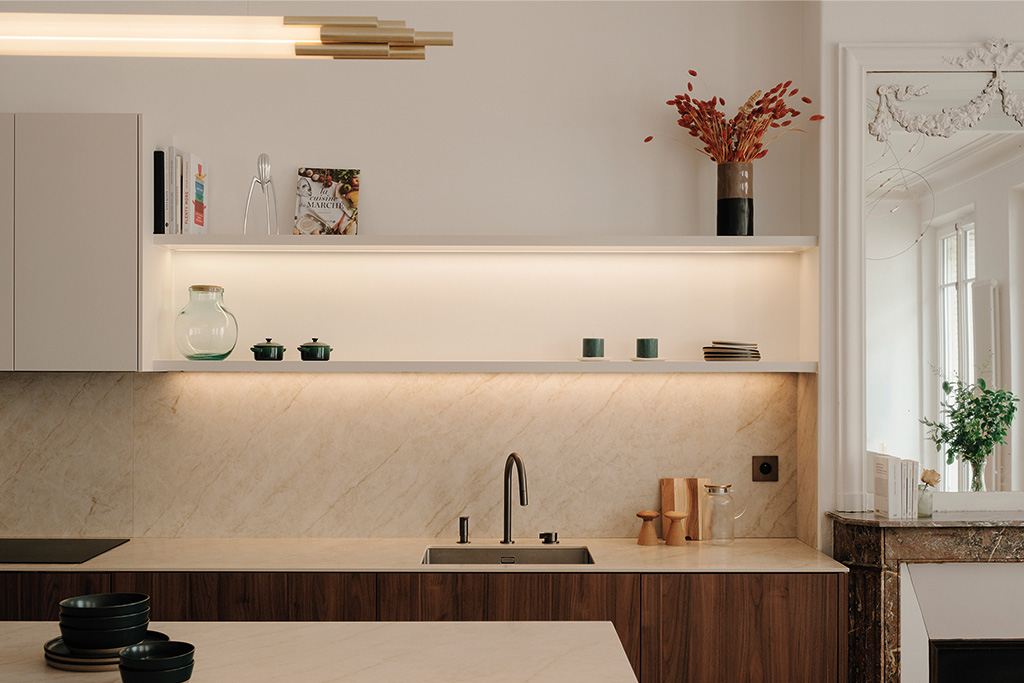
Optimiser l’espace au maximum
La fonctionnalité est ici d’autant plus important puisqu’elle occupe également une place centrale dans l’aménagement. En effet, les nombreux rangements, l’intégration discrète des appareils électroménagers et les étagères murales permettent de libérer visuellement l’espace, tout en facilitant les usages quotidiens.
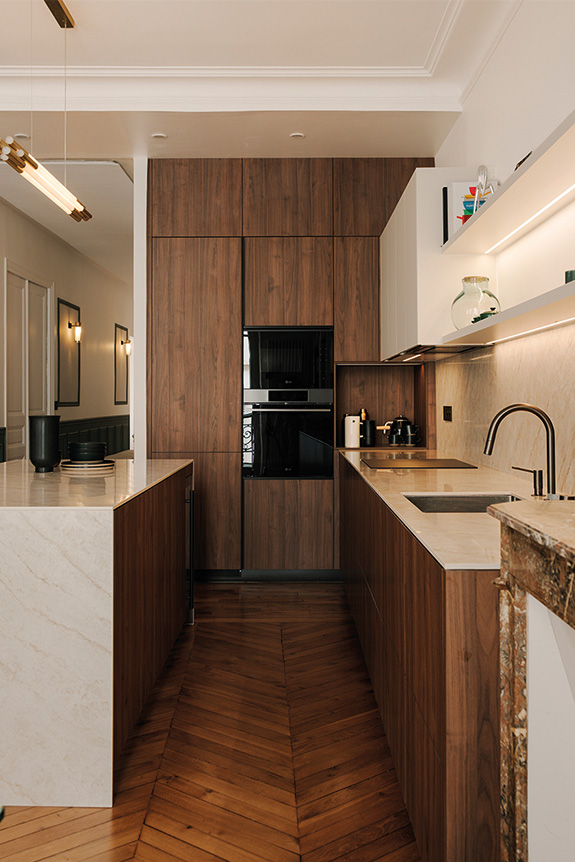
À travers ce projet, eba arrive à démontrer simplement comment la cuisine peut s’intégrer à une architecture forte sans en effacer l’identité. Une approche où l’optimisation des volumes, le choix des matériaux et la fonctionnalité des équipements font de la cuisine un véritable prolongement de la pièce de vie.
Retrouvez plus d'informations sur eba ICI. Et pour démarrer un projet, c'est via ce lien.
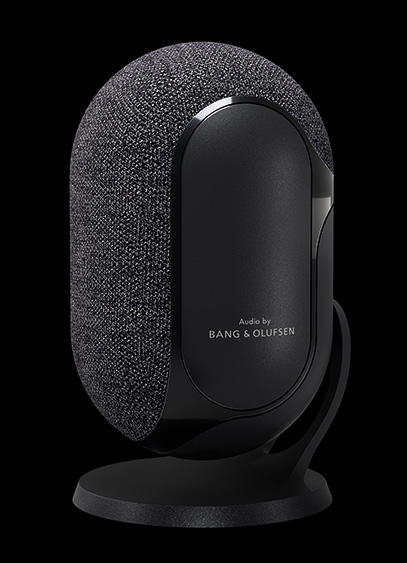
Avec son nouveau Décodeur Home Cinema, Orange entend repenser l’expérience audiovisuelle à domicile. Un équipement compact, développé avec Bang & Olufsen, qui associe qualité sonore, technologies immersives et simplicité d’utilisation.
Transformer son salon en salle de cinéma, sans multiplier les équipements, c’est toute l’ambition d’Orange avec son nouveau Décodeur Home Cinema. Développé avec l’expertise acoustique de Bang & Olufsen et le savoir-faire industriel de Sagemcom, ce nouvel appareil tout-en-un intègre quatre haut-parleurs : un woofer pour les basses, deux haut-parleurs latéraux pour spatialiser le son et une voie centrale dédiée aux dialogues. Une configuration qui permet de profiter d’une expérience sonore immersive, renforcée par la technologie Dolby Atmos, sans nécessiter d’installation supplémentaire. Côté image, le décodeur prend également en charge la 4K, le HDR10+ et le Dolby Vision, avec les équipements et contenus compatibles.
Un équipement compact pensé pour tous les intérieurs
Au-delà de ses performances techniques, Orange a souhaité concevoir un appareil facile à intégrer dans tous les espaces de vie. Son format compact lui permet de trouver sa place devant un téléviseur, tandis que son installation ne nécessite qu’un seul câble HDMI et une connexion wifi. Pour renforcer l’immersion, deux enceintes sans fil peuvent être ajoutées en option. Elles se calibrent automatiquement selon la configuration de la pièce, sans contrainte particulière de placement. Également pensé dans une démarche d’écoconception, le décodeur et ses enceintes sont fabriqués à partir de plastiques et de tissus 100 % recyclés et recyclables.
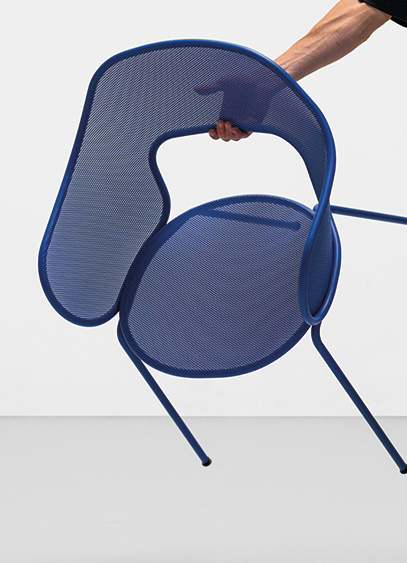
Le designer italien Alessandro Stabile dévoile, Areo en collaboration avec Kristalia. Une collection d'assises en métal pensée pour s'adapter aussi bien aux espaces intérieurs qu'extérieurs.
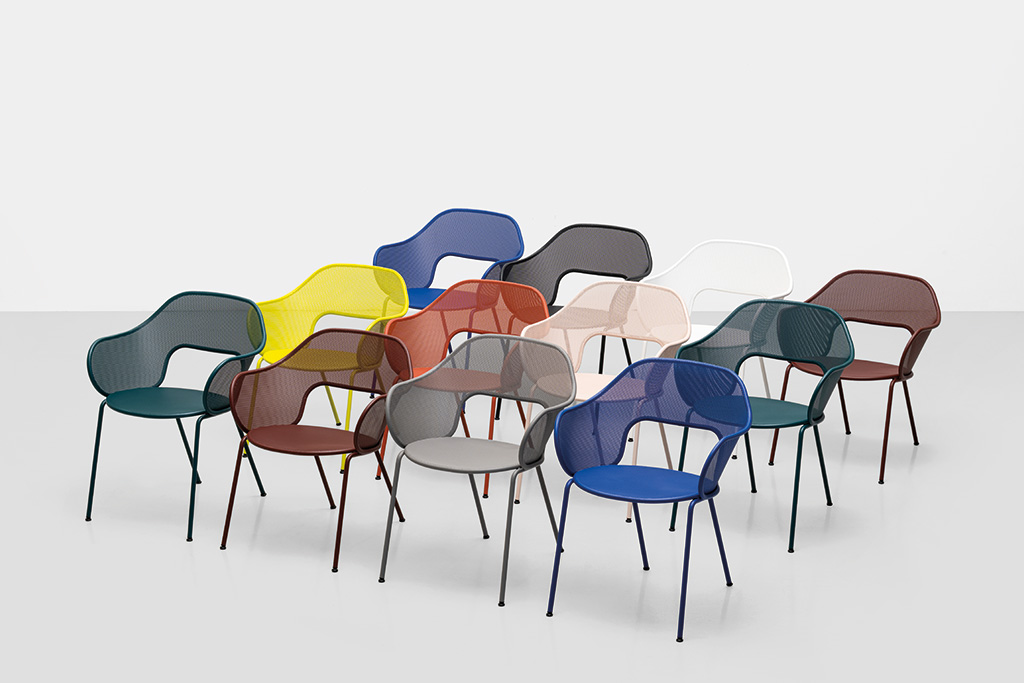
Pour sa première collaboration avec l’éditeur italien Kristalia, Alessandro Stabile a imaginé Areo, une collection de sièges dont la conception repose sur l'utilisation de la tôle perforée. Un choix technique et esthétique qui dévoile des assises aux lignes fluides et élégantes, où le métal semble épouser les formes à la manière d'un tissu. Constituée d'une structure en tubes d'acier et d'une enveloppe en tôle perforée, la collection se décline en plusieurs versions, avec ou sans accoudoirs, toutes empilables grâce à un travail minutieux sur la forme des dossiers et la disposition des pieds.
Une collection, plusieurs usages
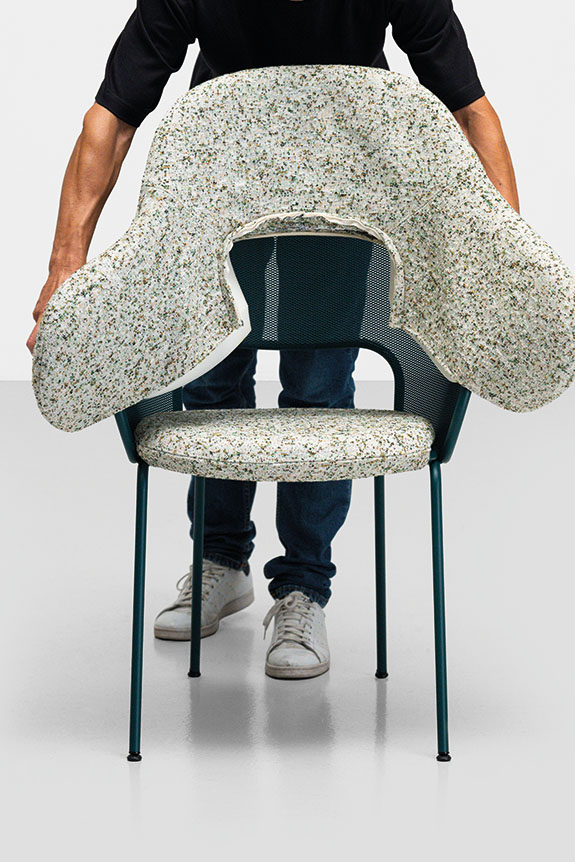
Au-delà de son esthétique, Areo se distingue par une conception pensée pour simplifier les processus de fabrication. Les courbures bi-dimensionnelles de la tôle permettent notamment de supprimer l'étape d'emboutissage, réduisant ainsi les investissements, le temps et l'énergie nécessaires à la production. Autre particularité : sa capacité à passer de l'extérieur à l'intérieur grâce à un système de housses rembourrées, qui peuvent recouvrir partiellement ou entièrement la structure métallique. Une modularité pensée dès les premières étapes du projet, permettant à chaque version de conserver son identité propre. À travers la collection Areo, Alessandro Stabile propose ainsi une collection polyvalente, où recherche technique, confort et esthétique se répondent.
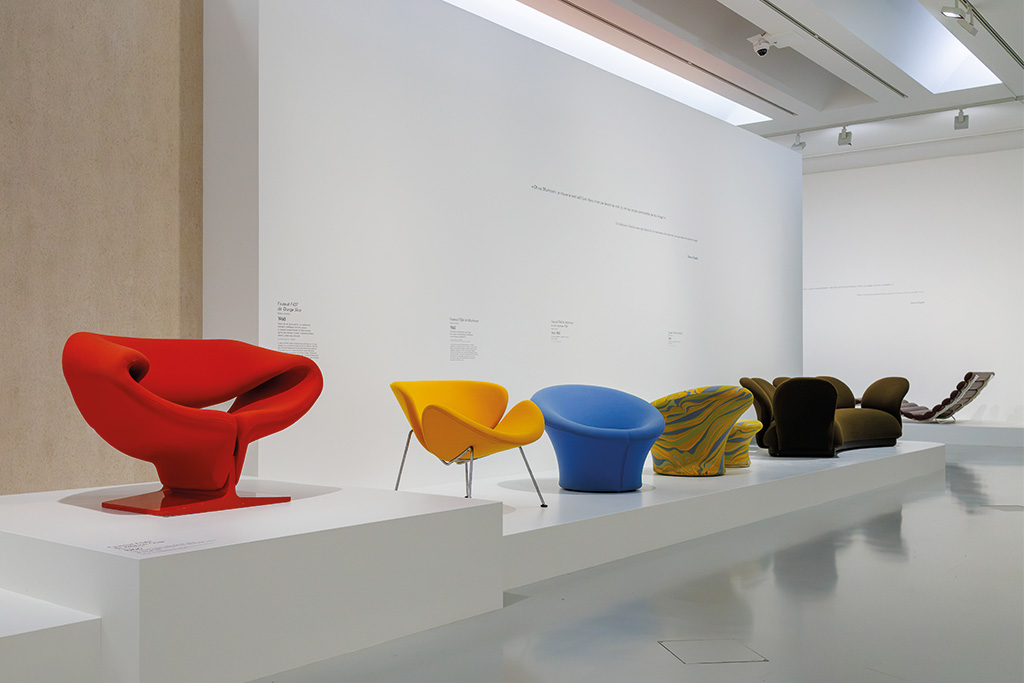
Au musée Fabre de Montpellier, l’exposition « Le design selon Pierre Paulin », ouverte jusqu’au 1er novembre, revient sur plus de cinquante ans de création d’un designer qui a fait de la matière le terrain d’une perpétuelle expérimentation.
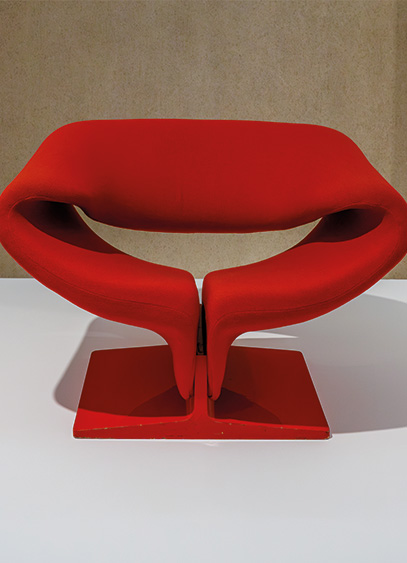
Des courbes, de la couleur et des formes, toujours. Mais cette fois-ci, c’est au design que le musée Fabre de Montpellier consacre son espace d’exposition temporaire. Avec « Le design selon Pierre Paulin », l’institution revient, jusqu’au 1er novembre, sur plus de 50 ans de création d’un designer obsédé par la forme. Un créateur qui n’a cessé de repousser les limites de l’assise pour donner corps à certaines des silhouettes les plus iconiques du XXe siècle. Influencé par son grand-oncle maternel, Frédy Balthazar Stoll, sculpteur formé dans l’atelier de Rodin, et son oncle paternel, Georges Paulin, designer automobile à qui l’on doit notamment l’invention du système Éclipse – permettant au toit des véhicules de se rabattre dans le coffre –, Paulin tire deux grandes lignes : la forme et le fonctionnalisme. Une pensée moderniste que l’étudiant en architecture intérieure au Centre d’art et des techniques (aujourd’hui Camondo) retrouve dans les travaux de l’entre-deux-guerres signés Charlotte Perriand ou Jean Prouvé, qu’il admire. De cette influence naît le fauteuil Première réalisation. Une assise imaginée comme un prototype, mais qui révèle déjà des facultés certaines pour la conception et le pousse à réaliser ses premières pièces inspirées par la Scandinavie, où il séjourne en 1951. Rapidement édité par Thonet Frères et Meubles TV, puis exposé au Salon des arts ménagers en 1953, le designer s’engage dans une voie moderniste, troquant la géométrie nordique pour les formes organiques.
Naissance de l’esthétique Paulin
Loin des ensembliers qui avaient révolutionné la première moitié du XXe siècle, Paulin appartient à la seconde moitié du siècle, celle de l’industrie. L’arrivée de nouvelles fibres, dont le jersey, textile souple et élastique symbole de la révolution industrielle des années 1960, lui ouvre de nouvelles possibilités. Il imagine alors de nouvelles formes. Parmi elles, le Groovy et le Mushroom marquent cette décennie et lui confèrent l’image d’une époque colorée, notamment grâce à des figures comme Kho Kiang Ie, directeur artistique d’Artifort, ou le designer textile américain Jack Lenor Larsen, avec qui Paulin développe un nouveau langage. Un dialecte à part sur la scène du design qui lui vaut d’entrer au MoMA en 1969 – trois ans après avoir contribué au lancement de l’ARC initié par Jean Coural – grâce au F300 et à la Tongue Chair. Une assise si basse dont on lui avait dit qu’elle ne pourrait être commercialisée. Elle deviendra pourtant l’un des grands succès du designer, pour qui la hauteur de l’assise influe sur les échanges humains au sein d’un même lieu.
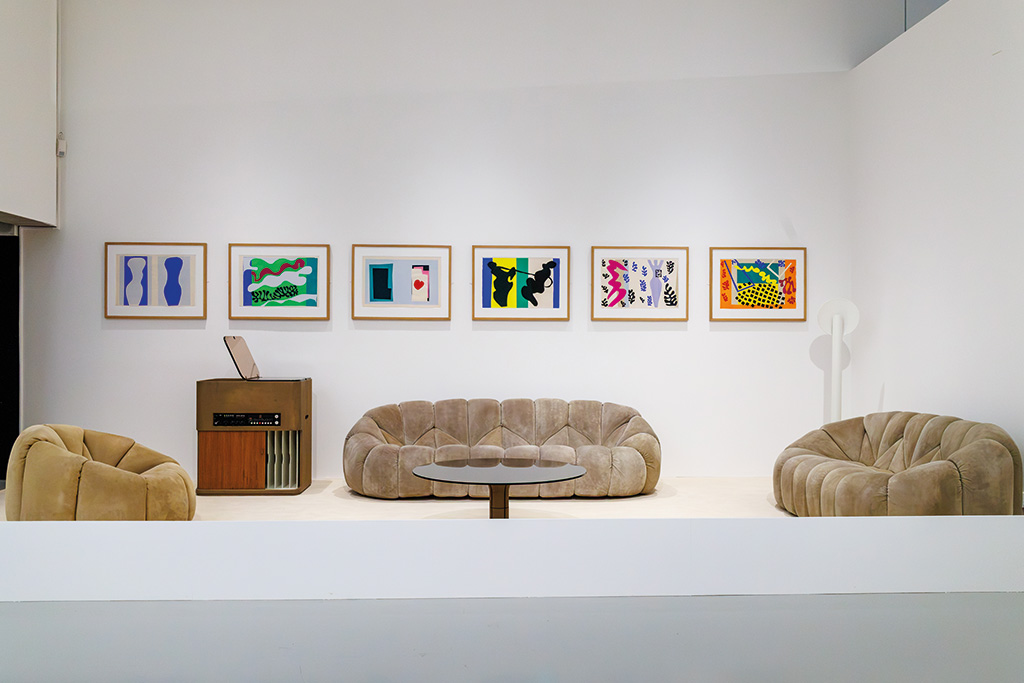
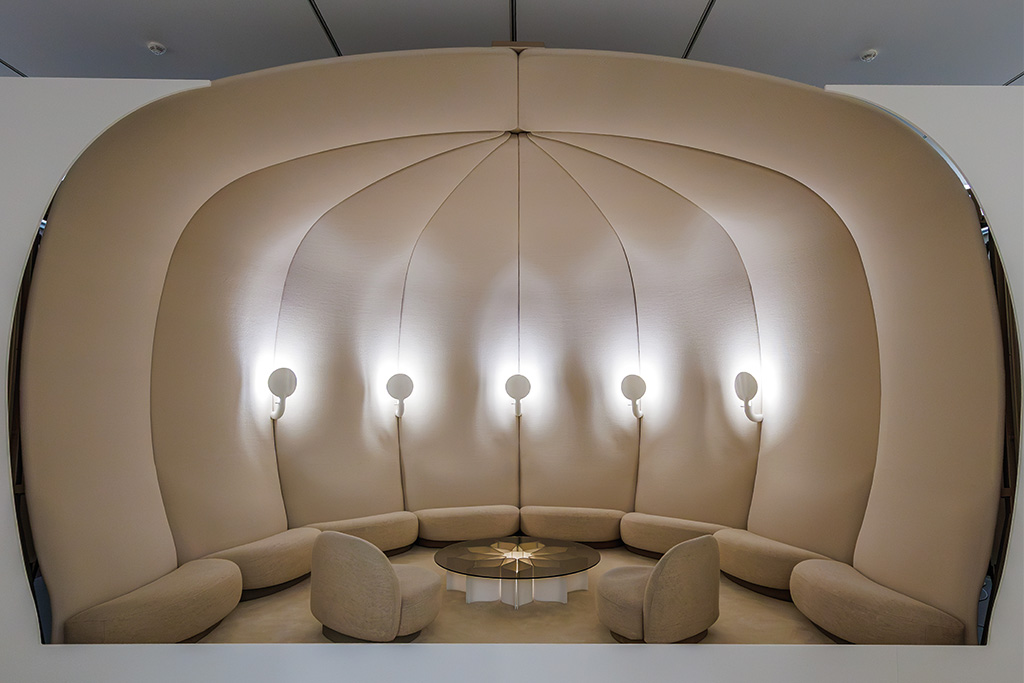
Ce rapport à l’espace, Paulin l’aborde également avec une structure mobile développée pour les salons. Bien des années plus tard, cette réflexion l’amène jusqu’aux appartements privés de l’Élysée, où il conçoit le célèbre fumoir du couple Pompidou. Une réalisation emblématique de son talent que le designer tentera d’exporter outre-Atlantique avec une collaboration avec Herman Miller et le développement du concept d’open loft. Un projet tombé à l’eau, sans doute trop précurseur à l’aube des années 1970.
Un design marqué par les innovations
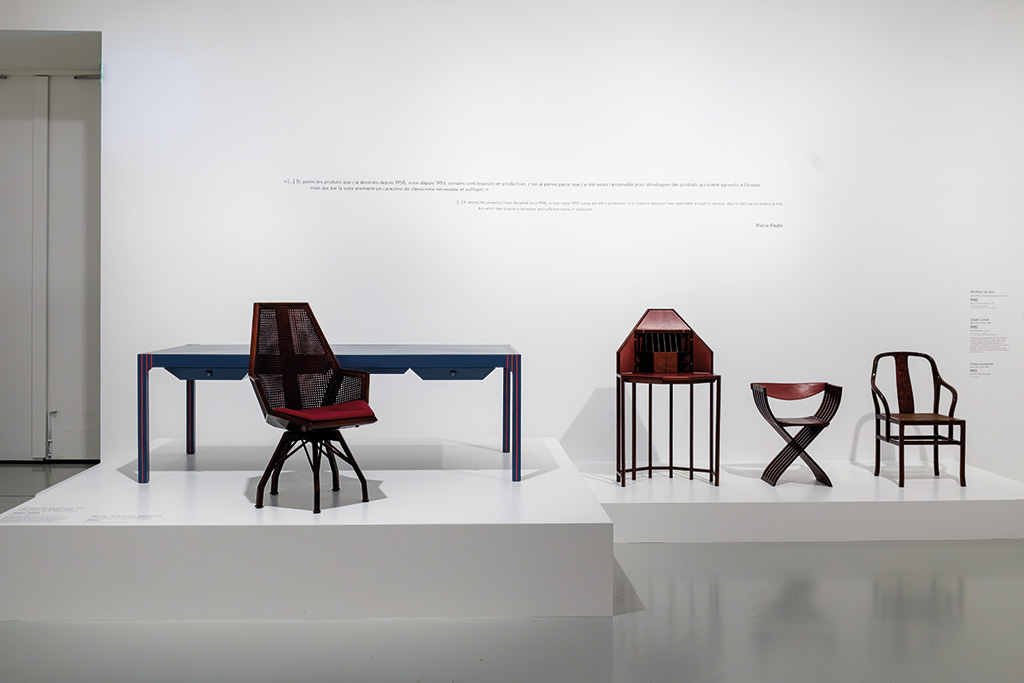
De l’artisanat au concept du déhoussable, en passant par les structures exosquelettes des fauteuils Vague ou de la table Cathédrale, Paulin n’aura eu de cesse d’entremêler les concepts, les innovations et les styles. Et ce, jusqu’à revenir, vers la fin de sa vie, à une esthétique Art déco valorisant la géométrie. En témoignent encore aujourd’hui les tapis abrités par le Conseil économique et social de Paris, basés initialement sur les plans du concours remporté par Buren au Palais-Royal, ou le bureau dessiné pour François Mitterrand. Une remise en question perpétuelle de son travail qu’il poursuivra jusqu’à la fin, avec Ligne Roset ou Magis.
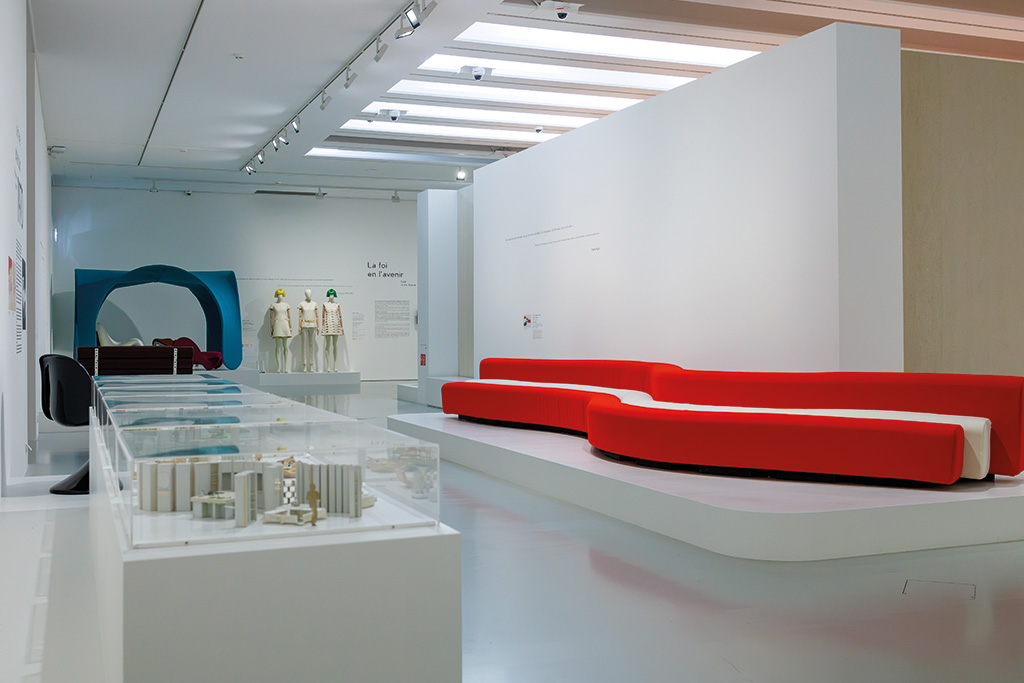
De ses premières assises aux pièces devenues iconiques, l’exposition raconte la carrière d’un homme qui avait fait du design une matière à penser. L’occasion de redécouvrir – et d’essayer – certaines des silhouettes les plus célèbres du XXe siècle, façonnées par un esprit qui n’a cessé de réinterpréter ses dessins pour qu’à travers eux se lise une histoire moderne.
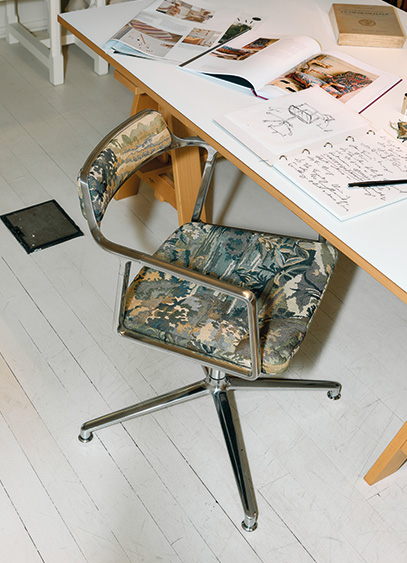
Pour la Villa Médicis, le designer Edgar Jayet livre trois fauteuils Tapestry. Une réinterprétation du Swivel de la maison d’édition danoise Vipp, retapissé d’un jacquard paysagé.
S’il existe une place qui, parmi plus que nulle autre, a traversé les époques pour garantir à la création un lieu d’expression, c’est la Villa Médicis. Fondée en 1666 par Louis XIV, l’institution française bâtie sur les hauteurs de Rome accueille depuis 2022 le programme « Réenchanter la Villa ». Entamée par India Madhavi, cette nouvelle campagne de rénovation se poursuit aujourd’hui avec les appartements des pensionnaires. Et c’est au numéro 10 que l’architecte et directeur artistique Edgar Jayet présente « Tapestry ». Derrière ce nom, une typologie que le designer considère « comme ce qui est un peu le nouveau chevalet de l’artiste » : la chaise de bureau. « Nous nous sommes intéressés à elle car c’est une pièce essentielle mais, à mon sens, souvent décevante en termes de design, de conception. Je suis donc rentré en contact avec l’éditeur danois Vipp pour y chercher la Swivel chair que j’adore. » Une assise pivotante au design industriel mais surtout à la hauteur du lieu, selon le prescripteur.
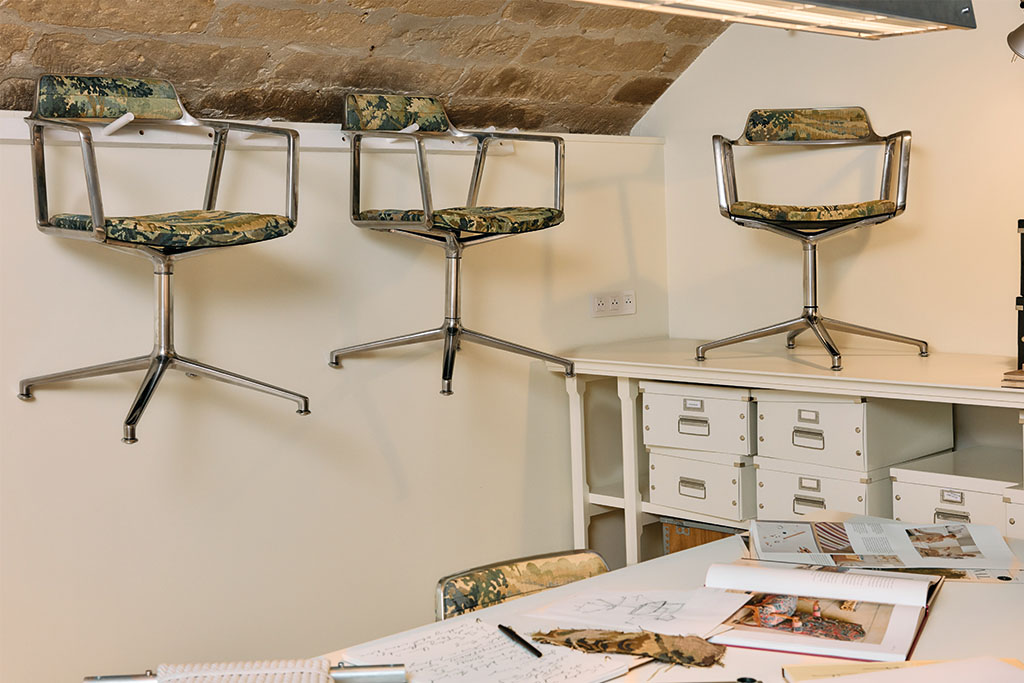
Un style néo-éclectique
Fidèle à une certaine vision très « dix-neuviémiste » de l’ameublement, Edgar Jayet a souhaité introduire dans ce projet un pont entre les époques et les styles. « Je me suis interrogé sur ce qu’était l’opposé d’un design industriel et je suis tombé sur la tapisserie. Un élément qui ramène à la naissance des Arts décoratifs, au Moyen Âge, à la Renaissance, à la manufacture des Gobelins… » Une réflexion qui amène alors le designer à sélectionner un jacquard au style forestier de chez Schumacher. « La ligne d’horizon, le feuillage… Pour moi, la notion de paysage intérieur est essentielle dans un atelier d’artiste. C’est une ouverture vers l’extérieur qui fait écho, dans notre cas, au jardin de la Villa Médicis », détaille le designer, marqué par l’ambiance néo-médiévale émanant des chaises tapissées de sa grand-mère. Grâce au métrage relativement long, les trois assises de la Villa se complètent sans que le motif ne se répète et offrent ainsi à l’espace une complémentarité stylistique.
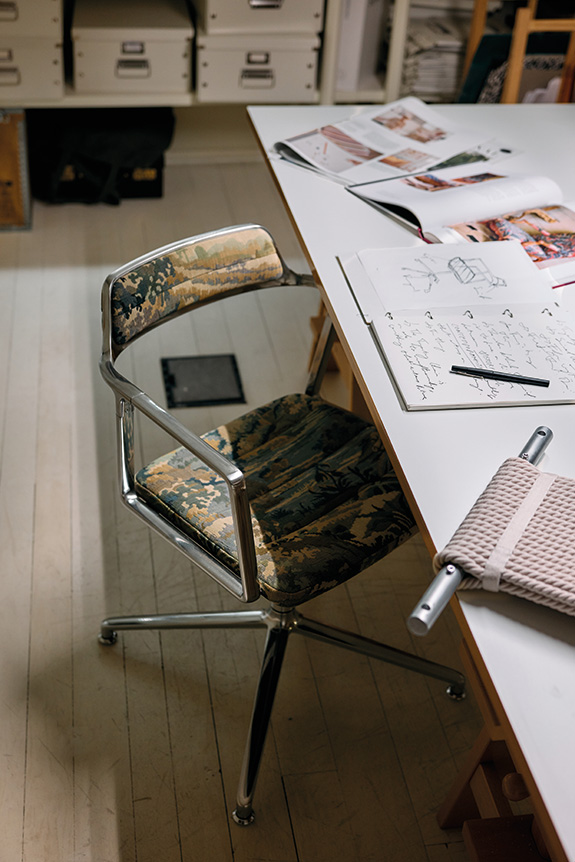
Un projet à acquérir
Imaginé à l’origine pour l’institution romaine, le fauteuil Tapestry sera également disponible à la vente à partir du mois de janvier. Avec ses 50 pièces, cette collection capsule s’inscrit dans la volonté plus globale de la maison d’édition danoise de développer des collaborations bespoke autour de leur best-seller : la Swivel. L’occasion de s’offrir un petit morceau de la Villa et de connecter, comme elle, les époques par le prisme du design.
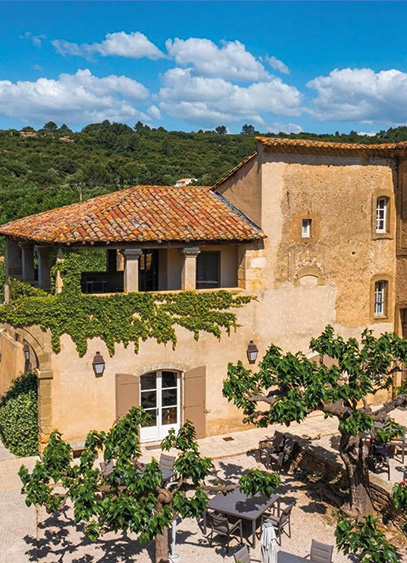
Éco Impact lance la Résidence, une semaine intensive d'éco-conception mobilier réservée à 12 designers, au Domaine des Escaunes (Gard), du 4 au 11 avril 2027. Un programme 100% financé pour les artistes-auteurs (AFDAS) et les dirigeants de TPE/PME (subvention ADEME).
Au programme : une immersion complète dans les outils d'analyse de cycle de vie et d'éco-conception, avec des experts pointus — Christophe Lemaire (Consiliom, pitch et argumentaire projet), David Legouix (FCBA, matériaux et innovation), Grégoire Gérard et Camille Cousté (Eco Impact) — et un grand témoin d'exception : Anthony Lebossé, cofondateur de Studio 5.5, lors d'un dîner-conférence.
À l'issue de la résidence, les participants présenteront leur projet devant un jury de professionnels reconnus : Carine Faure (Petite Friture), Alice Viault (Groupe Roset), Marie Carcassonne (Dynamo) et Martin Hallegouët (Bluedigo).
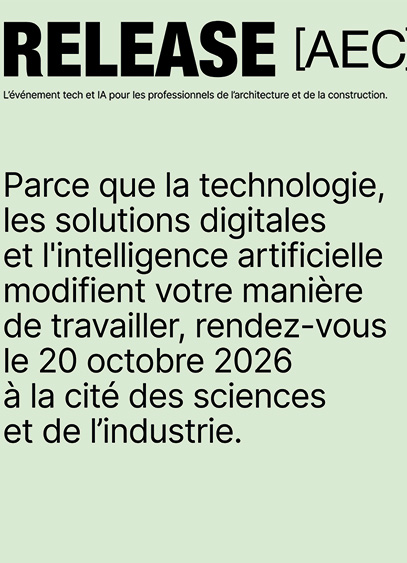
Pour sa 2e édition organisée le 20 octobre prochain, RELEASE [AEC] change de dimension : 25 agences d'architecture internationales viennent partager leurs retours d'expérience concrets sur l'IA et les nouvelles technologies et plus de 40 éditeurs de solutions dédiées.
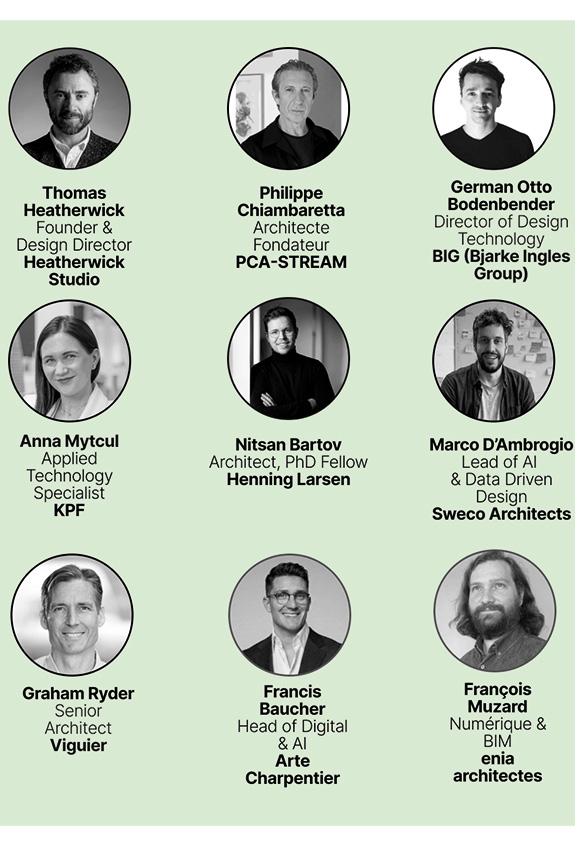
Le rendez-vous est donné le 20 octobre à la Cité des Sciences et de l'Industrie à Paris. Parmi les intervenants de cette 2e édition figurent notamment Anna Mytcul (KPF), Nitsan Bartov (Henning Larsen), Marco D'Ambrogio (Sweco Architects), Ami Nigam (Benoy), German Otto Bodenbender (BIG – Bjarke Ingels Group), Francis Baucher (Arte Charpentier), Philippe Chiambaretta et Adrien Pointeau (PCA-STREAM), François Muzard (enia architectes), Graham Ryder et Farouk Taoulilit (Viguier), Carlos Bañón (FORMAS.AI), George Guida (xFigura), Ismail Seleit (Gendo), Délhio Gaudé (Arquiz), Jean-Baptiste Nicolas (Unibail Rodamco Westfield), Amir Hossein Noori (Narva), Axel Wohlin (Arkyv) et Jens Majdal Kaarsholm (Motif), ainsi que Heatherwick St
Fidèle à son parti pris depuis la première édition, RELEASE [AEC] privilégie toujours les démonstrations concrètes, loin des simples présentations : chacun repart avec une vision claire de ce que ces solutions permettent de faire, dès aujourd'hui.
Les technologies, les solutions digitales et, bien entendu, l'intelligence artificielle transforment en profondeur la manière de travailler des professionnels de l'architecture et de la construction. C'est précisément ce mouvement que RELEASE [AEC] entend accompagner, en donnant à voir très concrètement ce qui est déjà à l'œuvre dans les agences les plus en pointe.
Pour plus d'informations et s'inscrire c'est ici : https://www.release-aec.com/fr/participer#register
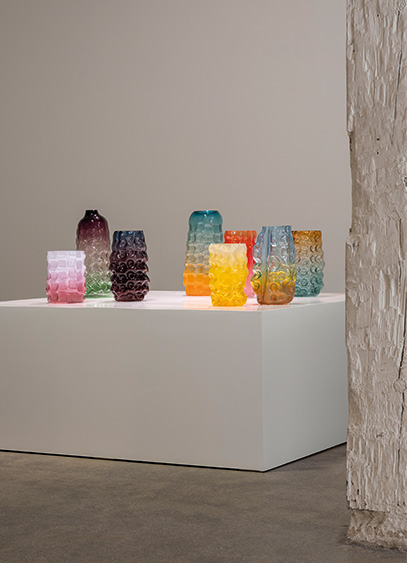
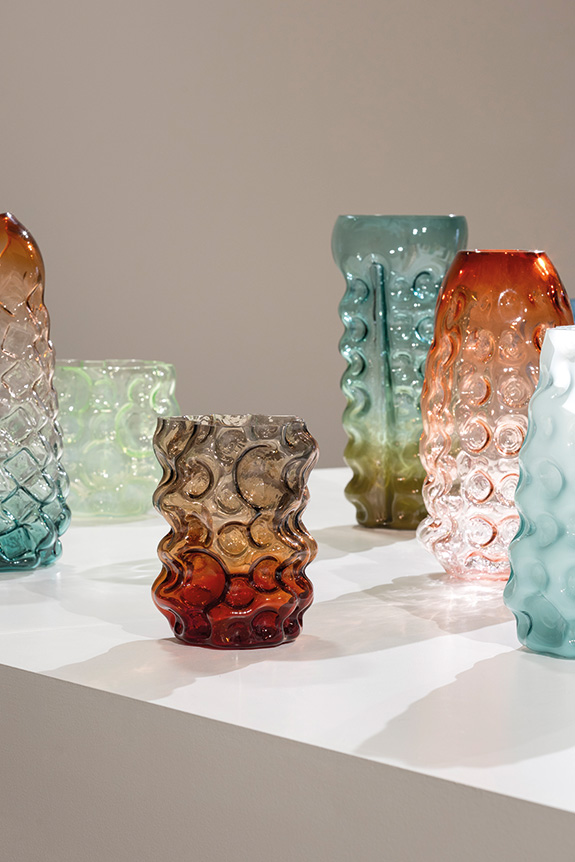
Tejo Remy présente "Solid Air, Liquid Colour" à la Galerie kreo jusqu’au 10 octobre. Une série de 43 vases en verre, née de deux années de recherche au Cirva, à Marseille. Entre différentes techniques, le designer néerlandais explore ce qui se joue lorsque la maîtrise du geste rencontre les imprévus de la matière.
Trouver dans le hasard les grandes lignes de l’expérimentation plastique : voilà la philosophie qui caractérise le travail de Tejo Remy. Membre du collectif Droog, le designer néerlandais investit la Galerie kreo jusqu’au 10 octobre avec 43 vases en verre de sa collection Solid Air, Liquid Colour. Mené avec le Cirva — Centre international de recherche sur le verre et les arts plastiques — à Marseille, ce projet explore les comportements de la matière. Ici, l’objet n’est ni sériel ni reproductible à l’identique, mais compose un ensemble. Une approche qui rappelle celle de la Chest of Drawers, présentée en 1991, dans laquelle des tiroirs, tous différents, étaient assemblés pour former un meuble unique. L’unicité des composants devient le point de départ d’un projet de recherche.
La matière formée par le matériau
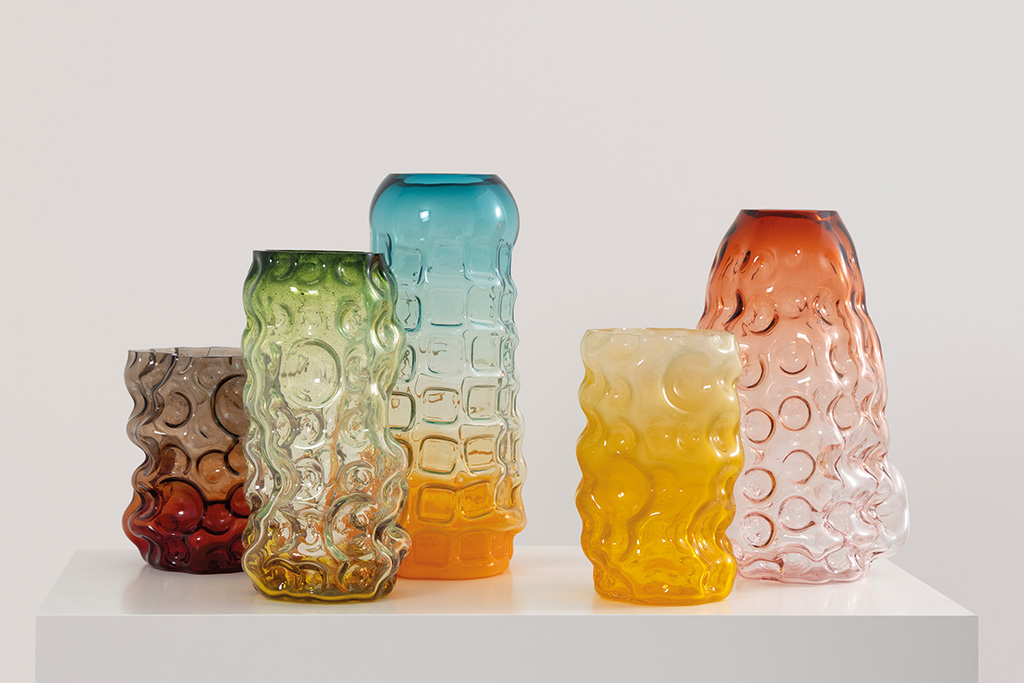
Pendant près de deux ans, dont dix semaines de travail au sein du laboratoire marseillais, avec l’appui de verriers et de techniciens, Tejo Remy s’est intéressé aux réactions du verre et aux différentes techniques de sa mise en forme. Reprenant des procédés classiques de soufflage et de moulage, le designer s’est également penché sur la fabrication des moules. Une base de recherche qui permet notamment d’expérimenter le passage d’une forme négative à une forme positive et qui l’a conduit à s’intéresser à la notion d’empreinte. Du bois à l’acier, en passant par le plâtre ou le roseau, le matériau du moule porte en lui d’autres matérialités. Des traces que l’imprévisibilité des déformations du verre vient enrichir d’un léger mouvement. La couleur participe également à cette perception. La série associe des rouges et des orangés, des bleus, des verts ainsi que des teintes transparentes, dont l’apparence évolue avec la lumière. De quoi conférer à la matière refroidie le paradoxe d’une certaine fluidité.
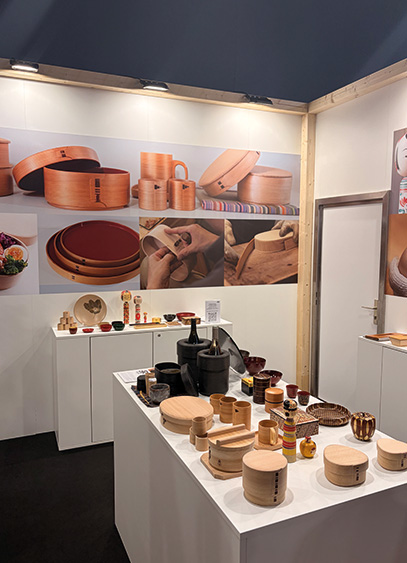
Sur le salon Maison & Objet en septembre, les savoir-faire traditionnels japonais liés au travail du bois ont été mis à l’honneur sur le stand « Japan Wood x Craftsmanship ». L’occasion de valoriser des techniques traditionnelles, parfois vieilles de plusieurs siècles, témoignant d’un artisanat minutieux, précis et profondément ancré dans la culture japonaise.
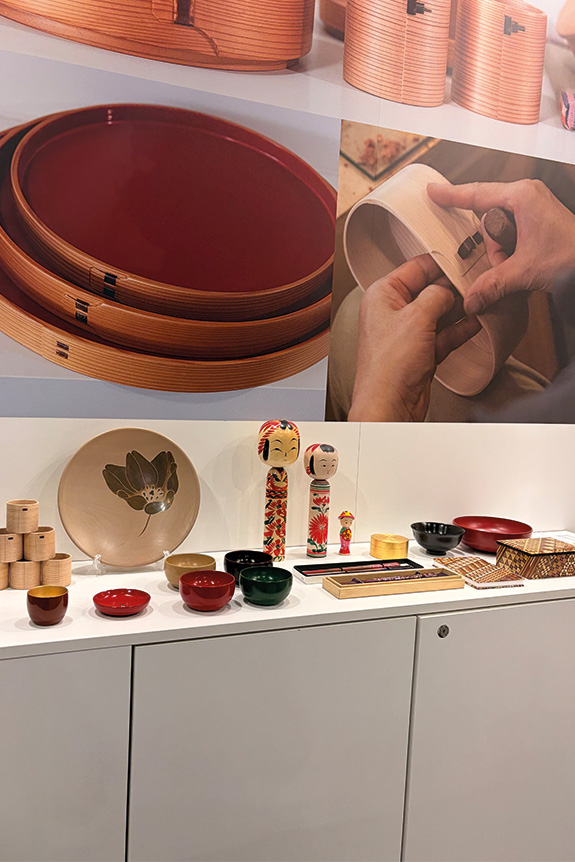
« Notre principal objectif en venant en France est de montrer l’intégrité de l’artisanat japonais du bois et de promouvoir ces savoir-faire. Nous souhaitions également mettre en avant le caractère durable du bois que nous cultivons », expliquait Yohei Kato, responsable du stand. Véritable symbole de la culture japonaise, le bois occupe une place importante dans le quotidien au Japon. Pour sa première participation au salon, le stand avait une mission claire : valoriser les savoir-faire japonais liés au travail du bois à travers les techniques traditionnelles de fabrication, mais aussi les objets qui en découlent. De l’emblématique boîte à bento aux seaux à champagne, en passant par des bols ou encore des poupées kokeshi, le stand présentait une grande variété d’objets et d’accessoires.
Valoriser les savoir-faire traditionnels
Au-delà de la matière elle-même et des objets proposés, l’accent était avant tout mis sur les savoir-faire et les techniques liés au bois, pour la plupart transmis de génération en génération. Plusieurs de ces artisanats étaient représentés sur le stand, chacun associé à une région spécifique du Japon : l’Odate Magewappa - une technique de cintrage du bois - originaire d’Akita ; le Hakone Yosegi-Zaiku - une technique de marqueterie de bois - provenant de Kanagawa ; les objets laqués d’Ishikawa ; ou encore les poupées kokeshi de la région du Tohoku. Le stand présentait également des créations plus contemporaines, notamment du mobilier, avec des chaises ou des tabourets, témoignant des applications actuelles du bois dans le design.
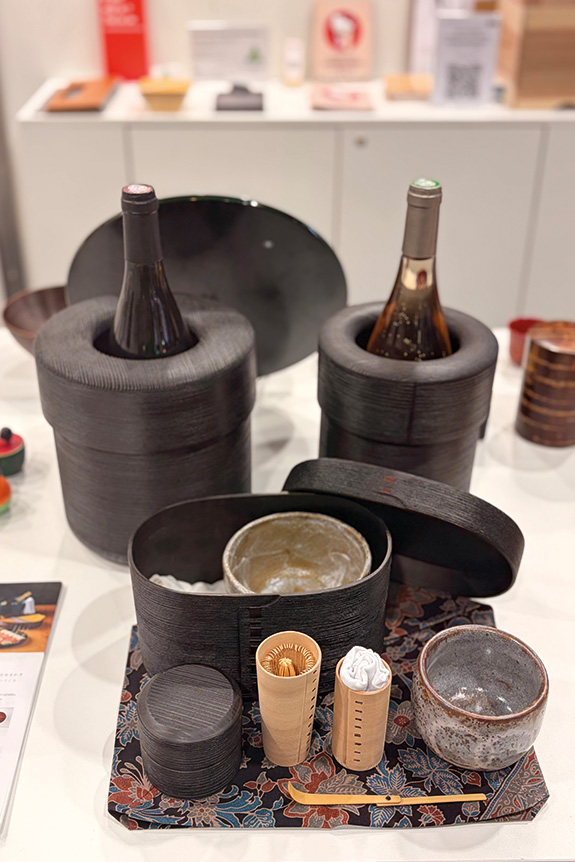
Sur place, l’artisan Yoshimasa Shibata proposait aux visiteurs de découvrir directement la technique du cintrage du bois en présentant plusieurs étapes de fabrication d’une boîte à bento. Yoshimasa Shibata est l’un des 16 seuls artisans certifiés « Traditional Craftsmen » au Japon spécialisés dans le magewappa, ces petites boîtes en bois cintré. Une certification qui nécessite au minimum douze années d’expérience pratique dans la fabrication. Développé comme artisanat il y a environ 400 ans et transmis depuis de génération en génération à partir de cèdre d’Akita cultivé localement, le magewappa se définit avant tout par sa technique de cintrage. Le cèdre naturel d’Akita est assoupli dans une eau chauffée à plus de 80 °C, puis courbé en un seul mouvement continu, guidé uniquement par le toucher et le savoir-faire de l’artisan.
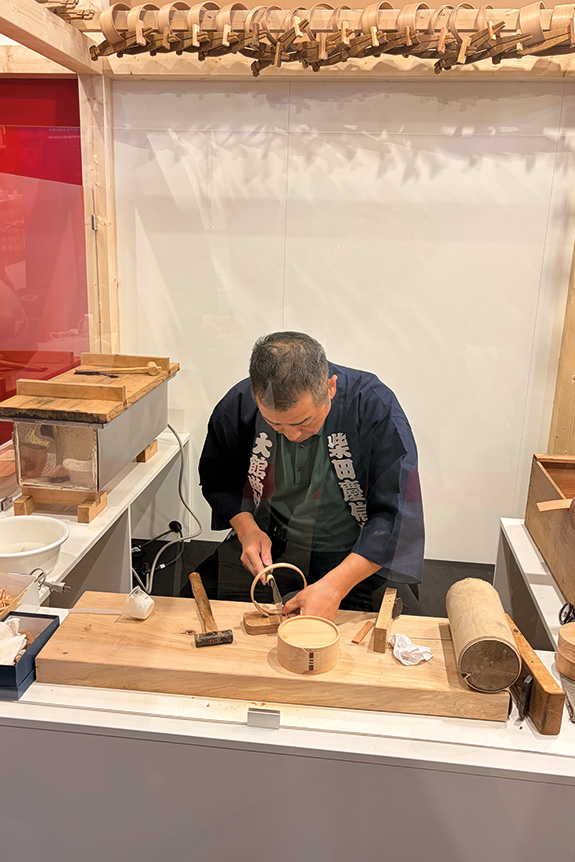
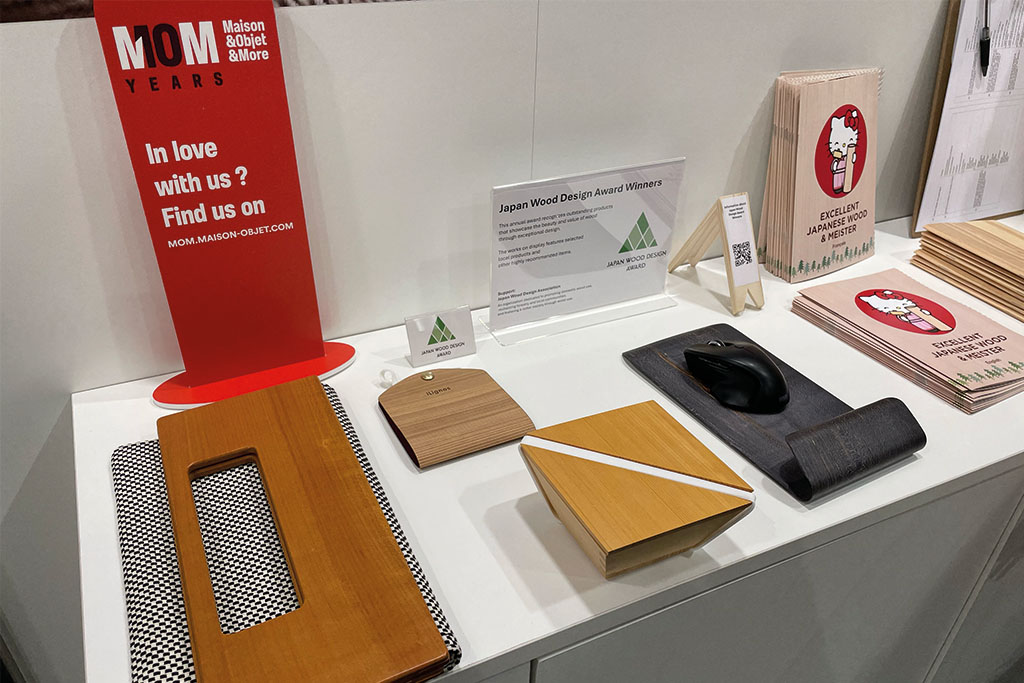
Une manière de faire découvrir au public ces savoir-faire encore relativement méconnus. Plus largement, l’initiative visait à encourager le dialogue et à favoriser de potentiels partenariats avec des acteurs européens, autour de produits existants comme de nouvelles pièces adaptées à des usages plus contemporains. Le stand présentait également des produits récompensés par le Wood Design Award, qui distingue des créations mettant en valeur les qualités et l’attrait du bois, témoignant ainsi de la manière dont les techniques japonaises sont aujourd’hui transposées dans le design contemporain. « L’objectif de notre participation est de favoriser les échanges et les rencontres susceptibles de déboucher sur des partenariats avec des entreprises européennes, entre autres. Nous sommes également ouverts à la possibilité d’exporter du bois japonais », ajoutait Yohei Kato.
Développer la culture du bois au Japon
Au-delà de la valorisation des savoir-faire, le stand souhaitait également mettre en lumière la relation qu’entretient le Japon avec ses forêts et la manière dont celles-ci sont gérées. En effet, près de 70 % du territoire japonais est recouvert de forêts, dont environ 40 % sont des forêts plantées. Celles-ci représentent 8 % de la superficie totale des forêts plantées dans le monde, ce qui place le Japon à un niveau particulièrement élevé à l’échelle internationale. Une situation qui témoigne d’une longue tradition de reboisement, les arbres étant replantés après leur exploitation afin de renouveler les ressources forestières. Le bois s’inscrit ainsi dans une logique circulaire : il absorbe du CO₂ au cours de sa croissance, nécessite relativement peu d’énergie pour être transformé et continue de stocker du carbone une fois devenu un produit fini.
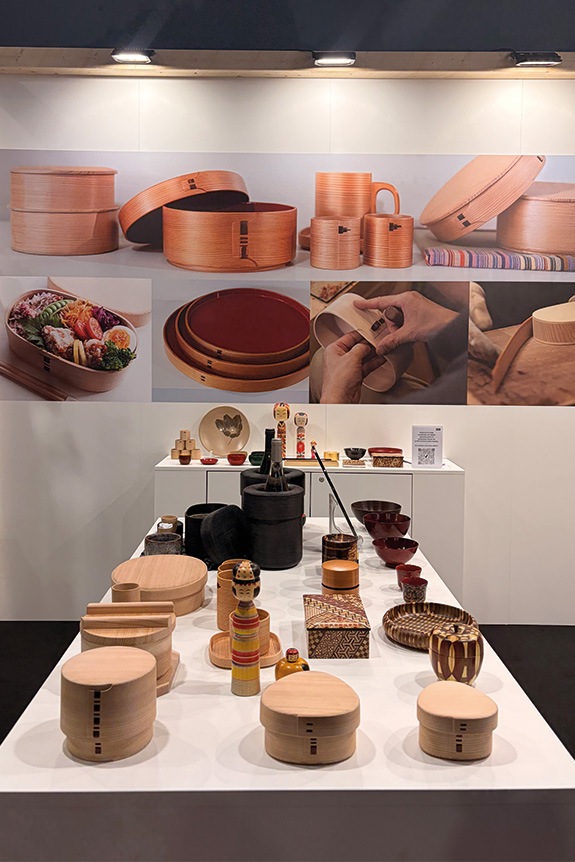
Cette approche environnementale est étroitement liée aux savoir-faire présentés sur le salon. Les qualités naturelles du matériau, notamment son parfum, ses capacités de régulation thermique et d’absorption de l’humidité ou encore ses propriétés anti-bactériennes ouvrent également la voie à de nouveaux usages. Entre préservation de techniques séculaires, gestion responsable des ressources et applications contemporaines, le stand défendait ainsi une approche du bois où artisanat et durabilité avancent de pair.
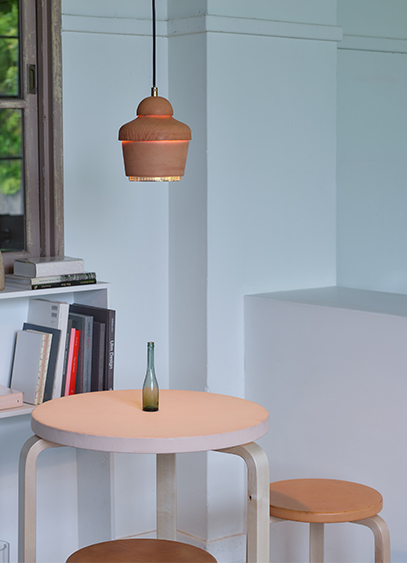
Le finlandais Artek et le japonais Hender Scheme présentent une première collaboration autour du vieillissement naturel des matériaux et du pouvoir esthétique du temps.
Notre attachement à certains objets ne s’explique pas par leur valeur intrinsèque, mais par leur histoire. Celle qui cause l’usure et attaque parfois la forme, voire la fonction. C’est avec cette question du temps qui passe en toile de fond qu’Artek et Hender Scheme se sont associés. Spécialiste du mobilier en bois cintré depuis 1935, la marque finlandaise avait amorcé en 2024 un nouveau tournant en tolérant, à l’occasion d’une collection avec le studio Formafantasma, les défauts du bouleau dans ses assises. Un rapport au naturel que la société, fondée par Aino et Alvar Aalto, interroge cette fois-ci avec un fabricant de chaussures et d’accessoires en cuir, le japonais Hender Scheme.
La valeur du temps
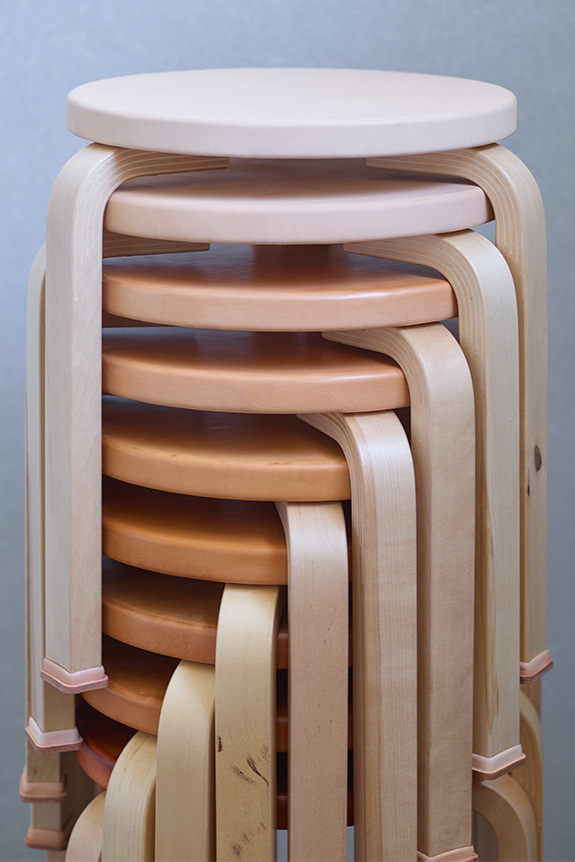
Si les objets sont façonnés par l’industrie qui les fait naître, cette collection entend montrer qu’ils continuent de vivre entre les mains de leurs utilisateurs. En faisant du cuir tanné végétal l’élément central de cette collaboration, les marques proposent un nouveau revêtement qui se patine naturellement avec le temps. Un rapport sensible à la vie des meubles qui confère aux pièces leur unicité. De ce choix naît aussi un échange entre les deux entreprises. La première introduit le langage stylistique du couple Aalto dans un univers codé et japonisant, lorsque l’autre importe son savoir-faire en dotant le célèbre Stool 60 de souliers de cuir. Un clin d’œil qui met en valeur le piètement en L caractéristique de la célèbre assise.
« New Craft » ou le concept d’un artisanat technologique
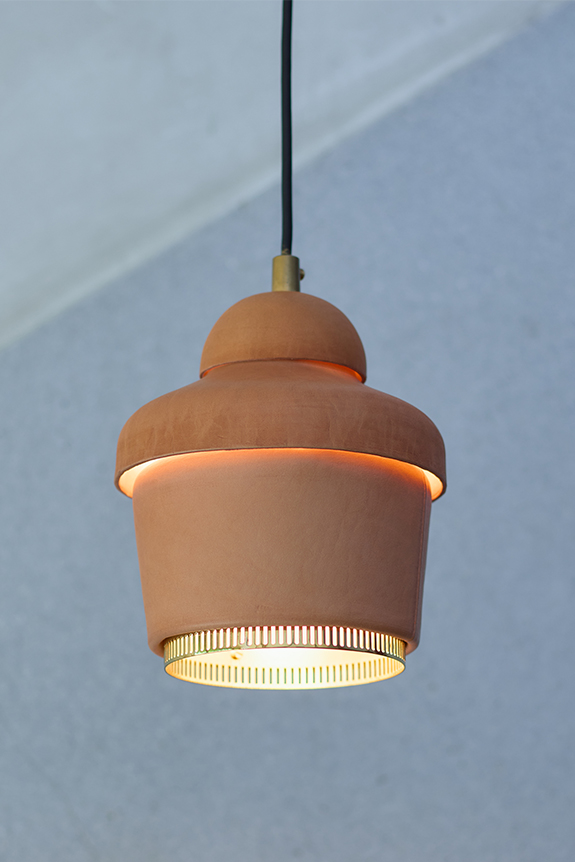
Cette nouvelle connexion est également l’occasion pour Hender Scheme de développer son concept de « New Craft ». Une idée selon laquelle l’artisanat et la technologie moderne se rencontrent et fusionnent au service de nouvelles réalisations. Parmi elles, la suspension A330 Golden Bell, dessinée par les Aalto. L’abat-jour en laiton est pour l’occasion réinterprété en cuir moulé. La technique traditionnelle du moulage humide est associée à l’impression 3D pour offrir de nouvelles qualités visuelles et tactiles sans altérer la forme initiale. Une proposition forte en écho au traitement plus classique du cuir valorisé sur différentes typologies dont une horloge, un porte-clés et des dessous de verre reprenant la forme courbe « Riihitie », imaginée par Aino Aalto. Dévoilés au London Design Festival, ces objets seront disponibles à la vente à partir du 10 octobre.
Ci-dessous de gauche à droite : dessous de verre et horloge
Jusqu’au 10 octobre, le duo Marie et Alexandre présente à la galerie signé l’exposition « Under Pressure », dans laquelle la pression est explorée sous plusieurs aspects : dans les techniques et les matières employées, mais aussi, plus largement, dans leur rapport à la création.
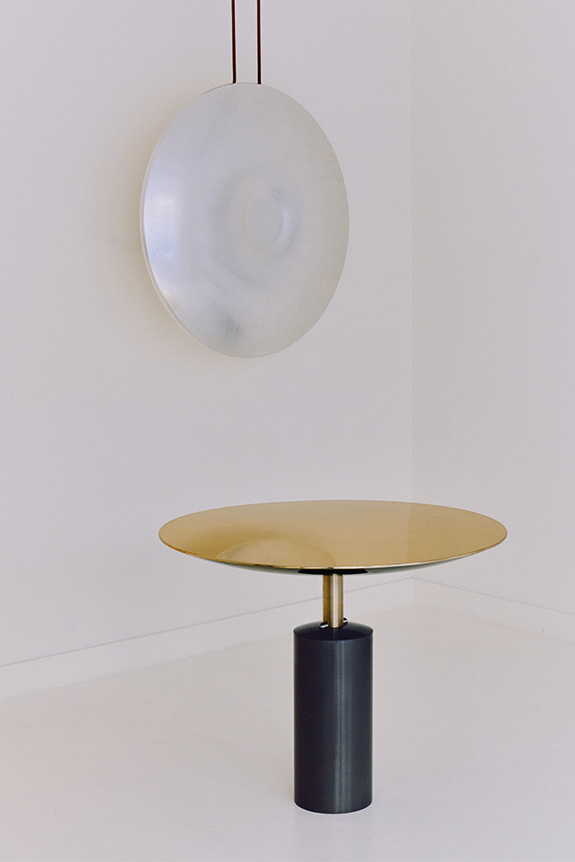
« L’idée derrière cette exposition était de travailler la pression un peu différemment, en utilisant des techniques diverses, avec cette idée d’explosion rapide, et de réussir à les allier toutes ensemble. » Pour cette exposition, le duo de designers formé en 2018 a choisi de faire de la pression son point de départ. Le titre, « Under Pressure », fait notamment référence à l’hydroformage, un procédé industriel dans lequel la pression de l’eau permet de donner forme au métal. Au sein de la galerie, Marie et Alexandre présentent ainsi des pièces façonnées par différentes forces et contraintes, réalisées en collaboration avec plusieurs artisans spécialisés. Mais la pression ne désigne pas seulement ici une technique de façonnage. Elle devient également une condition de création, exercée par la matière, par le temps, le doute, les choix parfois irréversibles ou encore la volonté de faire apparaître quelque chose qui n’existe pas encore.
Allier techniques et savoir-faire
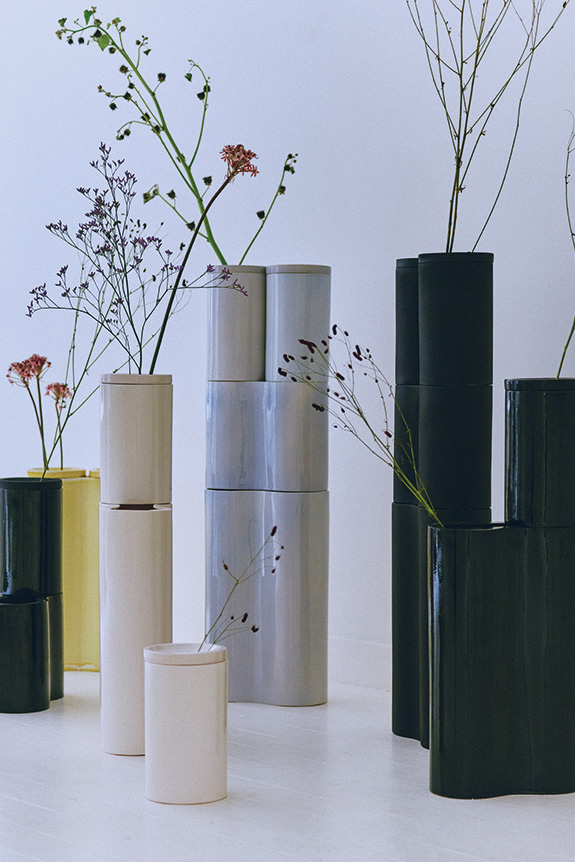
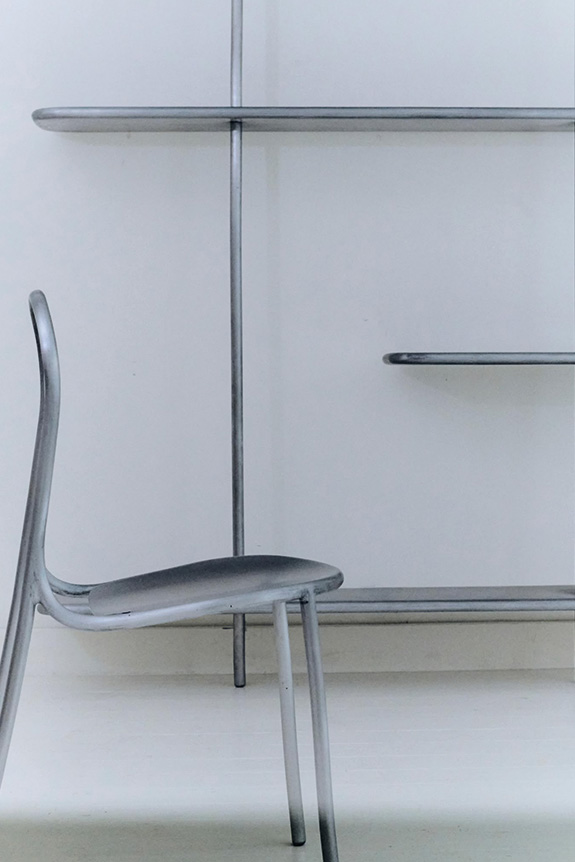
Au sein de l’exposition, qui réunit une dizaine de pièces, les designers se sont associés à différents artisans pour explorer la pression sous toutes ses formes. Avec Antoine Giret, ils présentent ainsi une console, un système d’étagères et une chaise autour d’un travail de l'aluminium fondé notamment sur la vibration de la matière et la création de systèmes. Accompagnés par Jean-Marie Foubert, ils ont imaginé une collection de vases en céramique, déclinés en versions simple et double ainsi qu’en différents formats. Avec le verrier Simon Rio, ils sont allés vers un autre registre en imaginant une table basse dont le plateau est en verre thermoformé. Enfin, avec l’atelier Blam - notamment connu pour avoir participé à la réalisation du cheval mécanique apparu lors de la cérémonie d’ouverture des Jeux olympiques de Paris 2024 -, ils ont imaginé une table sur piston ainsi qu’un médaillon en métal et feuille d'argent dont la forme naît directement de la contrainte exercée sur la matière. Ce dernier sera ensuite destiné à rejoindre la Cité du design de Saint-Etienne, récemment inaugurée.
À travers cette exposition, Marie et Alexandre semblent faire évoluer leur langage formel vers davantage de retenue. Les formes se resserrent et les moyens se réduisent, sans pour autant perdre leur fonction et leur intensité. Un moyen finalement pour le duo de questionner son propre processus créatif.



-1.webp)
-1.png)
Subscriptions
2 year subscription
You save 65.20 euros by subscribing
1-year student subscription
You save 48.60 euros by subscribing

.svg)


.svg)